The Sahara Desert is sending Florida its annual summer delivery.
Saharan Dust plumes are currently headed across the Atlantic and are expected to reach the state next month.

It typically forms during late spring, summer, and early fall, moving across the tropical North Atlantic Ocean every 3 to 5 days. It carries upwards of 100 million tons of dust annually over the ocean and the Americas.
Where is Saharan Dust right now?
According to My Fox Hurricane, the Saharan Dust is currently nowhere near Florida. The plumes have been tracked off the coast of South America’s northeastern countries, including Guyana, Suriname and French Guiana.
When will Saharan Dust reach Florida? How long will it last?
The plumes typically begin in mid-June and run through mid-August; however, the dry air can have lasting effects on hurricane season, which runs through November, according to the National Oceanic and Atmospheric Administration.
What causes the Sahara Air Layer?
Outbreaks of Saharan dust can form when ripples in the lower-to-middle atmosphere, called tropical waves, track along the southern edge of the Sahara Desert, lofting vast amounts of dust.
As the SAL crosses the Atlantic, it usually occupies an over 2-mile-thick layer of the atmosphere with its base starting about 1 mile above the surface, NOAA explains. The warmth, dryness, and strong winds associated with the layer have been shown to suppress tropical cyclone formation and intensification.
Can you actually see the dust in the air?
Sort of.
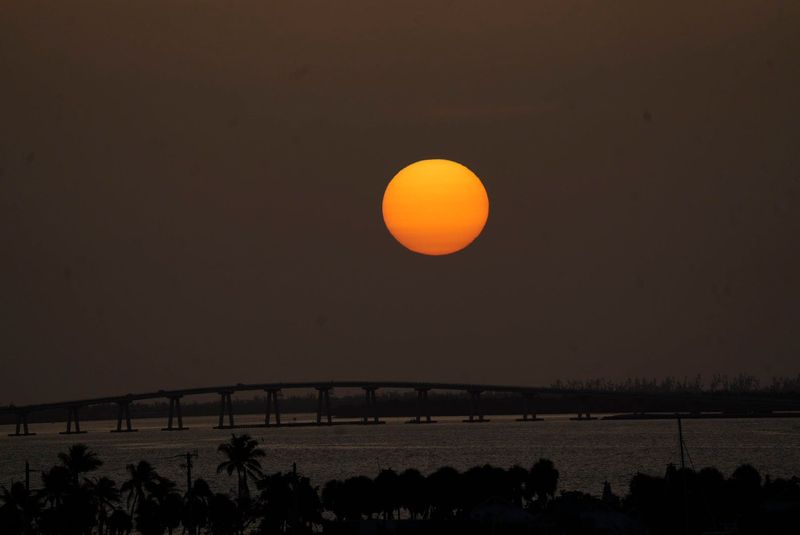
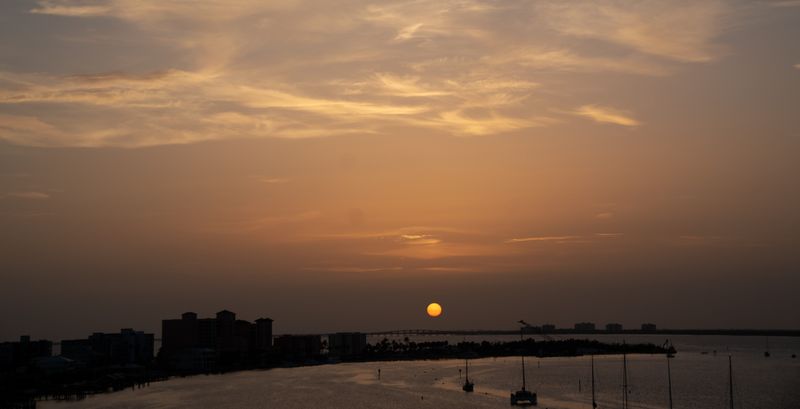
Given how high in the atmosphere the dust lies, it can create vibrant sunsets and sunrises by scattering sunlight. During the day, at most, the sky could appear hazy white if there are sufficient quantities.
See photos of Saharan Dust in Florida
Does Saharan dust make it hotter? Here’s how the Saharan Air Layer influences weather and climate
According to the National Weather Service, there are three characteristics of these “SAL” outbreaks that can affect tropical cyclones, tropical disturbances, and the general climatology of the Atlantic tropical atmosphere:
Is the dust harmful to our air quality?
Saharan dust can be harmful to health. The Centers for Disease Control and Prevention says Saharan dust worsens air quality and increases particulate matter levels.
The air has about 50% less moisture than the typical atmosphere, which means the presence of the layer can be detrimental to cloud formation and thunderstorm activity.
What are the symptoms of Saharan dust?
Dust particles can be breathed in, enter your lungs and bloodstream, and potentially trigger asthma attacks in people with asthma and aggravate other respiratory conditions. Individuals with seasonal allergies can also be affected by the dust, encountering the typical symptoms of runny noses, sore throats, and itchy eyes.
Saharan dust has been linked to increased emergency department visits for:
See latest reports on air quality around Florida today
Contributing: Brandon Girod, Pensacola News Journal
Samantha Neely is a trending reporter for the USA TODAY NETWORK-Florida, covering pop culture, theme parks, breaking news and more. You can get all of Florida’s best content directly in your inbox each weekday by signing up for the free newsletter, Florida TODAY, at https://floridatoday.com/newsletters.
This article originally appeared on Fort Myers News-Press: Why Florida skies get hazy in summer: Saharan dust, explained
Reporting by Samantha Neely, USA TODAY NETWORK – Florida / Fort Myers News-Press
USA TODAY Network via Reuters Connect