Are you experiencing sticker shock at the grocery store these days? If so, perhaps you can take comfort in knowing you’re not alone.
But perhaps even more importantly, simply having the resources to peruse those aisles — and complain about the double-digit percentage increases in your favorite items — means you’re still among the fortunate people who don’t deal daily with the scourge of food insecurity (meaning that nutritious foods are not available in a person’s immediate neighborhood or that they don’t have the resources to purchase it).

And for folks who do face food insecurity — which Feeding Palm Beach County says affects some 185,000 people in our community — recently implemented governmental policies mean they’ll be facing even more challenges than before.
That’s because amid all the federal government cutbacks that have been making headlines and sparking protests in recent months, here’s one that you may have missed: In March, the U.S. Department of Agriculture (USDA) announced that two of its programs — one that funds the purchase of local farm-fresh foods for school cafeterias; and another that funds much of the products that are available in food banks — were cut for 2025.
This amounts to a reduction of more than $1 billion in purchasing that has food banks nationwide scrambling to keep their shelves filled.
“This is an extraordinarily serious moment for food banks all across the United States,” said Feeding America Chief Government Relations Officer Vince Hall in an interview last month with PBS News Hour.
Feeding America runs a nationwide network of more than 60,000 food pantries and distributors. Hall explained that a confluence of pandemic era aid stopping, the rising costs of foods in all sectors, and workers’ wages not keeping up with inflation has led to the highest demand at food banks that the organization has ever seen.
And the USDA cutbacks have him worried about what this will mean going forward.
“Any reduction in the supply of food to food banks is going to have very significant impacts for people facing hunger,” said Hall. “Food banks were already maxing out their supply chains. They were already going to every conceivable donor, looking for every conceivable pound of food and asking every community for support. And so the reality is, we’re going to be short on food.”
Food banks seeing reductions in donations
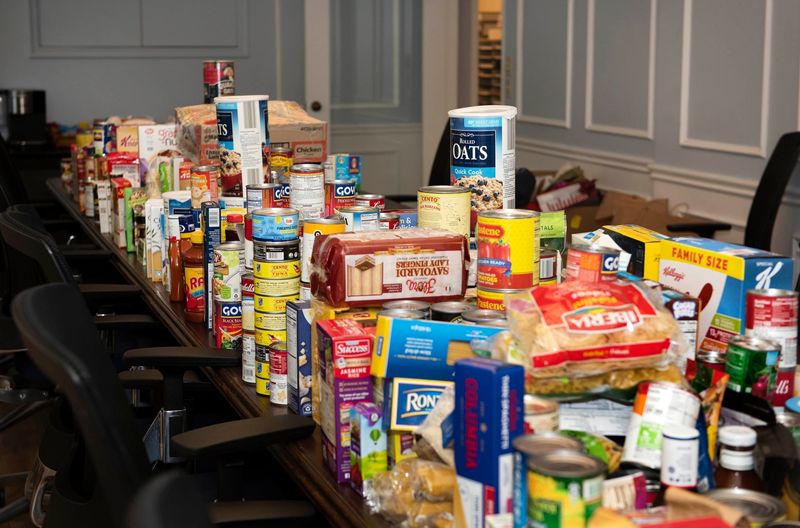
Without the federal government’s assistance in helping fill local food banks, these organizations will be forced to rely more than ever local donations from private citizens.
And that’s likely to result in far more empty food pantry shelves.
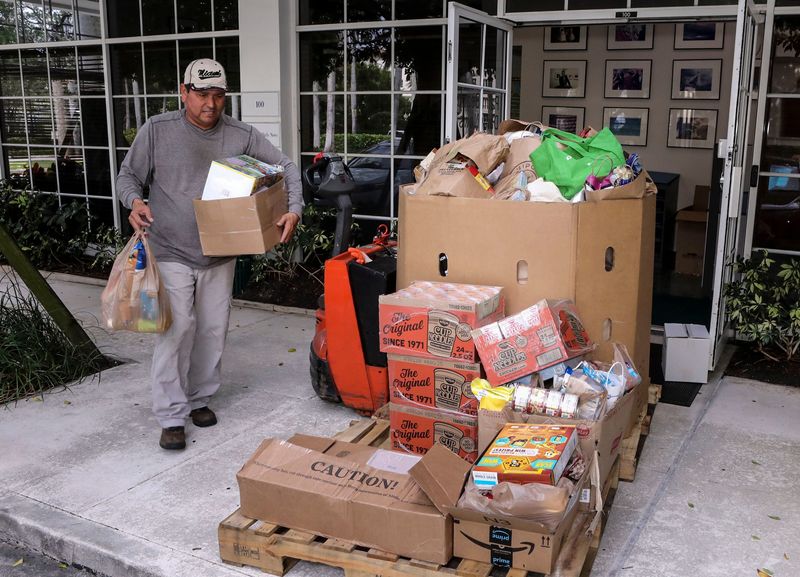
Last month, Boca Helping Hands Senior Director of Operations Bill Harper told WPBF News that “we are down 40% in donations from this time last year.”
In the period between March and January 2024, Boca Helping Hands received 1.4 million pounds of food.
At the end of this March that figure was 800,000 pounds.
Also sounding the alarm bells about record-high demand for food assistance was Palm Beach County Food Bank CEO Jamie Kendall, who noted that what’s happening in Palm Beach County isn’t unique.
“This is going on all over the state of Florida, all over the country, but we are feeling it right here at home, and we have some diminished resources right now,” she said.
Indeed, the shortages and governmental policies will impact millions of Floridians.
Feeding South Florida President and CEO Paco Velez told WPLG Local 10 News that the USDA cutbacks are now “affecting almost two million individuals across this entire region.”
He noted that, in addition to impacting the people who visit food pantries for their daily sustenance, the cutbacks will also negatively affect the many small local farmers who represent a significant portion of South Florida’s agricultural industry.
Because small farmers aren’t as able to quickly bring their products to market, a major source of their income comes from local food banks.
And for food bank clients, the fresh produce provided at food banks is often the only way they’re able to procure fresh fruit and vegetables.
Ways you can help
Knowing where our next meal was coming from is something so many of us have been able to take for granted for our whole lives.
But for the folks who don’t know that sense of security, local food pantries can be a lifeline — literally.
And that’s why any donations they receive — especially now — are so vital.
No matter how small the donation is, organizations like Feeding South Florida know how to stretch that money.
Before the USDA cutbacks, Feeding South Florida said that it could provide nine meals for every $1 donated — a figure which helped it provide some 150 million meals to some 1.5 million people in Palm Beach, Broward, Miami-Dade and Monroe Counties in 2023.
As Velez told The Palm Beach Post then: “We know that hunger is a symptom of a larger issue, a systemic breakdown.”
To learn more about Feeding South Florida, and how you can get involved, visit feedingsouthflorida.org.
This article originally appeared on Palm Beach Post: Why are food banks in South Florida — and nationwide — facing critical shortages?
Reporting by Steve Dorfman, Palm Beach Post / Palm Beach Post
USA TODAY Network via Reuters Connect