This article is also available in Spanish; you can read it here.
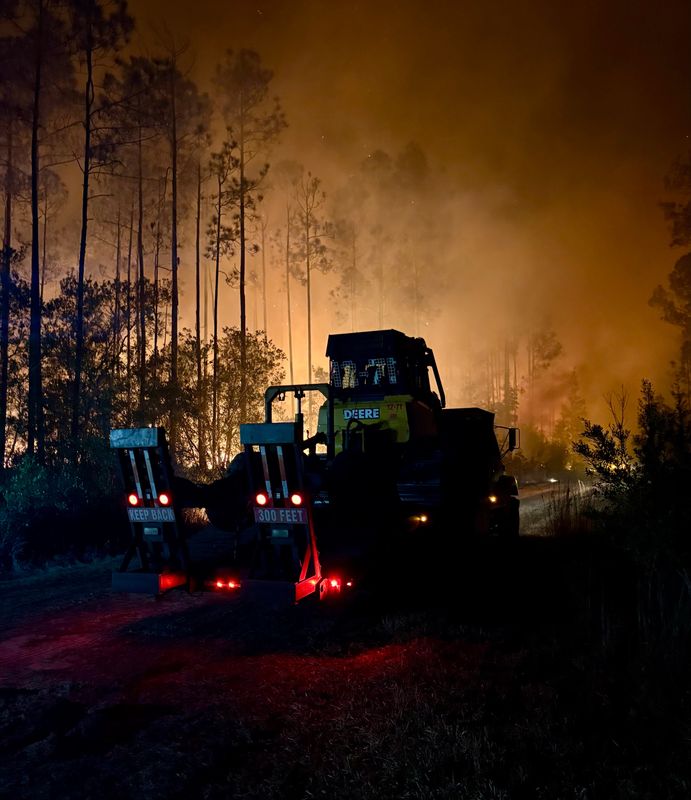
Wildfires have swept through Florida since February, leaving almost half of all Florida counties under red flag warnings, which indicate critical fire weather conditions are or will soon occur. One fire, coined the “National Fire,” swept through the Big Cypress National Preserve and grew exponentially from 1,000 acres of land on Feb. 23 to 25,000 acres of land on Feb. 24.

According to Florida State School of Communication professor Kellie Keys, the last burn that occurred in the Big Cypress National Preserve was in 2013.
“There are a couple of important factors to understand about the current fire in South Florida,” Kellie Keys said to the FSView. “First, Florida is in a drought. Second, there has been long-term fire suppression in the area of Big Cypress National Preserve, currently burning.”
The area naturally burns every three to four years, but has only burned two or three times since 2007.
Wildfires can become especially dangerous if they burn near communities. In fact, the dense smoke from one Florida wildfire shut down parts of I-75 due to driving visibility safety concerns. These combinations lead to an increased risk for a wildland fire or rapid-fire growth if one has already begun occurring.
How Florida wildfires impact the environment
According to Keys, fire is a natural part of Florida’s ecosystems because “many species depend upon cycles of fire, which are always driven by weather, climate, and available fuels.”
However, wildfires can have impacts such as habitat loss from flames, polluted water sources from the smoke and ash, and continued species endangerment as a whole.
FSU biological science major and President of Claws and Causes, Lauren Yoakum, said that a few of Florida’s native wildlife species can be impacted by unexpected fires.
“The unfortunate news is that a lot of these current wildlife[s] aren’t part of Florida’s natural cycle,” Yoakum said to the FSView. “Rather than preventing overgrowth of natural tree abundance and allowing other flora to thrive, these fires are decimating ecosystems long before it’s necessary.”
Smoke itself can have a big impact, since it can reach far past the damage caused by flames. This is seen in previously unimpacted habitats being abandoned by the residing wildlife and animals.
“While I understand fire is a natural part of ecosystems in southwest Florida, I’ve never seen anything this widespread,” environmental science and policy major and Co-President of Beautify FSU Cole Beiner said to the FSView. “While wildfires can be natural, climate change is worsening drought conditions and extending fire seasons. Taking small steps to reduce our carbon footprints can serve as a small win for regulating these hazards.”
Severe heat and drought are factors that contribute to wildfires and rapid wildfire spread. However, it’s not just environmental factors that play a role in wildfire ignition and spread; human factors such as the littering of cigarette butts can also contribute as well.
“Cigarettes are the most littered item on Earth, and improperly discarded ones can easily spark wildfires,” human rights social justice major and Co-President of Beautify FSU McKenzie Carlson said to the FSView. “Proper disposal is a simple, but effective, way students can protect both themselves and the environment.”
Here’s what to know about protecting yourself from wildfires
Ensuring one has a plan for before, during, and after a potential wildfire is the best way to keep safe if the time comes, with tips from the American Red Cross providing guidance if a situation ever arises. The City of Tallahassee has also provided tips to ensure safety when it comes time to deal with wildfires.
Wildfires pose a danger to humans and also household pets. Smoke from wildfires can irritate an animal’s eyes and respiratory tract. Animals with illnesses can be especially sensitive.
“The best thing you can do to make sure your domestic animals and pets stay safe is by keeping an eye on their breathing and energy levels,” Yoakum said. “If something seems off, or if your animals seem particularly sensitive to the decrease in air quality, the safest option is to get them evaluated by a veterinarian as soon as possible.”
In the event of a wildfire, Yoakum recommends that people become extra aware of displaced wildlife.
“A lot of animals that usually hide in these forests will be forced into anthropogenic areas, and so they are at much greater risk to get struck by cars, or even killed by humans.” Yoakum said. “The best thing you can do to help is to have empathy for those species impacted, and call the proper authorities if you see an animal that seems out of place, or like they are in danger.”
To Keys, the best way to fight against the uncontrolled spread of wildfires is to allow manmade plans of prescribed (controlled) burning.
“Allowing our land managers to support natural cycles of wildfire through controlled burning is the single most important thing we can do to prevent massive, uncontrolled wildfires,” Keys said.
Azzurra Degliuomini is a Senior Staff Writer for the FSView & Florida Flambeau, the student-run, independent online news service for the FSU community. Email our staff at contact@fsview.com.
This article originally appeared on FSU News: What to know about Florida’s wildfires and how to prevent them
Reporting by Azzurra Degliuomini, Senior Staff Writer, FSView / FSU News
USA TODAY Network via Reuters Connect