There is nothing new in noting clear contradictions in the rhetoric of politicians. Still, it appears they have elevated contradictory policy pronouncements to an art form.
Here’s a case that strikes close to my heart:

President Trump has launched a tariff assault against many of our long-term trading partners, most notably Canada, Mexico, China and Europe. His justification for this is the evil that Trump sees in the balance of trade surpluses run by these countries with the U.S. Yes the U.S. currently runs a trade deficit with the rest of the world.
As many economists will point out, trade deficits are not always adverse to Americans, and the current trade deficit should be assessed against the more inclusive U.S. balance of payments. But if we agree that the the deficit needs to be addressed why then is the administration assaulting a sector that has consistently generated large surpluses, that being higher education?
NAFSA: Association of International Educators estimates that about 1.2 million international students annually enroll in U.S. universities while about 280,000 American students study overseas. The Brookings Institution concludes this results in a nearly $50 billion annual trade surplus.We know well that students from around the world regard admission to an American university as a special privilege.
Despite the long-term successes, the American university system (both public and private) is now regularly denigrated by members of the administration and their allies in Congress. And there are active efforts to limit and discourage admissions of international students. As a result a decline of between 30 and 40 percent in new international enrollees is predicted for 2026 leading to an overall decline of 15 percent in international student enrollment (NAFSA: AIE).
Based on my five-plus decades of service in higher education this makes no sense. Along with producing a large balance of trade surplus, offering higher education to international students pays off in other ways.
First, tuition and fees paid by these students serve to lower costs for domestic students. International students “subsidize” their American colleagues.
Second, the presence of students from around the world enriches the experience for all students on campus. That’s especially true at a place like Florida Gulf Coast University, where having international peers encourages local students to broaden their perspectives and better understand the global economy in which they will compete.
Third, many international students stay in the U.S. (as eventual citizens or permanent residents) making real contributions to our economy, our society and our culture. They become leaders in medicine, technology, education and much more.
Finally, those students who return home become friends and U.S. supporters around the world. I’ve personally experienced on many occasions the impacts of goodwill offered by these alums of our universities.
The record and the data certainly suggest that our university system has contributed to the economy in numerous ways including offsetting trade deficits in other sectors. And it is central to America’s global stature. At a minimum, our political leaders, including the president, should acknowledge and, from time to time, celebrate the many important roles played by U.S. universities.
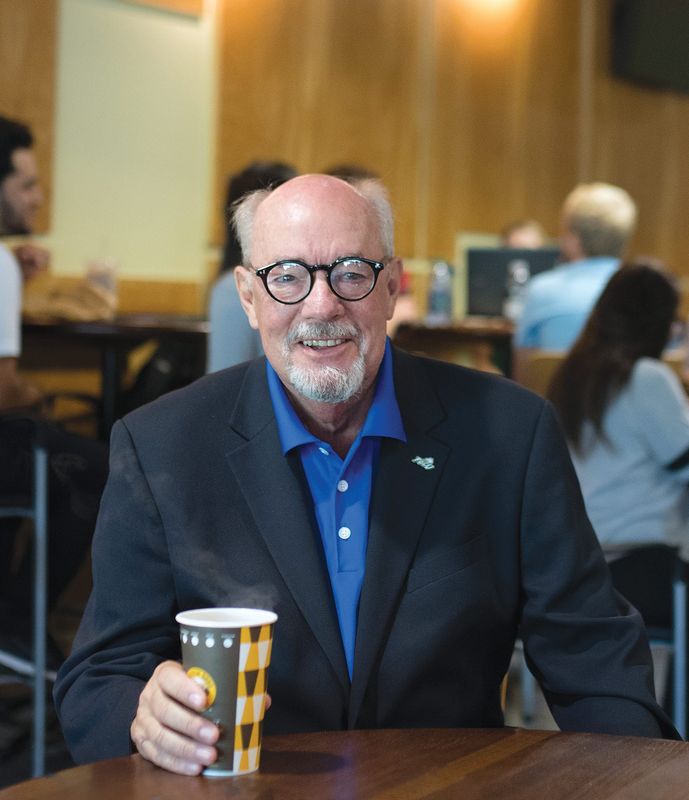
Mike Martin is former president of Florida Gulf Coast University.
This article originally appeared on Fort Myers News-Press: What does Trump really want? | Opinion
Reporting by Mike Martin / Fort Myers News-Press
USA TODAY Network via Reuters Connect