(Editor’s note: This column has been updated to clarify Commissioner Adkinson’s position on how she’d consider funding ocean rescue.)
Sometimes I get stuck on small things and they gnaw at me, causing all types of duress.

I recently read something about a County Commission budget workshop. There are lots of things to worry about as they start prepping for budget season, especially when it comes to state and federally mandated projects totaling nearly $800 million for cleansing sewage and tap water.
That means they need to come up with revenue and cuts totaling $800 million.
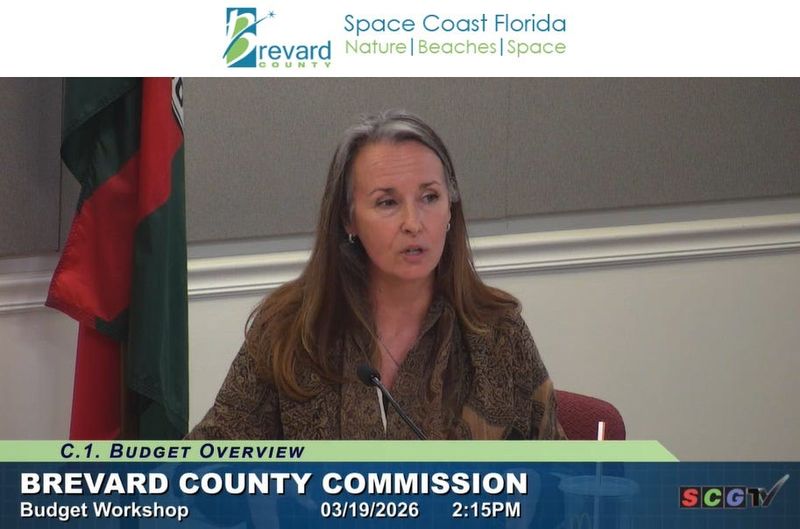
And kudos to District 3 Commissioner Kim Adkinson, who said she’d like to get more involved in the process this year, her second on the commission. She asked her staff to come up with some ideas on how to come up with the funds.
“So, last year being new, I felt like I was drinking from a water hose when it came to the budget, I don’t feel like I had a whole lot of input to be honest with you,” she said at the meeting held late last month.
“I feel like I want to participate a little more in that this year to the best of my abilities. So, my office just went through and looked at some nonessential county services. All these services are important to multiple someones. They are important to me. But I think it’s important we look at what we can. We’re not talking about trimming the fat.”
She’s not wrong and it’s good to get ahead of these things, especially when it comes to cutting services.
But then I saw the words “Ocean rescue,” meaning lifeguards on our gorgeous beaches.
Sorry, but that’s a nonstarter, even if it would free up $1.9 million for the county and even if it is just to get the conversation started.
Every night before bed, I ask my Alexa smartspeaker for the next day’s weather. I can’t remember the last time it didn’t include a rip current warning urging me to be safe. Remember, this is Brevard County where whether by fate or beach nourishment efforts or a combination of both, our waters are cursed with some dangerous currents which claim lives every year.
That’s why I reached out to Adkinson’s office to learn a little more or to see if she was backing away from the suggested cuts.
“I’ve prepared a list of potential budget cuts and reallocations, which I hope the Board will consider. We need to address aging infrastructure and increasing demands for services,” Adkinson told me via email.
“Some of the things on the list will be tough decisions, but those are the choices we were elected to make. To go forward and balance the budget we may have to put off important projects, make uncomfortable cuts, or increase taxes. I hope our fiscally conservative Board will not have an issue making the best choice.”
An email from one of Adkinson’s aides indicated Adkinson’s intention was not a cut in service but instead to shift costs so that 100% of the funding for lifeguards would come from the tourism development tax revenue as opposed to the current split between TDT revenue and general fund revenue.
That’s a good thing because from a safety standpoint there is no way we can tolerate the elimination of lifeguard services. From a cost-saving standpoint there is no way we can let that happen. Imagine the drop in tourism dollars flowing in after word gets out that our beaches and rip currents are “navigate at your own peril.”
“Any proposal to remove trained ocean lifeguards from a coastline such as Brevard County would present a significant and immediate risk to public safety,” Bernard J. Fisher, director of health and safety for the American Lifeguard Association, said after I told him about the potential cuts.
“Brevard’s beaches are not passive environments — they are dynamic, high-risk coastal systems with known hazards, including rip currents, shifting sandbars, and heavy tourist traffic. These conditions require professional oversight. Lifeguards are not a discretionary amenity; they are a critical layer of prevention, intervention, and emergency response.”
Fisher went on to say that cutting lifeguards would almost certainly guarantee an increase in drownings, especially among those unfamiliar with navigating the dangerous rip currents. Emergency response times would assuredly be delayed as well.
“The prospect of Brevard County eliminating lifeguard coverage is deeply concerning and would represent a serious step backward in public safety,” Fisher continued.
Fisher went on to say that cutting lifeguards would almost certainly guarantee an increase in drownings, especially among those unfamiliar with navigating the dangerous rip currents. Emergency response times would assuredly be delayed as well.
“The prospect of Brevard County eliminating lifeguard coverage is deeply concerning and would represent a serious step backward in public safety,” Fisher continued.
“It is also important to recognize that proactive lifeguard services are among the most cost-effective public safety investments a coastal community can make. The financial savings associated with eliminating these services must be weighed against the potential human cost, increased liability exposure, and the long-term impact on tourism and public confidence. We strongly encourage Brevard County officials to carefully evaluate the full implications of such a decision and to engage with qualified water safety professionals before moving forward.”
I then reached out to District 4 County Commissioner Rob Feltner, who also happens to chair Brevard County’s Tourism Development Council.
He reminded me that he was part of the previous county commission, which expanded lifeguard service in the county.
In 2024 the County Commission voted 3-2 to fund beach lifeguards in the county’s 2024-25 budget through a combination of money from the county’s general fund budget; from the county’s 5% tourist development tax on hotel room rentals, vacation rentals and other short-term rentals; and from three municipalities ― Cocoa Beach, Indialantic and Melbourne Beach.
“This is something I would never support,” Feltner said of cutting lifeguard services, adding that when the issue of lifeguard expense was last brought up, he discovered that no drownings took place in areas that were covered by lifeguards.
“In fact, we got calls from many to expand our lifeguard services.”
That’s a good thing. Still, the issue remains and the commissioners have their work cut out for them.
The Commission plans another budget workshop during its regular commission meeting April 21. Commissioners won’t vote for a tentative tax rate until July.
I won’t mention the possibility that millions of dollars more could be lost to the county should a state proposal pass that would do away with homestead property taxes. We’ll cross that bridge when we have to.
Contact Torres at jtorres@floridatoday.com. You can follow him on X @johnalbertorres
Support local journalism and become a subscriber. Visit floridatoday.com/subscribe
This article originally appeared on Florida Today: Torres: Why cutting ocean rescue is a dangerous budget mistake
Reporting by John A. Torres, Florida Today / Florida Today
USA TODAY Network via Reuters Connect