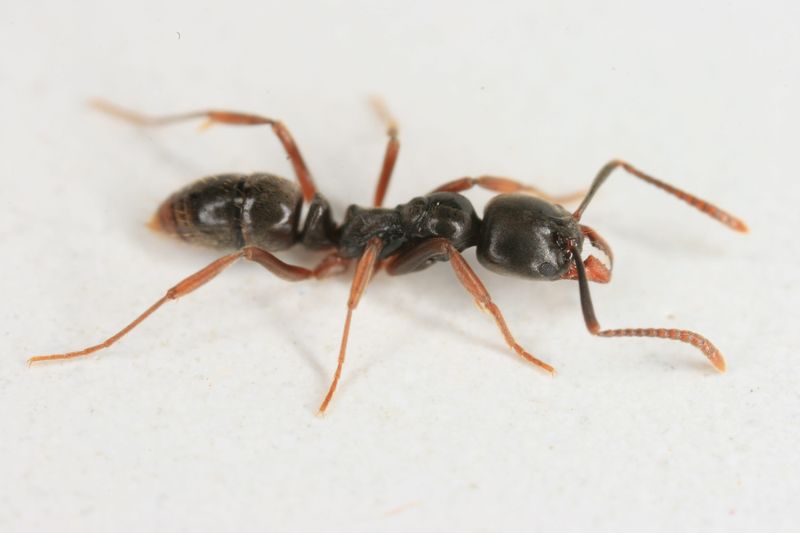
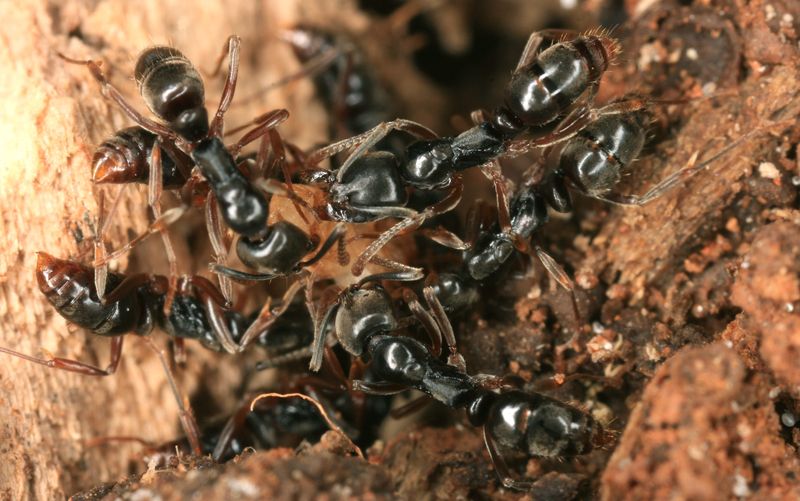
Meet the Asian needle ant. Better yet, try to avoid it.
It’s scientific name says it all: Brachyponera chinensis — roughly translated as “short, wicked ant from China.”

The stinging, carnivorous ants have been spreading in the United States, including a couple of sightings in Florida, although researchers admit tracking them can be challenging.
For some people, the sting from an Asian needle ant can cause anaphylaxis, a life-threatening condition. For many, the pain can come and go for hours, sometimes for days.
Unfortunately, as with many other invasive species, it appears Asian needle ants are here to stay, according to the U.S. Department of Agriculture.
Here’s what you should know, including how the Asian needle ant differs from the all-too-common fire ant.
Is the Asian needle ant in Florida?
There have been two recorded instances of the Asian needle ant in Florida, one near Tallahassee and the other near Kennedy Space Center, according to Dr. Jason Williams, postdoctoral research associate, entomology and nematology at the University of Florida, in an email.
➤ Map shows locations of Asian needle ant in Florida, US
Where is Asian needle ant in US?
The Asian needle ant was first discovered in the United States in 1932, according to the USDA. Since then, it’s been documented in several states and is currently spreading across the eastern United States.
“It is capable of invading much of North America’s temperate forests,” the USDA said. The tiny ant is hard to see and is carnivorous, loving termites and other small insects. Peak season for the Asian needle ant is June and July.
According to antmaps.org, the Asian needle ant has been found as far north as New York, south to Florida and as far west as Washington and even in Hawaii:
➤ Interactive distribution map
Asian needle ants aren’t aggressive but their sting …
“Perhaps the most troubling characteristic of Asian needle ants is their sting,” the USDA said.
“We are now considering it a medically important pest,” Dan Suiter, an Orkin distinguished professor of Urban Entomology at the University of Georgia, told Fox Weather.
“While they are not terribly aggressive, like the more familiar red imported fire ants, their stings are painful, often affecting different people in different ways,” the USDA said.
“Stings are often reported to result in intense pain at the site of the sting that comes and goes over the course of several hours or even days later.” Some people experience pain away from the sting site and some report Redness of the skin and mild to severe urticaria — hives — are reported as symptoms. “
“People who are hypersensitive to other stinging insects may be at increased risk of anaphylaxis from Asian needle ant stings,” the USDA said.
Venom from both Asian needle ants, fire ants can be deadly
Many different ant species sting, and each species has its own blend of venom compounds, Williams said.
“Both Asian needle ants and fire ants are capable of triggering anaphylaxis in people who are allergic to insect stings.”
Fire ant stings tend to cause a sharp, intense pain right away, which fades fairly quickly.
The sting from an Asian needle ant can come back hours, or even days later, Williams said.
Another difference is that fire ant stings, typically result in a burning sensation followed by a red rash and a small pustule that can persist for several days.
Sting of Asian needle ants can cause anaphylaxis
Perhaps the most troubling characteristic of Asian needle ants is their sting, according to the USDA. While they are not terribly aggressive, like the more familiar red imported fire ants, their stings are painful, often affecting different people in different ways. In fact, the sting can result in life-threatening anaphylaxis, an acute allergic response.
People who are hypersensitive to other stinging insects may be at increased risk of anaphylaxis from Asian needle ant stings, the USDA said.
Last year at least three cases of life-threatening anaphylactic reactions were reported in Georgia.
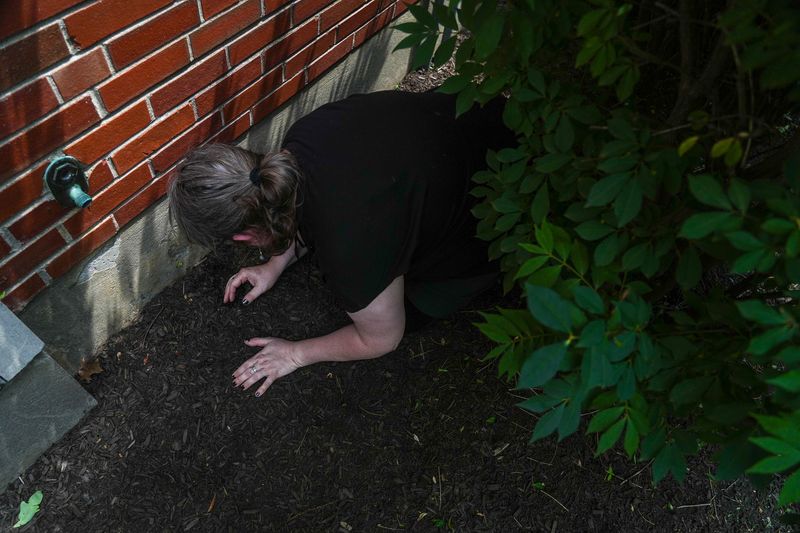
Asian needle ants will defensively sting if they feel pressure, for example from someone reaching into a pile of mulch or soil near their nest.
Stings are often reported to result in intense pain at the site of the sting that comes and goes over the course of several hours. Some people experience pain away from the sting site. Redness of the skin and mild to severe hives are reported as symptoms.
How are Asian needle ants different from Florida’s fire ants?
Here’s how Williams described the differences between Asian needle ants and fire ants:
How big are Asian needle ants?
“Asian needle ants are about 5 to 6 mm long and mostly uniform in size across the colony, (known as monomorphic),” Williams said.
“On the other hand, fire ants can range from about 2.5 to 6 mm long and are variable in size across the colony, known as polymorphic.”
“Asian needle ant workers are small, shiny, dark brown to black, with the end of the antennae and the legs being a lighter orange-brown. Workers are about 0.2 inches in length,” the USDA said.
How can you tell the difference between Asian needle ants and fire ants?
Williams described how you can tell the difference between Asian needle ants and fire ants:
There are other ant species in the Eastern United States that superficially resemble Asian needle ants, so it takes an experienced eye to positively identify them, the USDA said.
Where are Asian needle ants in our yards or homes?
Williams said he could not confirm Asian needle ants have established themselves in Florida.
“Asian needle ants are typically found in shaded, moist, wooded environments. In residential areas, this can include parks, wooded yards, and landscaped spaces. They commonly nest in leaf litter, under logs or rocks, or within mulch beds.
“Unlike fire ants, they do not build visible mounds; their nests are far more inconspicuous, and they generally don’t nest inside walls or homes. That said, individual ants may come indoors occasionally, especially if they’re searching for food or moisture.” Colonies are typically fairly small and flat.
If these ants are found on your property, the most effective way to manage them is by reducing potential nesting sites. This includes storing firewood off the ground, removing rotting wood, and keeping mulch beds tidy and well-maintained.
Near your home, look for Asian needle ants under mulch, pavers, landscape timbers, and other objects, the USDA said.
Asian needle ants threaten ecosystems
“Of great concern is the apparent ability of Asian needle ants to displace ant species that are critical seeddispersers,” the USDA said.
“Researchers have demonstrated substantial decreases in seed dispersal where Asian needle ants have invaded forestareas.”
What is anaphylaxis? What are symptom of severe allergic reaction?
“Anaphylaxis is a severe, potentially life-threatening allergic reaction. It can occur within seconds or minutes of exposure to something you’re allergic to, such as peanuts or bee stings,” according to the Mayo Clinic.
Symptoms include:
Contributing: Elizabeth Weise, USA Today
This article originally appeared on Florida Today: Tiny Asian needle ant packs powerful, potentially fatal, sting. Compare it to Florida fire ant
Reporting by Cheryl McCloud, USA TODAY NETWORK – Florida / Florida Today
USA TODAY Network via Reuters Connect