MIAMI — There was nothing atypical about the young man. At the moment in the mid-1960s, he seemed as dazed as every other teenager I had seen walk into “El Refugio,” the Spanish moniker for the Cuban Refugee Resettlement Center at the Freedom Tower in downtown Miami.
Except he would be the only extended family member I would never see again.

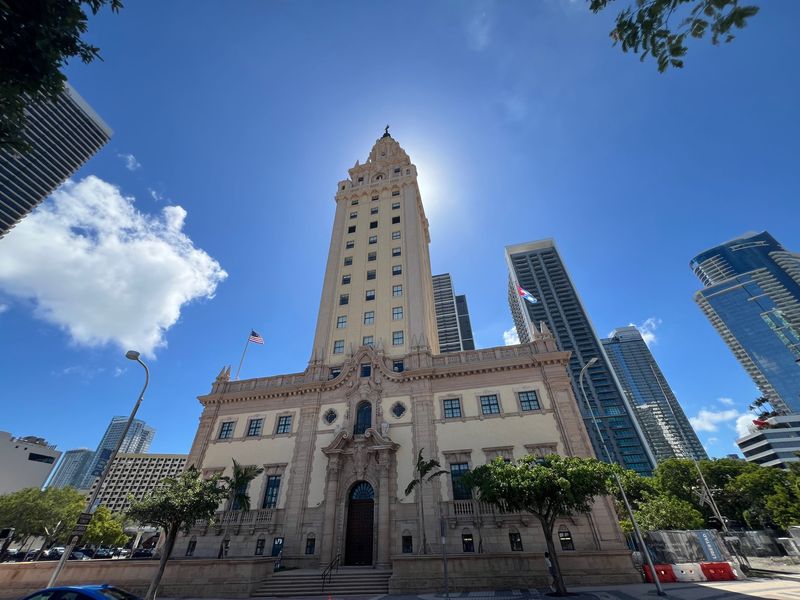
From 1962 to 1974, the refugee center located at the now landmark Freedom Tower served as an Ellis Island for Cuban exiles. Over those dozen years, 400,000-plus people fleeing Fidel Castro’s dictatorship got their official welcome to the United States.
It’s where they received permits to work and find housing plus assistance, whether a dental check up, a vaccine or can of Spam.
It was also where my mother got her first job, and where I spent more than a few pre-school afternoons and first met dozens of family members — including that one ordinary but unforgettable youth.
A first job, and impactful memories
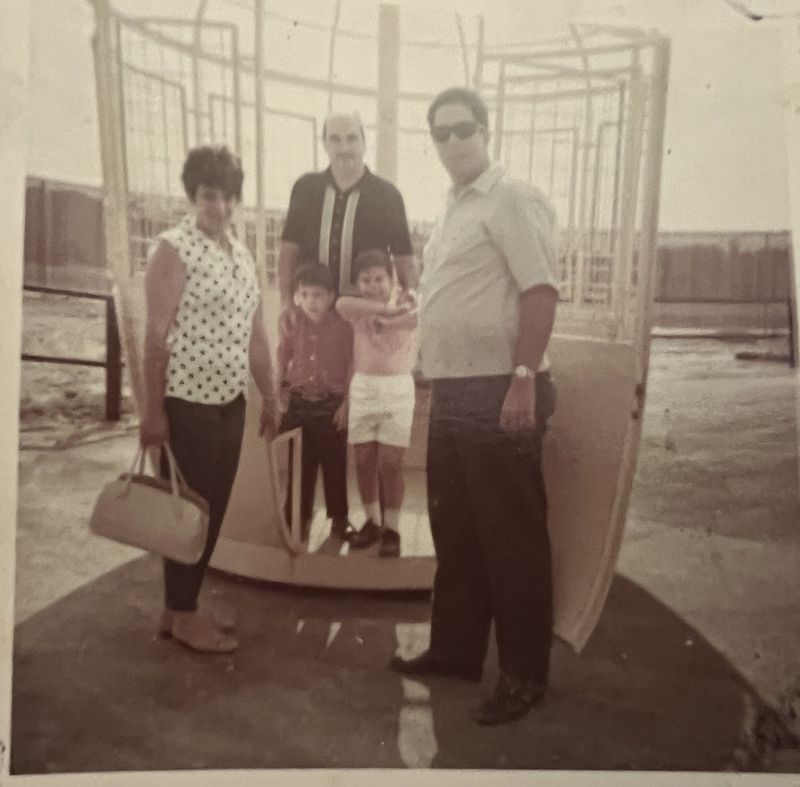
My parents, older brother and I arrived in exile at the Freedom Tower in Miami in December 1965.
My mother, who had worked for the American-owned telephone company in Havana, spoke English and was quickly hired by the U.S. government to work at the resettlement center as a translator. She also hugged, comforted, held hands, helped reunite others as they passed through the office.
She did that for countless strangers, and the roughly three dozen family members for whom she filled out paperwork after they, too, arrived.
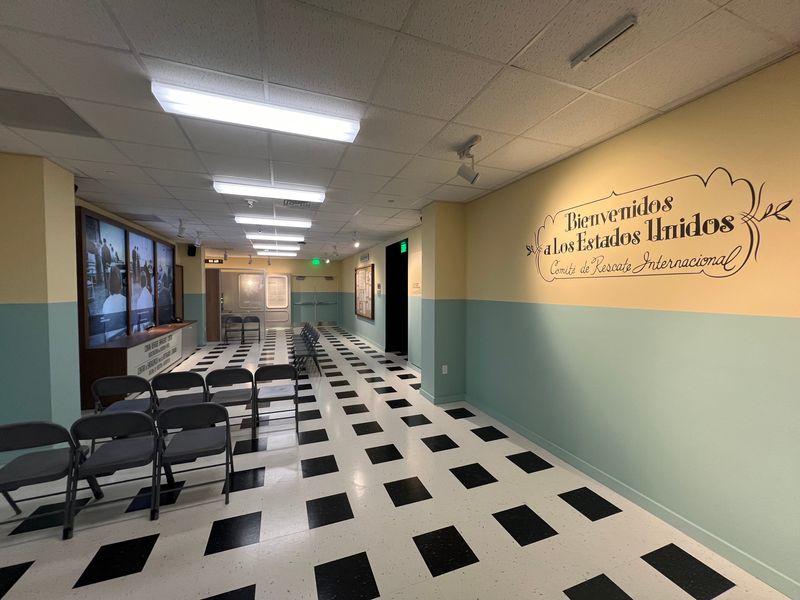
I thought about all of them on Aug. 12 when I got a tour of the new Freedom Tower museum dedicated in part to the building’s 12 years as a refugee center. One of the exhibits is a recreation of what the main reception room at the resettlement hub looked like 60 years ago.
The collections include oral history interviews with refugees, employees and refugee-employees like my mother. Also on display are artifacts associated with El Refugio, including a child’s winter coat given to those Cuban refugees being relocated to northern U.S. cities. It is a coat I recoganized from photos of my cousin in the snow when she, my uncle, aunt and her brother first moved into Cincinnati.
One item not in the collection, however, was the water cooler. It was a beige dispenser topped with a clear glass water bottle. Paper cups were neatly stacked on an adjacent table. On the other side was a metal folding chair.
I remember the water cooler setting vividly. What I saw and heard there, sitting quietly until my mother’s work day ended, are not only deeply-etched memories but collectively form the single-most formative event of my childhood.
Joy, relief and responsibility in Cuban family reunions at Freedom Tower
I was about 4 years old at the time, and was alleged to be a handful. My daytime caretaker had a job at the Los Violines restaurant, partly owned by my grandfather’s close friend and business partner, on Biscayne Boulevard just north of the Freedom Tower. I would be dropped off at the refugee resettlement office where I was stationed by the water cooler.
There, I saw an endless stream of people, and emotions, flow through the center.
I saw tears of hope and joy. I heard new arrivals break the news of the death of parents and grandparents to those who greeted them. I saw them show photos of newborns to grandparents, uncles and aunts who wondered whether they would ever see their grandchildren, nephews or nieces.
On a handful of occasions, one of mother’s colleagues, also a former co-worker at the Cuban baby bell company, strode over to my mom to whisper good news. My mother would excuse herself from the table, walk over to the co-worker’s desk and make a phone call on a rotary phone.
A short time later, a lanky man with a crew cut, determined gaze on his face and and elder statesman’s demeanor walked through the door. It was my grandfather, wearing a dark suit jacket over the white shirt and slacks, his uniform as head chef, maestro cocinero, at Los Violines, an establishment whose actual name was French, Les Violines, but we cubanized to Spanish.
My grandfather’s presence heralded the arrival of relatives from Cuba at the Freedom Tower on a bus from Miami International Airport. He was the family greeter.
It was a happy occasion for me. It meant I might be meeting new cousins. Or maybe a nice Mary Poppins-like matronly sitter who would not mind me going KAPOW! on something after watching the “Batman” TV series, or provide supervision so I could play football or baseball with the bigger kids in the alley behind our Little Havana apartment building.
For my grandfather, the family reunions at the Freedom Tower were a mix of happiness, relief and responsibility. As the family patriarch, he certainly rejoiced in seeing loved ones again. Every extended family unit that walked in was another that he had managed to free from communist tyranny.
And responsibility? That’s the conversation that would ensue — by that water cooler.
A water cooler chat like no other at the Freedom Tower
After hugs and tears, my grandfather would walk over to the watercooler with the family’s adults. He would hand them a cup of water, and begin to speak quietly but deliberatively with no ambiguity — zero.
He would explain that there were two restaurants, Los Violines just up the street and the Flamenco a few miles further north. The adults in the newly arrived family would be assigned jobs at one of those restaurants. The expectation, however, was that they would quickly master enough English to move on as quickly as possible to employment in the trade or profession they worked back in Cuba — in Miami or elsewhere in the United States.
That was necessary for two reasons. One, to free the restaurant jobs for the next family to arrive. Two, to start making the best of the opportunity in front of them.
My grandfather would explain that the newly-arrived couple were young men and women, and they, like their children, still had the bulk of their lives in front of them. As much of a tragedy as Fidel Castro was to Cuba, it would be equally unconscionable for them to waste this opportunity in the U.S. land of opportunity.
He understood the pain of leaving behind parents and siblings. He reminded them he also left a brother and two nieces behind, in Cuba, and his mother decades before in Spain. But the only antidote for that sorrow, he instructed, was to work hard, become a success and then seek to bring them to America if possible.
However, he would firmly instruct, if they were coming to America to embitterly bemoan and lament the possessions lost in Cuba, they were to tell him at that very moment and he would put them back on the return flight to Havana.
No one ever took him up on that offer.
Why I never saw the teenager again after that day at Freedom Tower
What is your earliest memory of a Fourth of July? Maybe a picnic? Fireworks? Mine is going to a Sears and Roebuck department store where my parents bought me a suit, shirt and tie.
Why? It has to do with the nondescript teenager who walked in to the Freedom Tower with his parents, two sisters and younger brother sometime in 1967.
Over the years, we saw that family a lot. The dad, an in-law to one of my father’s first cousins, chauffeured my grandfather and worked at Los Violines and Flamenco. The youngest son taught me to play football.
But the oldest son, the teenager, would never again be with them.
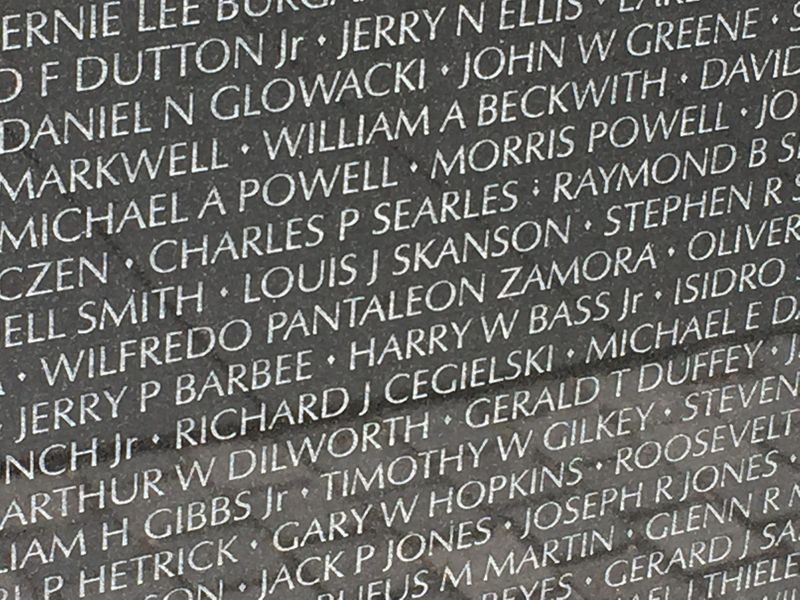
People arriving at the Freedom Tower received documents like Social Security numbers and work authorization cards. The young man, Wilfredo Pantaleon Zamora, got all that — plus a card with a military draft number.
Six months after he arrived in the United States, Wilfredo’s draft number came up. His older sister told me, about a decade ago, that Wilfredo was offered a chance to leave the United States. He refused. He said he was done running away because of politics. The United States was now his country, and he would serve in its military and fight for its interests.
So he did. And on July 4, 1968, Wilfredo Pantaleon Zamora — say his name — was killed in combat in Vietnam. That day, rather than celebrate America’s independence, we dressed up in our finest to pay condolences.
Why Freedom Tower’s past shapes view of polarization on immigration
There is, in reality, little that I have written that is remarkable, or let alone news, to anyone with a conection to an immigrant experience.
The only reason this story offers a contrast is because of the current polarized and polluted view of immigration in the United States.
I recently received an email from a reader rejoicing over, and lauding, the Alligator Alcatraz detention center. The reader expressed glee that such a facility exists to punish and remove the “litter” and “cesspools of human filth” that recent immigration has brought to America.
Maybe his words are harsh, but the writer’s view prevails in America 2025, where foreigners generically branded as “illegals” are widely feared and resented.
Much of the country found it devilishly clever that stunned families just like the ones that I saw at the Freedom Tower were flown to and dumped on the doorstep of villagers in Martha’s Vineyard. Just like they vindictively applauded children being taken from their parents at the border seven years ago.
The Alligator Alcatraz site about 40 miles west of the Freedom Tower museum is an attraction where people stop on U.S. 41 to take their selfie with the camp’s highway sign as they revel in jokes about people getting eaten and tortured by alligators, pythons and mosquitoes. I’ve seen that scene play out while standing by the roadway on reporting assignments.
I understand that a large share of the public draws a sharp distinction between people who show up at the border unannounced, or sneak in across it, and those who waited patiently in their home countries for permission to come to America. I respect that difference.
Between the time my parents first applied to come to the United States in 1961 and the moment we arrived in December 1965, they suffered close to four years of hardship in Castro’s Caribbean gulag while waiting their turn.
Others worry that those crossing the border have not been properly vetted, and that people who could pose a public safety danger are being allowed into the country. I cannot dismiss that concern, either, since I saw that danger in real life, men truly out of prisons and mental institutions, arrive at the docks in Key West during the Mariel boatlift 45 summers ago.
Certainly a lesson of the Freedom Tower history of Cuban resettlement is that an orderly, controlled flow of foreigners into the country best serves everyone’s interest.
But acknowledging legitimate, shared public policy concerns is far different than relishing the cruelty and inhumanity being shown to people that, barring criminal pasts, are no different than my family or the ones I saw walk into the Freedom Tower so many decades ago. We should be able to address what are fair, reasonable and legitimate concerns about how immigrants arrive without the dehumanizing rhetoric and treatment of decent families as subhuman or inferior.
Counter factual, too, is the judgmental attitude toward the modern era’s Hispanic immigrants.
A frequent argument waxes nostalgically, and somewhat historically incorrectly, about the waves of Euopeans that migrated to the United States in the late 1800s and early 1900s.
Many times I’ve heard from people resenting that Latino immigrants still speak Spanish and cling to cultural staples, like foods or holidays, while they claim that their ancestors from Italy, Germany, Poland, and other parts, immediately learned fluent English and assimilated into polite society.
There are plenty of museums, shrines, monuments and memorials across the United States that tell us a more nuanced narrative. It’s why we can’t go to a northern U.S. city and not find remnants of a Little Italy or Little Poland much like there is a Little Havana today.
Truth is, Latino immigration waves are not that different from those of previous generations or hemispheres. They assimilate into the melting pot at roughly the same pace.
My grandparents did not learn English. My parents were fluent in English while dominant in Spanish. I am dominant in English but fluent in Spanish. I am proud my children are dominant in English but still speak and understand Spanish. I expect my grandchildren will be dominant in English but likely will not speak Spanish, though I hope they do.
It’s the way assimilation has historically worked, regardless of where your ancestors are from or the century in which they came.
Another common denominator: Over time, we all added richness to American society. No one’s ‘poisoning’ anyone’s blood.
Don’t think so? Visit the Freedom Tower museum.
And while you are there, ask yourself if, a century from now, the Alligator Alcatraz site will be as equally venerated as the elegant Miami building. Or will it be seen as a shameful episode like the World War II Japanese internment camps?
Do not be shocked if history is as merciless as the treatment of those held there.
For me, the Freedom Tower’s chapter in the story of Florida immigration is one of pride, opportunity and success — even, I like to think, for that restless kid that learned to listen and learn in that building and now appreciates and is grateful for all he saw and heard sitting by that water cooler.
Antonio Fins is a politics and business editor at The Palm Beach Post, part of the USA TODAY Florida Network. You can reach him at afins@pbpost.com. Help support our journalism. Subscribe today.
This article originally appeared on Palm Beach Post: Water cooler talks at Miami Freedom Tower like none I have ever heard
Reporting by Antonio Fins, Palm Beach Post / Palm Beach Post
USA TODAY Network via Reuters Connect