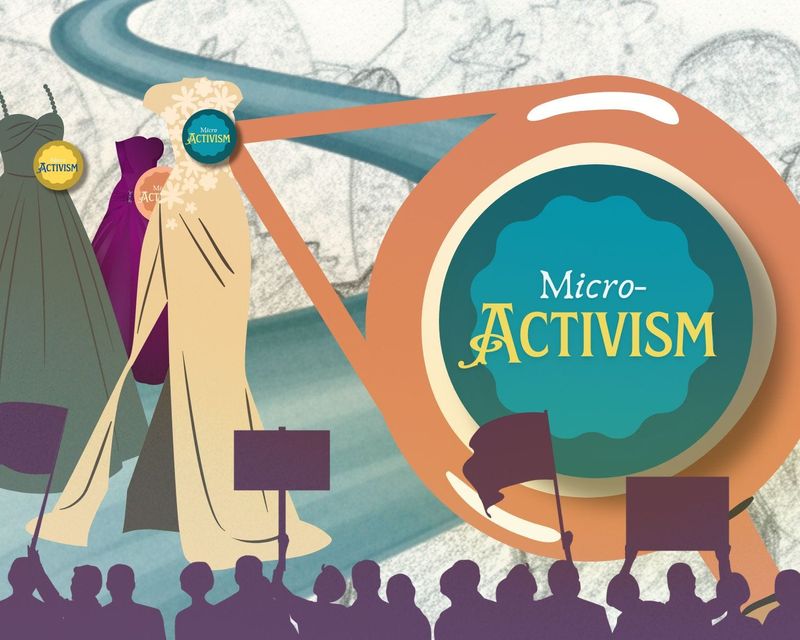
At the Golden Globe Awards on Jan. 11, a number of celebrities, including Ariana Grande, Natasha Lyonne, and Jean Smart, were spotted wearing pins reading “BE GOOD” and “ICE OUT.”

These inconspicuous white pins with black lettering served as a subtle form of activism against Immigration and Customs Enforcement (ICE)’s alleged abuses of power and human rights in the name of immigration enforcement.
With nationwide protests occurring across the country, the question remains: Why are such minimal gestures considered sufficient statements from some of the most influential figures in American pop culture?
Art is meant to challenge dominant ways of thinking and uplift previously silenced voices, and artists have a responsibility to use their platforms to advocate for positive change.
Many people have also deemed these acts of micro-activism insufficient. SNL recently aired a skit called “Teeny Tiny Statement Pin,” which features comically small pins with messages that require extreme magnification to read.
The skit is shot like a commercial, with the characters portraying actors claiming that “with so many complicated issues out there, it’s hard to know when to join the conversation and how.”
The punchline of the skit is “with teeny-tiny statement pins, you can be a teeny-tiny part of the conversation.” The skit concludes with one of these tiny pins falling off and getting lost in the carpet. What makes the skit funny is how accurately it reflects reality.
There seems to be a general consensus among celebrities and popular culture figures to not rock the boat and to only advocate for their values in the most non-invasive method possible.
Still, there are notable examples of celebrities and musicians specifically using their platform for good. Live Aid’s 1985 concert consisted of over 70 groundbreaking artists such as Queen, David Bowie, Paul McCartney, and U2.
The benefit concert raised over $245 million to provide famine relief in Ethiopia. It had a large-scale impact and raised the bar for activism efforts from musical artists on a global scale.
More recently, Ariana Grande’s “One Love Manchester” charity concert featured performers like Coldplay, Katy Perry, Justin Bieber, Miley Cyrus, and more. Together, they raised over $25 million for the British Red Cross. This scale of activism should be the standard.
Mark Ruffalo and the Hadid sisters recently made public statements speaking out against the attacks on Palestine. Social media has also been used by artists like Zara Larsson, Chappell Roan, and Renee Rapp to set the record on where they stand.
It is worth mentioning that there is always the caveat of potential misuse of power.
Because of her impact on Tennessee voter registration back in 2018, there are many posts online speculating that if Taylor Swift had endorsed Kamala Harris’s presidential campaign, the outcome would have been different.
This raises the question of the role of celebrity activism and its influence over the political sphere as we know it. Having a fanbase so loyal they’d follow your every suggestion is, in and of itself, a frightening concept.
The role of celebrity activism should never be to get fans to blindly follow. Instead, it should be to voice personal opinions, provide insight on important issues, and share resources for fans to do their own research.
Activism through lyricism and pins is nice, but people in the public sphere should be held responsible for using their platform for good and to stand up for what they believe in, instead of pandering to the masses or fearing pushback.
At the end of the day, an unreadable statement pin isn’t accomplishing any real change. There is a moral obligation to put your money where your mouth is, and to go beyond expectations, like many great and respectable artists have and continue to do.
Ava Werner is an English major at Florida State University and a Staff Writer for the Views section of the FSView & Florida Flambeau, the student-run, independent online news service for the FSU community. Email our staff at contact@fsview.com.
This article originally appeared on FSU News: Statement pins aren’t enough: The problem of celebrity micro-activism
Reporting by Ava Werner, Staff Writer, FSView / FSU News
USA TODAY Network via Reuters Connect