For five years, Erwin Jackson – a local landlord, businessman and frequent civic activist – has asked the city of Tallahassee to help him keep dozens of electric scooters off his properties.
On April 15, he finally got the city’s pledge to help that he’s been waiting for.

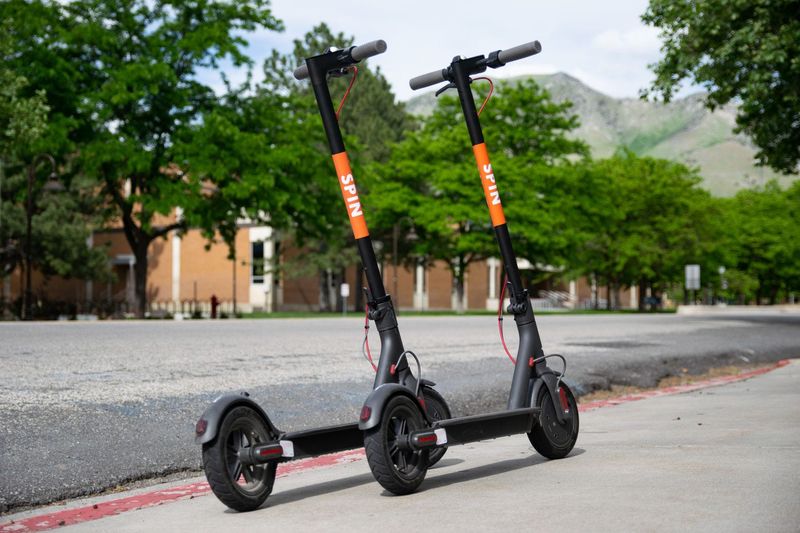
Jackson has come before the city commission a number of times to complain about the e-scooters that litter his properties. He said he’s then left to round up and store them until the companies that rent them out come to retrieve them – which he says has cost him a surprising sum of $1 million.
“I’ve had it with scooters,” he said.
Apparently, so have many Tallahasseeans: Data included in city agenda materials shows ridership has declined precipitously over the last two years. At the same time, there’s still enough users leaving scooters to vex Jackson.
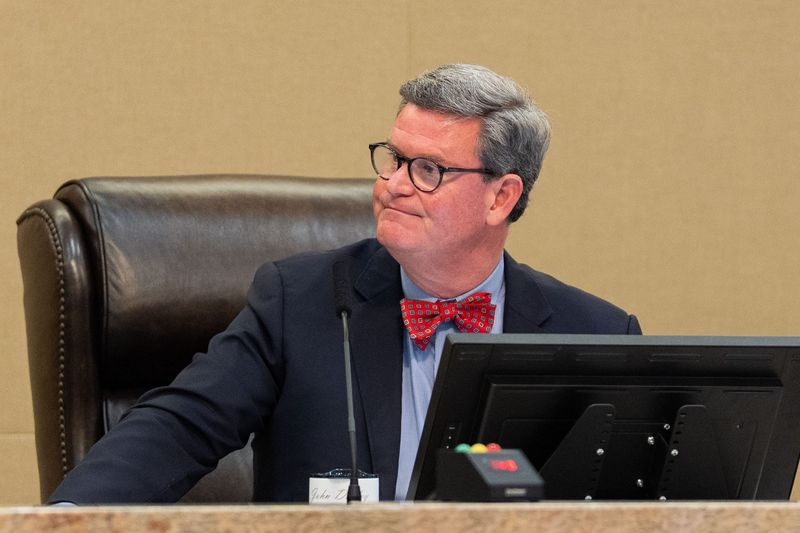
After listening to a status report on the scooters and the situation with Jackson’s property, Tallahassee Mayor John Dailey asked the e-scooter company Spin and city staff to work together to come to a resolution. (Another company, Veo, also provides scooters in the capital city but wasn’t mentioned.)
“Dr. Jackson, I hear you loud and clear,” Dailey said at the commission meeting.
Scooters OK’d in the capital six years ago
The city adopted an official “micromobility” program in 2020, giving e-scooters a permanent place in Tallahassee. Micromobility refers to short-distance trips using small, lightweight vehicles like bikes, e-bikes or scooters, often in urban areas, according to the Federal Highway Administration.
As Tallahassee’s rollout began, Jackson said officials agreed to designate several scooter-free areas across the city, including Cascades Park and local university campuses.
“I don’t want them on my property either,” Jackson said. “The city says it’s a great idea, but then they exempt themselves and they don’t have to deal with these scooters.”
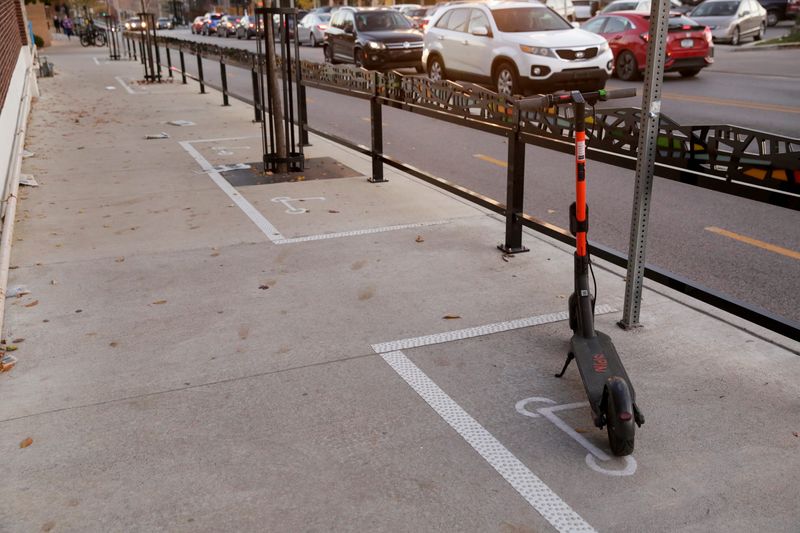
In an effort to smooth out the issue, Dailey asked the city to look into public places the scooters can be parked that are in the vicinity of Jackson’s property and for Spin, the e-scooter company, to continue refining the “geofencing” around Jackson’s properties to keep the scooters from reaching them.
It’s a technology that draws a virtual boundary around a real-world place so software can trigger actions like alerts or restrictions when a GPS-enabled vehicle goes into or out of that zone. Spin uses geofencing to make the scooters shut down when they enter zones the scooters aren’t permitted in.
“Let’s see if we can get creative with some parking facilities on our property around his student housing,” Dailey said. “I think we can come up with a solution.”
Bruno Lopez, Spin’s manager of government partnerships for the East Coast, spoke to commissioners at that same meeting to tout the benefits the company has brought to Tallahassee.
Since the inception of the micromobility program, it has provided 663,870 rides over 822,000 miles and brought in over $650,000 in revenue for the city, the employee said, which is also reflected in city agenda materials.
“We continue to ask for your support,” said. “We think by most metrics in the industry it is pretty clear that the city has taken well to it, and it’s been a successful program.”
Without any help over the years, Jackson said he was forced to create his own solution that has subsequently cost him money he’s hoping to recover.
Jackson wants over $1 million for storing scooters
Jackson pays people to collect any scooters that get left on his property so someone doesn’t trip on or run over them and sue him. In doing this, he’s also incurring expenses to store them and pay for liability insurance.
He also pointed to a stipulation in the agreement between the city and scooter companies that says each day a scooter is on private property, the scooter company must pay $200 per day. Under this stipulation, Jackson says he’s due $1,137,980.
City Commissioner Jeremy Matlow asked when geofencing was applied to Jackson’s property and whether scooters have been left on his property since.
Mike Alfano, the Tallahassee-Leon County planning department director, said the geofencing went into effect in 2024 and that the number of scooters Jackson has encountered “has diminished significantly” since then.
“It’s impossible for the vendor to comply with, ‘Hey, you have to go pickup this scooter,’ when the scooter is being collected and withheld from the vendor,” Alfano said.
A letter provided by Spin to the city says the company believes Jackson is “unlawfully holding their property,” as he is not a licensed tow business and so cannot take the e-scooters and charge a fee for their release.
City Attorney Amy Toman said the city can’t do anything about the money Jackson is seeking to be repaid or impose any penalties or fines on the company for the scooters.
“I believe that’s a legal issue between Dr. Jackson and Spin,” Toman said.
Even though the city declined to intervene, Dailey closed out the discussion assuring Jackson the city would work with him.
“I am a big fan of micromobility,” Dailey said. “I am a fan of the scooters. I do think overall it’s been successful in the CollegeTown (area), but I am very well aware of the issues that you’ve been dealing with and we want to help.”
Rides by the years
Over the last six years, e-scooters have carried residents and visitors to destinations nearly 664,000 times. The number of rides has decreased roughly 43% each year since 2024.
Elena Barrera can be reached at ebarrera@tallahassee.com. Follow her on X: @elenabarreraaa.
This article originally appeared on Tallahassee Democrat: Scooter scofflaw saga sparks city search for solutions
Reporting by Elena Barrera, Tallahassee Democrat / Tallahassee Democrat
USA TODAY Network via Reuters Connect