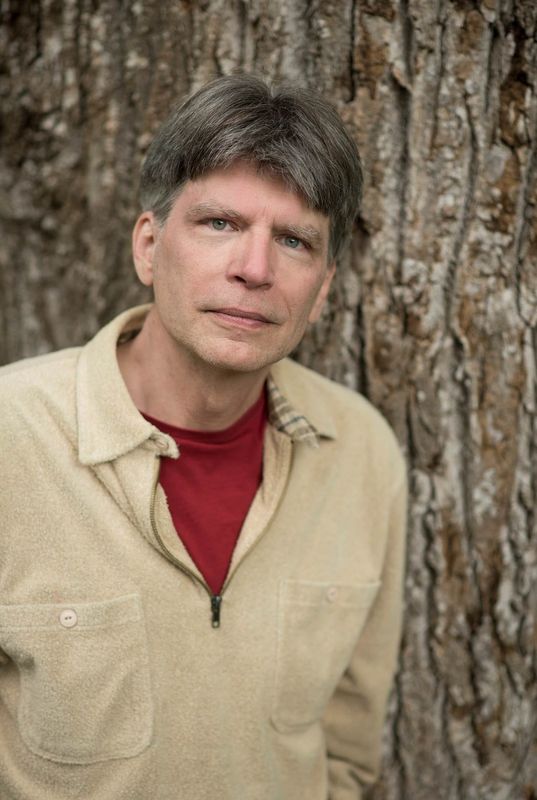
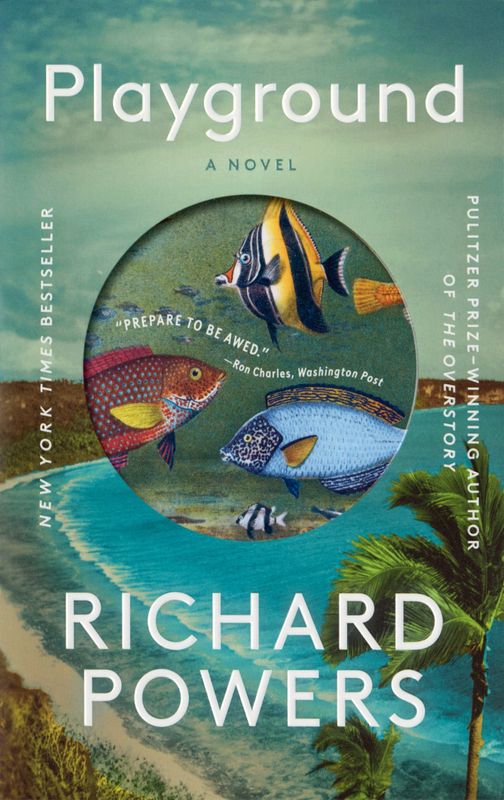
Pulitzer Prize-winning novelist Richard Powers is headed to Tallahassee for the Word of South festival on Sunday, April 26 to discuss his latest novel, “Playground.”
This special appearance is made possible through One Book Tally, the community-wide reading program presented by Let’s Read!, Midtown Reader’s charitable literacy initiative in partnership with the Community Foundation of North Florida.

Let’s Read distributed 2,000 free books this spring through the Leon County library system and Midtown Reader. This year’s selection has sparked community conversations about connection, ecology, and how we understand the world around us.
Powers is the author of 14 novels, including “The Overstory” and is the recipient of a MacArthur Fellowship, the Pulitzer Prize, and the National Book Award.
“Playground” explores the potential colonization of the Pacific as a small island nation debates its role chosen as the base of the adventure. Powers takes on AI, the environment, and shared humanity with this breathtaking work, his characters connected and empathetic.
Midtown Reader manager Caylee Wilson recently received a sneak preview of the conversation audiences can expect. Here’s Wilson’s Q&A with the author:
Q: “Playground” is a book about many things: the ocean, games, death, survival, and love. Why did this feel like the story you wanted to tell?
A: I had a strange feeling when I began to write “Playground” that it might be the last novel I ever get a chance to write. Happily, that has turned out not to be the case. But the pressure of that suspicion was so powerful and so useful. How would I write — what would I write — if this one was going to be my last word?
I have always loved the ocean ever since I started snorkeling in the South China Sea as an 11-year-old. I have been a board game junkie forever, and I spend at least an hour a day trying to keep up with the explosive growth of AI. While writing this book, I found myself thinking: if this is going to be your swan song, try to put together as many of your loves and obsessions into a single last story as you can.
Q: The novel asks readers to think about intelligence in many forms: human, technological, ecological, and even oceanic. How did you approach those different ways of knowing while writing?
A: The brain and body have so many ways of knowing the world, and the more ways that you can bring into that act of triangulation, the richer your experience will be. A big, contrapuntal novel calls upon both the writer and the reader to wear so many kinds of guises: analytical, empirical, skeptical, intuitive, intellectual, impulsive, and emotional.
Q: The islanders of Makatea may have smaller individual storylines, but they round out the novel in such an essential way. How do you see those characters contributing to the book’s larger themes of community and shared responsibility?
A: The Makatea frame of the novel was the first time that I’ve attempted to write a real community story, where each character is part of this larger, aggregate organism, and where the community itself becomes a character of its own. It gave me tremendous, surprise pleasure to watch that island come to life from out of its constituent parts.
Even more pleasing was to see how a community entirely split down the middle by a political issue could still go on functioning as an organic whole. I guess this was a private therapy for me, to write this at a moment in American history when we are all being told that our nearby neighbors are evil and our greatest enemies.
Q: “Playground” feels like a culmination of many ideas you’ve explored in past novels. Do you feel every book you write informs the next one?
A: Freshness is always important, of course, even when I am revisiting themes that have preoccupied me for my entire life. Every book sets its own new terms of style, subject, tone, venue, characters, locale, and structure. Every book raises questions that can only ever be answered in the next book, or the book after that.
If you go
What: A conversation with Richard Powers on “Playground”
When: 2 p.m. Sunday, April 26
Where: Cascades Park as part of Word of South
This article originally appeared on Tallahassee Democrat: A few words with Pulitzer Prize-winning novelist Richard Powers
Reporting by Special to the Tallahassee Democrat, USA TODAY NETWORK – FLORIDA / Tallahassee Democrat
USA TODAY Network via Reuters Connect