I wrote a guest column in the Herald-Tribune in November 2023 lamenting how in my childhood everyday household items – such as a glass mayonnaise jar with a metal lid – were reused and repurposed for a multitude of functions inside and outside the house.
Whereas today we purchase mayonnaise in a single-use plastic container that we empty and discard, a container that in the 1950s would have been sold empty as a reuseable product.

My interest in waste and littering started in 1969 when I published my first editorial as a sixth-grade student at Osprey Elementary School.
This short piece proposed that it was un-American to pollute or litter as it harmed our environment and increased taxes to pay for cleanup.
The piece was simplistic, to the point and timelessly accurate.
It was motivated by a Boy Scout camping trip to Midnight Pass. I saw how the aqua-blue water, endless undeveloped sandy beaches, abundant fisheries and nature-based recreation had been adulterated by litter.
That disturbed me greatly.
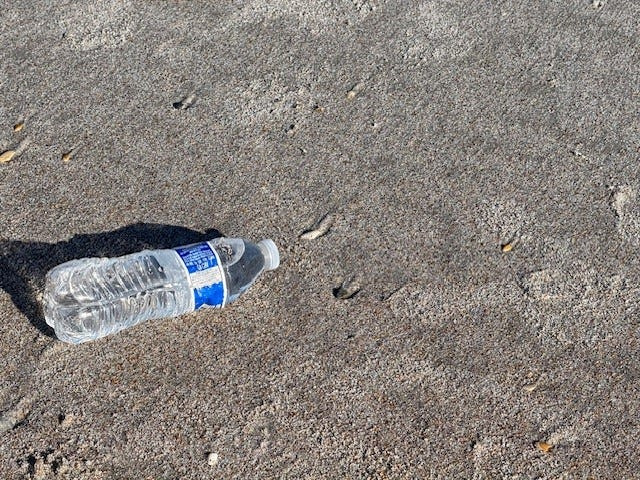
Little did I, or anyone at the time, understand that the plastic litter insulting the aesthetic beauty of our natural environments would one day account for roughly 80% of the litter in our Gulf – and break down to become the covert killer we now know as microplastics.
We’ve known for years that microplastics are problematic, but more and more studies continue to emphasize just how much of an impact they are having on the natural environment and our health.
Microplastics still threaten our environment
Microplastics are extremely persistent and almost impossible to remove from environments where they accumulate. Due to their persistence – and the chemicals they are made of – studies suggest they can be highly detrimental to the living organisms they encounter.
Microplastics cause widespread environmental damage by contaminating ecosystems, harming aquatic and terrestrial life, and entering the food chain. They damage marine ecosystems by causing ingestion, entanglement and toxicity in marine life resulting in reduced biodiversity.
According to Dr. Randy Wells, who directs the Sarasota Dolphin Research Program – the world’s longest-running dolphin conservation research program – “microplastics have been found in every Sarasota dolphin breath sample and nearly every gastric and fecal sample collected to date. The breath samples indicate inhalation as a vector for these microplastics, and the gastric and fecal samples, suggest ingestion as another vector, further supported by findings of microplastics in their prey fish.”
Mind you, this is the same air that we breathe – and the same fish that we eat.
Dr. Wells went on to say that scientists “are still figuring out the health impacts of microplastics on dolphins, but laboratory research suggests they may irritate the gut, impact metabolism and cause inflammation in the organs and tissues where they are found.”
These conditions are often linked to serious, chronic and sometimes fatal diseases – including cancer, diabetes, Crohn’s, ulcers, Alzheimer’s and premature aging in humans.
When I published my 1969 editorial as a sixth grader, the rapid growth in the plastics industry was just beginning. The shift had begun from less toxic natural materials to the now-ubiquitous synthetic alternatives with significant environmental consequences.
But here’s the real problem:
In 1960, the world produced 8 million metric tons of plastic annually. Today that number is more than 300 million metric tons!
As it takes many years for plastic litter to degrade into microplastics, today’s harmful and sometimes deadly microplastic levels are just the tip of the iceberg.
The pipeline for creating microplastic is in overdrive and the microplastic levels in years to come will be devastating.
In the meantime, Sarasota’s marine life faces immediate, lethal and long-term sub-lethal consequences from plastic.
The threats include ingesting plastics that are mistaken for food, dying from entanglement in plastic debris and developing plasticosis – a disease where ingested plastic shards cause extensive scarring in the stomach linings of seabirds.
For those of us who consider economics a necessary factor in the thought process, the financial cost of plastic litter to the United States marine environment and economy ranges from approximately $436 billion to $1.1 trillion per year.
And plastic pollution in Florida’s marine environment is estimated to cost the state $7 billion annually in lost tourism dollars alone.
The future economic cost of microplastics is a debt yet to be seen.
Time for moderation
I’m not one to advocate for extremes, but I do believe in moderation.
There is no good reason to have individual products packaged in a single-use plastic container.
Or repackaged in a larger single-use plastic container.
Or for such products to be carried from the store in a single-use plastic bag.
We can do better than this.
Plastics are here to stay, and they do create products that improve our quality of life.
But the production, transportation and use of plastics have become bizarrely excessive, and our purchasing habits are driving the excess.
As consumers we can advocate for change by prioritizing reusable containers, purchasing alternatives to plastic containers and dutifully recycling the plastic that we do buy.
It’s a small investment with huge rewards, especially for our sea turtles, dolphins and manatees.
And for our children.
Jon Thaxton is a fifth-generation Sarasotan who served three-terms as a Sarasota County commissioner. He has been a lifelong conservation and water quality activist, and he currently servs as director of policy and advocacy with Gulf Coast Community Foundation.
This article originally appeared on Sarasota Herald-Tribune: Sarasota is awash in plastic. It’s time for a new approach | Opinion
Reporting by Jon Thaxton Guest columnist, Sarasota Herald-Tribune / Sarasota Herald-Tribune
USA TODAY Network via Reuters Connect