Wow, has it really been six months since the possibility was dangled out there?
We’re now officially into May, and the tease came last November, so yep, six months. And now, word on the street — and, better yet, around the docks and boat ramps — says we’re oh-so-close to an official casting of common sense into the South Atlantic’s red snapper situation.

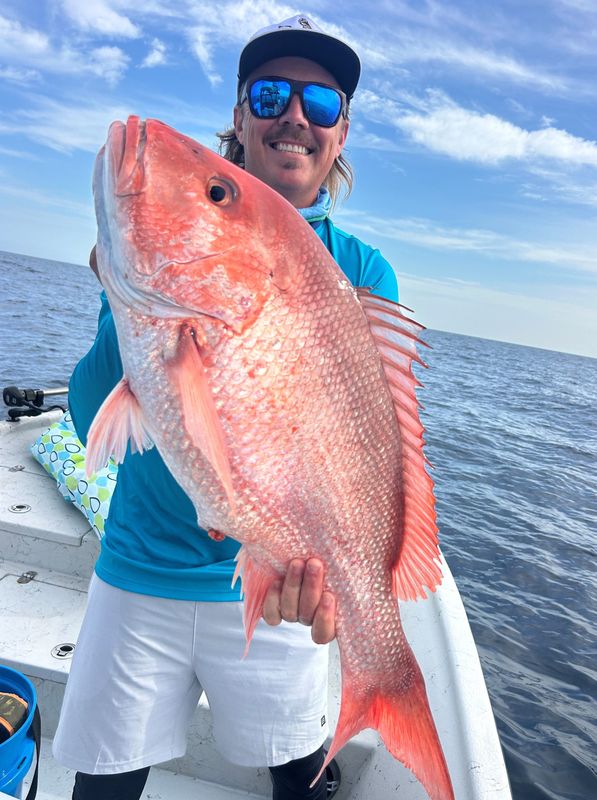
Last November, Florida Governor Ron DeSantis visited Fernandina Beach, just north of Jacksonville, to tout a proposed new “season” of red snapper harvesting that was actually seasonish with a few mini-seasons (long weekends, actually) included, bringing the number of legal snapper fishing days to 39, which doesn’t sound huge but is actually 37 or 38 days more than recent years.
For a decade, fishing for red snapper off our Atlantic Coast has been governed with heavy hands of the feds (NOAA and the South Atlantic Fishery Management Council). Most years, a couple midsummer weekend days were set aside for legal harvesting, and it created crazy caravans out to the productive offshore fishing holes.
All in the name of helping replenish the population of red snapper off our coast. Cue the laugh track from an offshore crowd that suggests if red snapper were any more plentiful, they’d unionize and demand reparations for all of their kin who were pardoned and released back to the sharks in recent years.
When Gov. DeSantis first broke the news, he talked about a one-month snapper season from May 22 to June 20, followed by three long weekends in October (three-day mini-seasons). Those 39 days are nothing compared to the 126 days of snapper fishing on the state’s Gulf side last year — similar to previous years — but compared to one or two days, it’s a gold rush.
Nope, this doesn’t affect the vast majority of anglers at all, just the offshore crowd. But it’s a long-awaited reprieve from the pressures of the bureaucratic thumb, and anytime that comes about — particularly when it’s warranted, of course — we should all celebrate.
Halifax/Indian River
More good news coming in about the snook population, which didn’t take as big a blow as feared during our freezes in January and February.
Anecdotally, anyway. There’s been no official head count. If an official FWC study commences, it’ll come later.
But for now, through much or maybe even most of the local intracoastal, reports are good.
“Snook, snook and more snook,” says Ike Leary, who operates the Granada Bait shop on the west side of the big bridge in Ormond Beach.
Last week, kayak angler Blake Abbey sent along word of thick schools of snook in the Tomoka River, though all under the legal slot of 28-32 inches. That narrow slot, along with a daily bag limit of one per angler, seems to have worked well over the recent years.
Overall this past week, things have picked up with the softening of the winds.
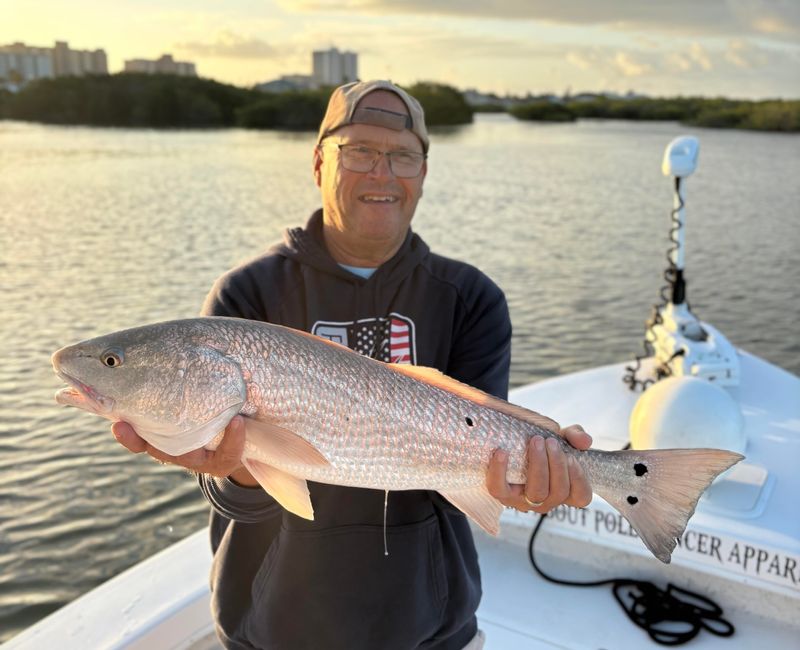
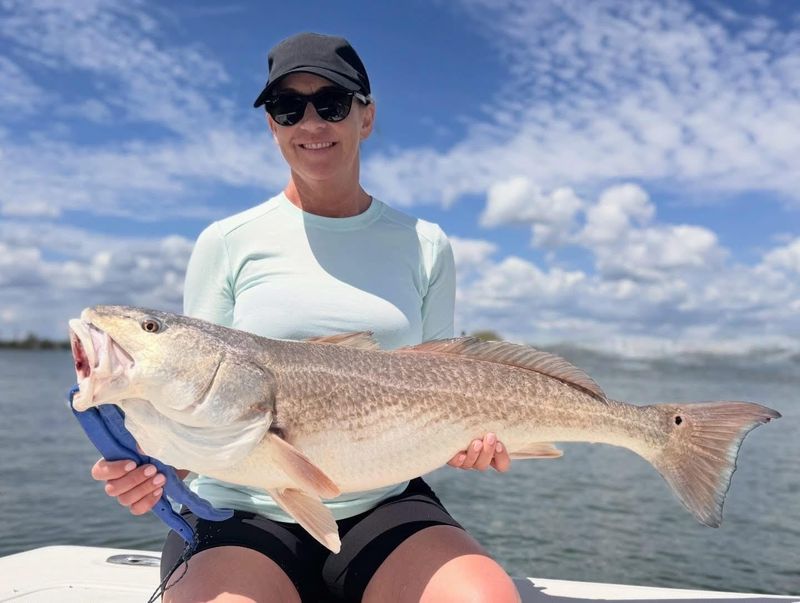
“Awesome conditions in the mornings, and they’ve been pretty fishy,” Capt. Jeff Patterson (Pole Dancer) says. “Redfish, seatrout and snook (there they are again!) have been biting pretty good.”
Capt. Jeff says live mullet have been working best, and that’s practically a universal truth year-round if you can get ’em. Incoming tide has been best, and expect that tidal flow to pick up with today’s full Flower Moon on the rise.
“The bite has been slow, but I’m still getting redfish and some trout, with an accidental snook bite (yet again!),” Capt. Billy Pettigrew says.
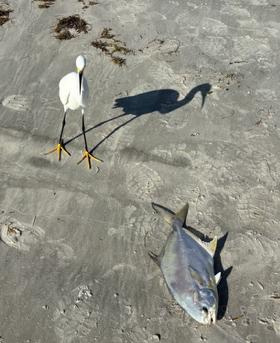
There are reports of pompano coming inshore and hanging out in deeper holes, while the jacks are currently in one of their mood swings when they go from starving to downright ravenous.
Surf
The payoff might’ve finally arrived, with seaweed subsiding and giving way to a slightly delayed rush of big springtime pompano and other marquee makes — black drum, reds, etc.
Marco Pompano calls the bigger pomps “slabs,” and he’s been finding some on the other end of the handful of lines he keeps in the water.
“All the weeds are finally away, and big pompano have returned,” Marco reported midweek. “The ocean is greenish-blue, hardly any wind out of the Southeast. I hope it stays like this for a while.”
Pssst … it never does, which is why it’s so enjoyable when things are perfect.
St. Johns
It’s BYOC time at South Moon Fish Camp in Astor.
And the C stands for crickets.
South Moon’s owner-operator, Kerry McPherson, has his annual gang visiting from the Macon area, bedding down in his efficiencies and spending their days on the water, raising hell with the local bluegill contingent, largely using worms and, yes, crickets.
Except …
“The new breed of cricket, they’re so small, I lose money trying to sell ’em,” Kerry says, “so I tell everybody to bring their own.”
The old style of brown cricket, once so common in bait shops, died out due to disease, and they’ve been replaced by banded crickets, which have their advantages (they survive shipping better, for instance) but also disadvantages — according to Kerry, at least.
“Small and brittle,” he says.
Elsewhere, he says he has folks doing well on specks around structure, and the striped bass have been really good — except when they’re not, which usually coincides with stronger east winds backing up the water flow.
“Hit and miss,” he says.
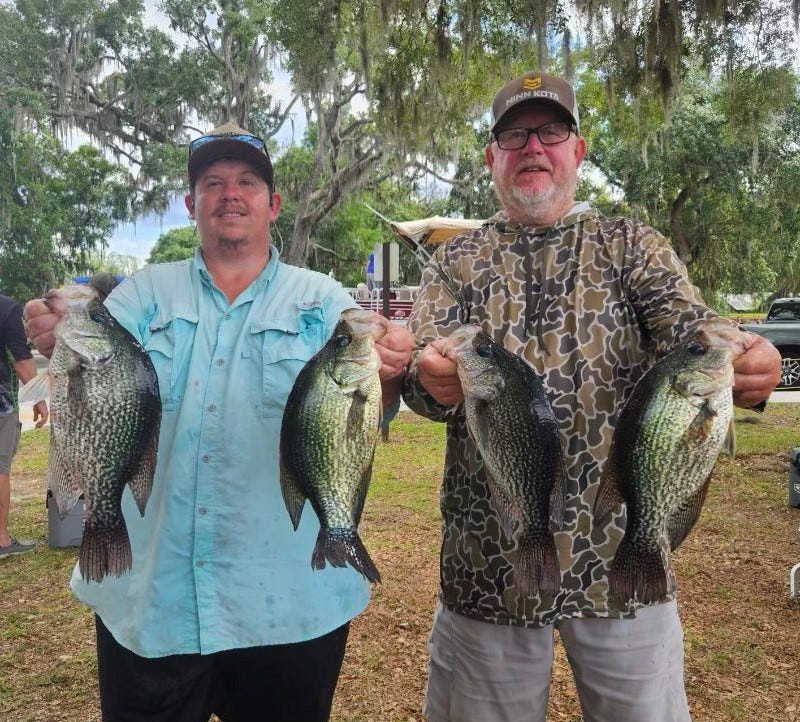
Back to specks, Capt. Don McCormick sent along word of a second-place finish for himself and Brian Hunter in the Florida Crappie Trail’s state tournament last weekend — one day on the St. Johns, one on Lake Crescent.
They brought home several plaques for largest fish and heaviest overall bags, but missed overall first place by a third of a pound.
Halifax Sport Fishing Club
This month’s gathering of the HSFC (May 21) will be a little busier than usual. The monthly seminar chore falls to Dustin Smith of NSB Shark Hunters, who’ll be joined by Matt Liberto (Fun Coast Fishing) to talk land-based shark fishing. There’s more to it than your trusty spinning reel, No. 2 hook and a shrimp, as you might imagine.
Prior to that, there’ll be a how-to on kayak fishing, with kayaking club members providing tips for those of you who often see anglers on kayaks and think, “That looks like fun.”
The kayak demo begins at 6 p.m., followed by a short “business” meeting at 7 and the shark talk around 7:30. As always, it’s free and open to all. The HSFC is at 3431 S. Ridgewood in Port Orange. More info: HSFC.com.
Hook, line and clicker: Send us your fish pics
We want to see your most recent catch. Email your fish photos to ken.willis@news-jrnl.com.
Please include first and last name of angler(s), as well as type of fish (we’re occasionally stumped). Some may be used in print, but all appear in the online version of the fishing roundup.
Do I need a fishing license?
You can find all the license info, including exemptions, on Florida’s Fish and Wildlife Commission website: MyFWC.com. But the basics are: No: If you’re 65 or older, 15 or younger, you don’t need a license. “Probably” Not: If you’re fishing with a licensed guide or charter boat, both of which often purchase commercial licenses that cover their customers. Yes: Most everyone else, including visitors from other states. Yes: Even if you’re a shore-based angler (shoreline, dock, pier, bridge, etc.), and even if fishing with a shore-based guide. However: The shore-based license is free . . . But: You still need to register for that free license.
Where do I get a license and what does it cost?
Many bait shops sell licenses, as do the bigger retailers (Bass, Dick’s, Walmart, etc.). Florida’s FWC uses a third-party site for buying or renewing fishing licenses: GoOutdoorsFlorida.com. The cost: $17 for an annual license. Don’t forget: Whether you’re fishing fresh or saltwater, you need the specific license. Freshwater and saltwater licenses are both $17 annually.
I’m here on vacation, do I need a license?
Yes you do, and some are available at GoOutdoorsFlorida.com, but what you need probably isn’t. Short-term: Three-day ($17) and seven-day ($30) licenses are no longer available online, but only at local tax-collector offices and many bait shops. Long-term: The yearly visitor pass is still available online for $47. “Some” exceptions: If you’re fishing on a charter boat (saltwater only), that guide should have a license that covers all his clients. If you’re hiring a shore-based guide, no such coverage exists and you must go purchase a license.
What if I get caught fishing without a license?
Florida residents: First-time violation is usually $50, plus the cost of the license you should’ve had. Non-residents: Fines range from $100-250, plus cost of license. Both go up exponentially with future violations.
This article originally appeared on The Daytona Beach News-Journal: Red snapper relief, promised earlier, might be announced very soon in Florida
Reporting by Ken Willis, Daytona Beach News-Journal / The Daytona Beach News-Journal
USA TODAY Network via Reuters Connect