It was a busy year for Palm Beach officials and Town Hall Staff as they continued reforming the town’s aging zoning code.
Staff members over the past two years have steadily drafted ordinances under the guidance of the Planning and Zoning Commission as well as the Town Council to revamp and update zoning regulations, which were originally codified in 1974.

Here’s a review of the most notable changes approved during the recent Palm Beach season.
Streamlining the renovation process for landmarked houses
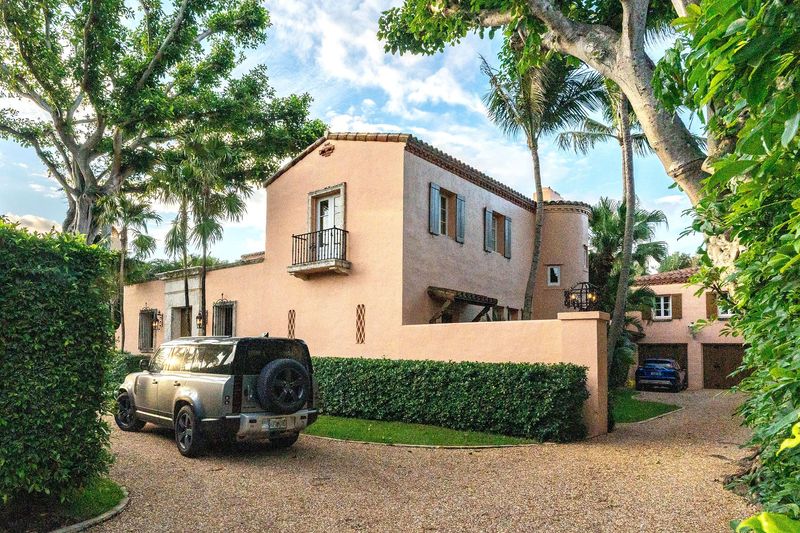
Among the most notable updates to the zoning code was an ordinance passed by the council in December to change the language regulating landmarked homes and ease the process for renovating those properties through a “landmark adjustment” request system.
A landmark adjustment is a type of waiver that allows owners of landmarks to exceed certain zoning-code thresholds — including minimum requirements for open space, side setbacks, rear setbacks and building height — without having to apply for a variance to the code.
The adjustments were needed because many historic houses — built long before the town adopted its zoning code — do not conform to current regulations, according to Town Hall staff.
Under the waiver system, homeowners can list all of a property’s “nonconformities” to the zoning code in a single waiver request, said the town’s Design and Preservation Manager Friederike Mittner during a November town council meeting.
Previously, property owners had to submit a separate application for each requested zoning variance.
The waivers are reviewed by the Landmarks Preservation Board in a hearing. Neighbors within a specific distance from the property must be notified about the waivers and the hearing.
Unlike the previous system for renovating landmarked homes, the building proposal no longer appears on the Town Council’s regular agenda. The adjustments are instead placed on the council’s consent agenda, which can be approved without discussion.
New guardrails for North End residential developments
Approved by the Town Council during its March 4 meeting, a new law adds an extra level of scrutiny for North End property owners who want to build a home 5 feet closer to the street than the zoning code allows.
Before the law was passed, property owners were allowed to make such a move, as long as the backyard was increased by the same amount.
But now, property owners who want to build a home closer to the street must apply for a waiver, which requires notices to be sent to neighbors detailing the proposed placement of the house.
The property owners also are required to get the go-ahead from either the Landmarks Preservation Commission or the Architectural Commission, according to the ordinance.
For the waiver request to be granted, applicants must satisfy the ordinance’s four criteria:
New law gives zoning relief for small lots
One of the earliest code changes enacted this season, this law removes the town’s requirement that the Town Council review site plans for buildings on historically platted nonconforming lots. Nonconforming lots are those that are smaller than the standard lot size set by the town’s zoning code.
Under the law passed by the council in October, those projects now follow the town’s standard procedure and only need approval from the Architectural Commission or the Landmarks Preservation Commission.
Law would allow estates to have two guesthouses
An ordinance likely to be passed by the Town Council in May would allow estate owners to have two guesthouses on their properties.
The ordinance, which received the council’s initial approval during its April 15 meeting, would allow owners of lots roughly 1.4 acres or larger to build a pair of guesthouses.
The law would also allow qualifying property owners to build an additional guesthouse, should the property already have one.
Property owners are currently required to seek a variance if they want to build an additional guesthouse. But under the new law, those property owners would simply earn approval through the town’s standard design-review process.
The only catch? The guesthouse could not be tied to any variance request.
Town Council likely to OK changes to awning signage rules
Another law likely to be codified in May would allow some business-identification signs to be displayed on the lower skirt, or valance, of an awning.
The law, which was unanimously advanced by the Town Council during its April 14 meeting, would replace current restrictions on awning signage with a waiver process overseen by the town’s design boards.
Town hall staff say the change would simplify the design-review process while still retaining robust oversight of the awning signage along commercial corridors.
Under the law, signage would be limited to one line of text identifying the business, with lettering limited to 7 inches in height and covering no more than a quarter of the awning’s length.
Businesses would be limited to one street-front awning sign, and the signage would only be allowed on the first floor.
If the signage is approved by a design board, the request would be placed on the Town Council’s consent agenda.
The law would require signage to be visually compatible with the building and its surroundings and be painted or sewn directly onto the awning. Signage could not contribute to visual “overcrowding” and must comply with existing business identification sign limits under the town code.
Diego Diaz Lasa is a journalist at the Palm Beach Daily News, part of the USA TODAY Florida Network. You can reach him at dlasa@pbdailynews.com.
This article originally appeared on Palm Beach Daily News: Palm Beach officials continued reforming zoning code this season
Reporting by Diego Diaz Lasa, Palm Beach Daily News / Palm Beach Daily News
USA TODAY Network via Reuters Connect