Jurors in the Jowarn Micquel Mitchell murder trial were deadlocked on July 17, so the judge declared a mistrial.
That means the case will be set for trial again. It will be the fifth time the court tries to start and complete a trial in this case.

Here’s what we know:
Who was the judge? Circuit Judge Peter Brigham.
The lawyers? Defending Mitchell were Brice Aikens and Winder Saint-Cyr. Assistant State Attorney Meredith Poisson prosecuted the case.
Charge: Second-degree murder with a firearm.
About the case: On July 20, 2023, Marion County Sheriff’s deputies went to the 6500 block of Southeast 41st Court in reference to a shooting.
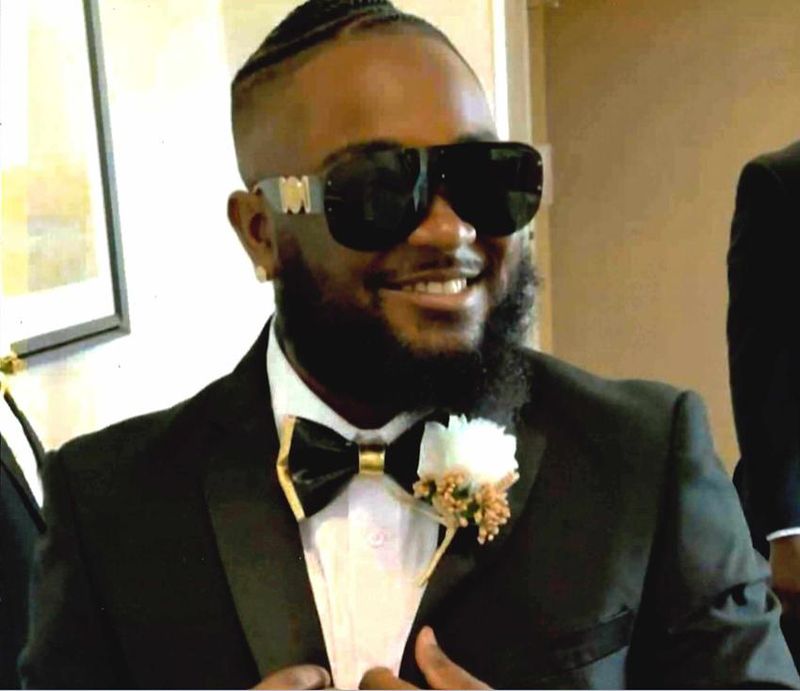
Arriving at the location, deputies found the defendant’s cousin Quentin Samuel Jr., 34, in front of the residence and suffering from multiple gunshot wounds. Samuel lived at the home with his wife and children, authorities said.
Mitchell was considered a person of interest and detained in a traffic stop. After interviewing him, sheriff’s officials released Mitchell.
The investigation continued. Detectives arrested Mitchell in October 2023, charging him in Samuel’s death.
Sheriff’s detectives said they could prove Mitchell was at the scene at the time of the shooting. They said other information, such as GPS locations extracted from Mitchell’s cellphone, linked him to the shooting death.
How long was the trial? It started with jury selection on July 13.
How many people were on the jury? Six: four men and two women. An alternate was allowed to leave before deliberations.
Was Mitchell, 27, in or out of jail? In jail since his arrest.
If convicted, what’s the sentence? Up to life in prison.
Was there a plea offer? No.
What happened at the start of the trial? July 14 began with opening statements. Prosecutor Poisson told the court Samuel was shot multiple times by Mitchell.
She said a truck belonging to the defendant’s father was seen by Samuel’s father, who lives nearby, leaving the victim’s residence.
She said evidence obtained by sheriff’s officials showed the pickup was at the crime scene at the time of the shooting.
In its opening statement, the defense said there’s no gun in evidence linking Mitchell to the shooting. Defense attorney Aikens said that before leaving his parents’ residence to go get some food and fix a tire, Mitchell was not angry.
Which witnesses testified? Samuel’s wife described coming from work and seeing her husband at the front of the home unresponsive.
The victim’s father told the court he saw the pickup truck leaving the area by his son’s residence. Cross-examined by the defense, Samuel’s father said though he saw the truck, he did not see who was driving.
On July 15, the medical examiner who performed the autopsy said Samuel was shot more than six times, and the manner of death was homicide.
Cross-examined by the defense, the doctor said no fingernail scrapings were taken, and the distance between the victim and the shooter was not determined.
The prosecutor showed the jury a video of Mitchell’s traffic stop. Aside from a cellphone taken from the vehicle, no other items were collected by a deputy, according to testimony presented in court. The arrest was peaceful, the deputy said.
Poisson finished her case on July 16. Before closing, the prosecutor called a phone expert and Lead Detective Sgt. Kip Peterson to the witness stand.
Poisson said Mitchell was the one who shot and killed Samuel and drove away from the scene. She said though Mitchell had left his residence in his father’s truck saying he was going to get food and fix a tire, he never did either of those things.
Countering the state’s argument, the defense asked the witnesses if the murder weapon was found. No. Did anyone see the defendant driving the truck? Was there any fingerprint or DNA evidence proving the defendant was responsible for Samuel’s death? Again the answers were no.
After the state rested its case, the court denied a defense request for a judgment of acquittal. The defense rested without calling any witnesses.
Jurors were sent home for the day and told to report on July 17 at 10 a.m. for closing arguments, jury instructions and deliberations.
Closing arguments: Prosecutor Poisson told the court that the doctor who performed the autopsy determined that Samuel was shot at least 10 times. She said two of the gunshots, one to the head the other to the chest, were kill shots. The prosecutor indicated those shots were intentional. She said the shots were fired from the same firearm.
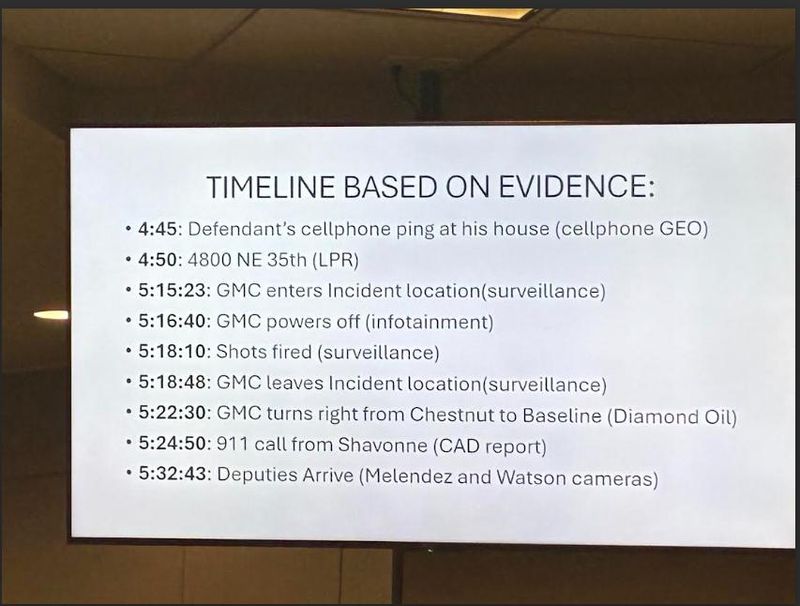
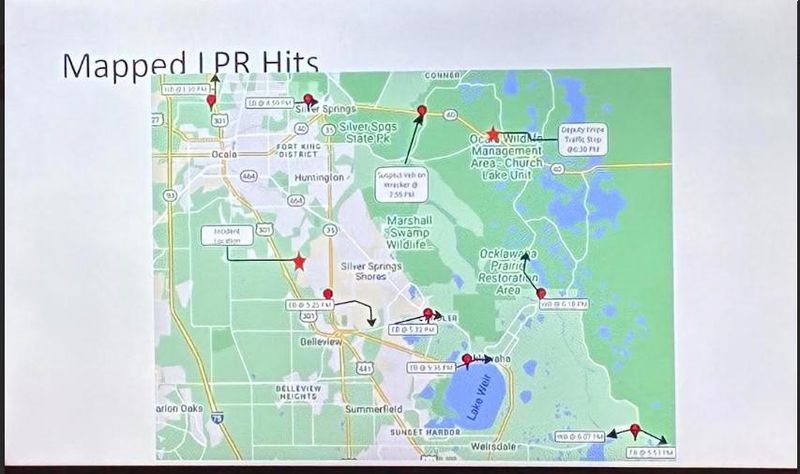
Poisson said the state presented layers of evidence, such as the defendant’s interview with a sheriff’s detective and data outlining his travel. All that combined to prove Mitchell was at Samuel’s residence, shot his cousin, and then drove away.
For the defense, Aikens said the state had not proven its case. He said there’s no DNA or fingerprints implicating his client. No murder weapon was produced. There was no testimony showing his client and the victim were angry with each other.
Aikens said no one saw Mitchell at the scene. He said law enforcement failed to test all of the evidence collected from the scene. He said those basic failures were a result of detectives having tunnel vision.
As for the various technologies used to show where the vehicle traveled, the defense lawyer said the movements weren’t continuous.
On rebuttal, the prosecution said the defense used distractions to confuse. From a chart, the prosecutor game a timeline of the evidence that traced from the time Mitchell left his home to when deputies arrived at the crime scene.
As for not having a weapon or a motive: Poisson said it’s not a requirement for the state, and it’s not part of the jury instructions.
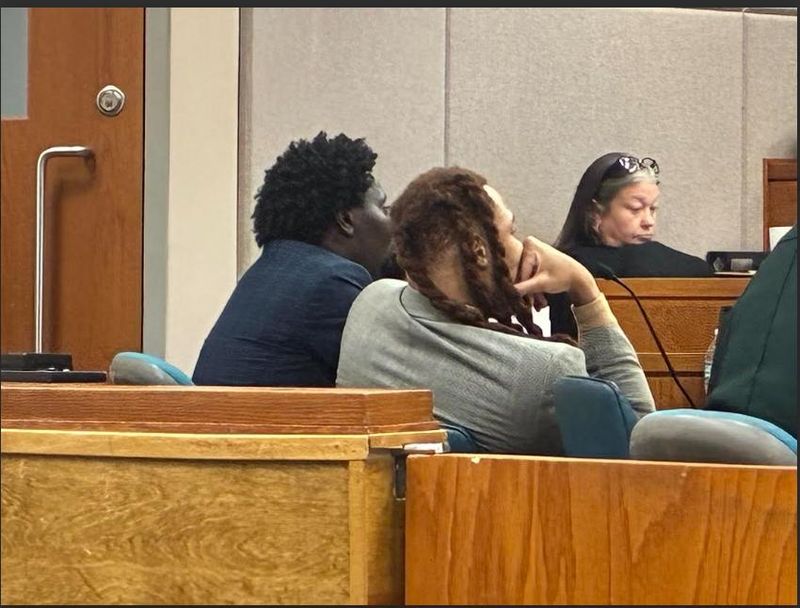
Deliberations: The judge dismissed the alternate juror, a woman, after reading the jury instructions at 12:06 p.m. Three minutes later, jurors went to the back to deliberate.
It was the first time the jury had the opportunity to bring their notes with them. Jurors had to leave their notes on their seats each time they had a break or at the end of the day. The judge told them that their notes will be destroyed after their verdict.
During the jury’s deliberations, they had to give their electronics to a bailiff, who placed them on the witness chair for safe keeping.
Evidence presented at trial went to the back with the jury at 12:11 p.m. At 12:55 p.m., jurors asked to watch a security video of Samuel’s driveway, where gunshots could be heard in the background. They returned to their deliberations after viewing the footage.
At 2:49 p.m., the jury had a question: What should they do if they can’t come to a unanimous conclusion?
The judge brought the jurors back to the courtroom and read them two instructions. The first stated, in part, that whatever decision they reach must be unanimous.
The second instruction was about jury deadlock. If they like, they could go to the back and see if they could talk about it some more.
The jurors agreed to go to the back and discuss the case again.
By 3:40 p.m., the jury signaled it couldn’t reach a unanimous verdict. The judge declared a mistrial and jurors were dismissed at 3:49 p.m.
What’s next? The case must be tried within 90 days. After speaking with the attorneys, the judge set a pre-trial date of Aug. 20 at 9 a.m.
What were the reasons for the earlier reschedulings? The first time the trial was postponed was in late 2025, when two of the seven jurors selected to hear the hear the case told the court they knew the victim’s family members. The second time, lawyers disagreed about a witness and the judge granted more time. The third delay was because the judge was ill.
Contact Austin L. Miller at austin.miller@starbanner.com
This article originally appeared on Ocala Star-Banner: Ocala jury deadlocks in murder trial. What happens next? | Exclusive
Reporting by Austin L. Miller, Ocala Star-Banner / Ocala Star-Banner
USA TODAY Network via Reuters Connect
By Austin L. Miller, Ocala Star-Banner | USA TODAY Network