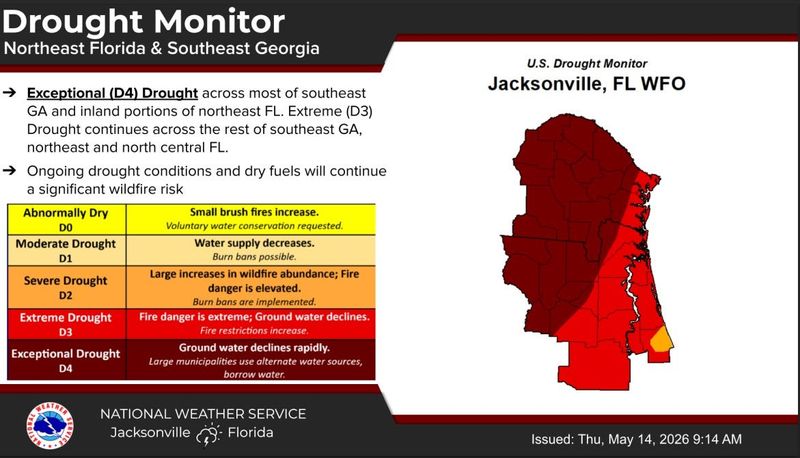
Despite several days of rain across the Jacksonville area, Northeast Florida remains under extreme to exceptional drought conditions, prompting regional water managers to impose stricter conservation measures.
Much of Northeast Florida is now under a Phase III Extreme Water Shortage Declaration after months of unusually dry weather, declining groundwater levels, and reduced river flows strained water resources across the region.

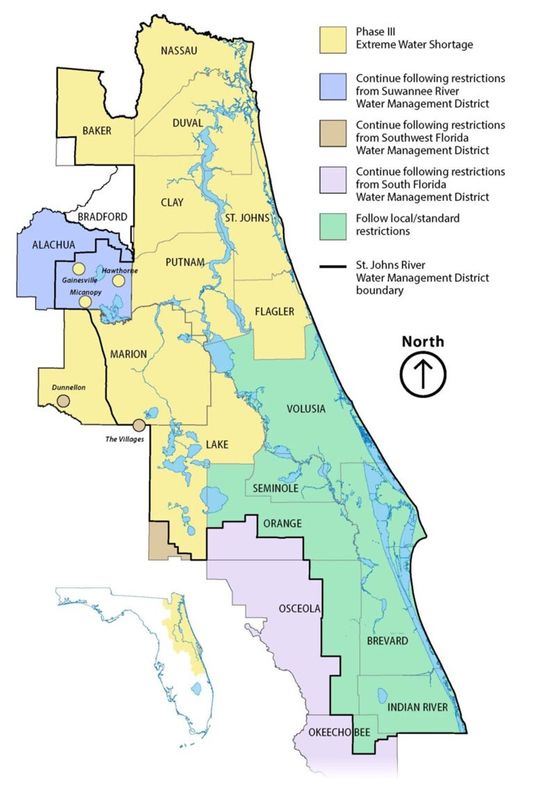
The declaration, issued May 11 by the St. Johns River Water Management District, applies to Duval, St. Johns, Clay, Nassau, Flagler and Putnam counties, along with portions of several other counties within the district’s jurisdiction.
Here’s what the Phase III water shortage declaration means for residents and what to know about the new restrictions now in effect.
Why is Northeast Florida under a phase III water shortage declaration?
The region is experiencing severe drought conditions caused by below-average rainfall, declining groundwater supplies, and reduced river flows. According to the U.S. Drought Monitor, the affected counties are currently classified under Extreme Drought (D3) conditions, the highest level of drought coverage Florida has seen since national monitoring began in 2000.
Water managers say these conditions are placing significant stress on the region’s water resources and aquifer systems.
Water restrictions across Clay, Duval, Flagler, Nassau, Putnam, and St. Johns counties. What are residents allowed and not allowed to do?
According to a Phase III Extreme Water Shortage Declaration issued by St. Johns River Water Management District (SJRWMD), the water shortage order prohibits wasteful or unnecessary water use. Residents, businesses, agricultural operations, and property managers are encouraged to reduce consumption now in case additional restrictions become necessary if dry conditions continue.
Restrictions under the phase III extreme water shortage declaration:
Restrictions also apply to:
The restrictions apply to water from:
Reclaimed water is exempt from the one-day irrigation schedule.
See map of impacted counties by phase III extreme water shortage declaration
Why is lawn irrigation and outdoor water use currently restricted?
Outdoor irrigation is typically the largest source of residential water use. Officials say reducing unnecessary watering is one of the fastest ways residents can help conserve water during the drought.
“Water conservation plays an important role in protecting our aquifer and maintaining reliable service for our community,” said Neal Shinkre, Director of the St. Johns County Utilities Department. “Small actions like adjusting irrigation schedules, checking irrigation systems for leaks, and watering only when necessary can make a meaningful difference during dry periods.”
When will it rain in Jacksonville again?
According to the National Weather Service, there’s a 20 percent chance of afternoon showers and thunderstorms in Jacksonville on Sunday, with that chance decreasing to 10 percent before 8 p.m.
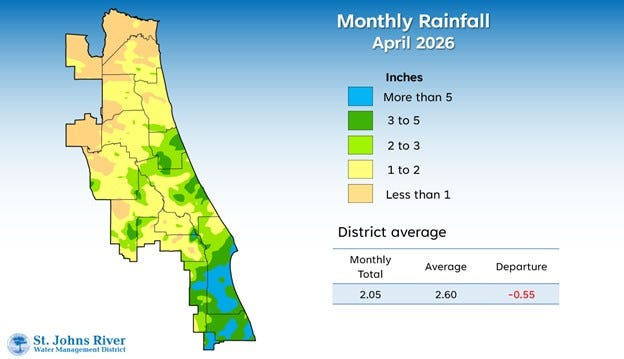
Monthly rainfall amounts for April 2026
How can residents reduce water use through Florida-friendly landscaping practices?
Officials encourage residents to adopt Florida-Friendly Landscaping practices, including:
According to a release, the St. Johns County Utilities Department says it is continuing long-term investments in reclaimed water infrastructure to reduce demand on drinking water supplies. Meanwhile, regional water managers will continue monitoring rainfall, groundwater levels, and river flows to determine whether stricter conservation measures may be needed.
To learn more information about irrigation schedules, water conservation tips, and reclaimed water is available at St. Johns County Utilities Department.
Doris Alvarez is a Breaking and Trending Reporter for The Florida Times-Union. You can get all of Jacksonville’s best content directly in your inbox each weekday by signing up for the free Daily Briefing and News Alerts newsletters at jacksonville.com/newsletters.
This article originally appeared on Florida Times-Union: Northeast Florida drought: What new water restrictions mean for you
Reporting by Doris Alvarez Cea, Jacksonville Florida Times-Union / Florida Times-Union
USA TODAY Network via Reuters Connect