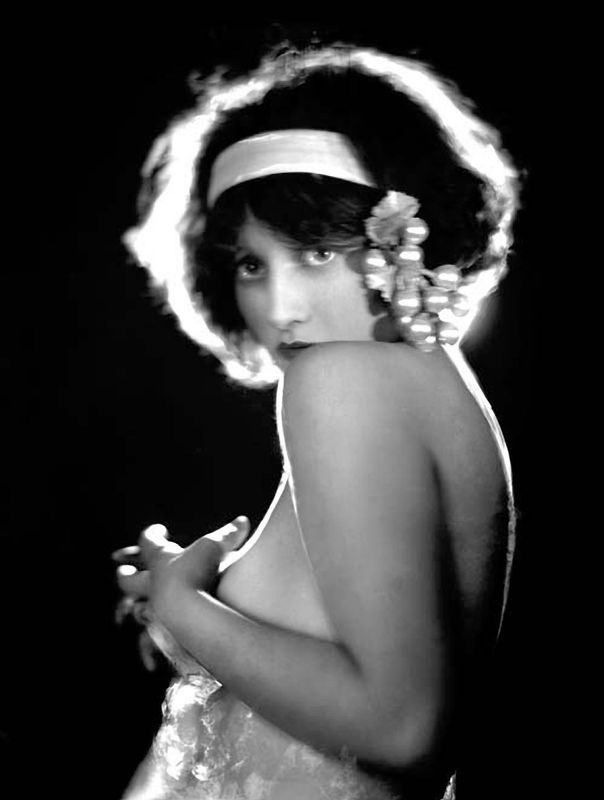
The broad shoulders, the arched eyebrows, the big eyes capable of expressing an ocean of emotion — those belonged to a Texas beauty who went by many names.
Born Lucille LeSueur in 1905 or 1906 (no one is sure), she called herself “Billie,” a boyish name to suit her strong body, tousled auburn hair and freckles. Her last name became “Cassin” when her mother married a third time.

But “Billie Cassin” was too plain a name for the woman with the mesmerizing eyes.
MGM’s Louis B. Mayer knew star quality when he saw it. In 1924, MGM signed Lucille/Billie to a movie contract for $75 a week. The next year, the world met a woman it would never forget: “Joan Crawford.”
Today, Crawford’s name may seem as tarnished as an old wire hanger, thanks to “Mommie Dearest,” the book her adopted daughter, Christina, wrote about her in 1978. A few years later, the book became a camp-fest of a movie starring Faye Dunaway.
The pop-culture caricature continued in 2017, when the FX series “Feud: Bette and Joan” played up the cat-fighting between Crawford and Bette Davis during the making of 1962’s “Whatever Happened to Baby Jane?”
Those overwrought portrayals are exaggerations but not surprising. High-voltage women ignite sparks, and Joan Crawford possessed nuclear pizzazz.
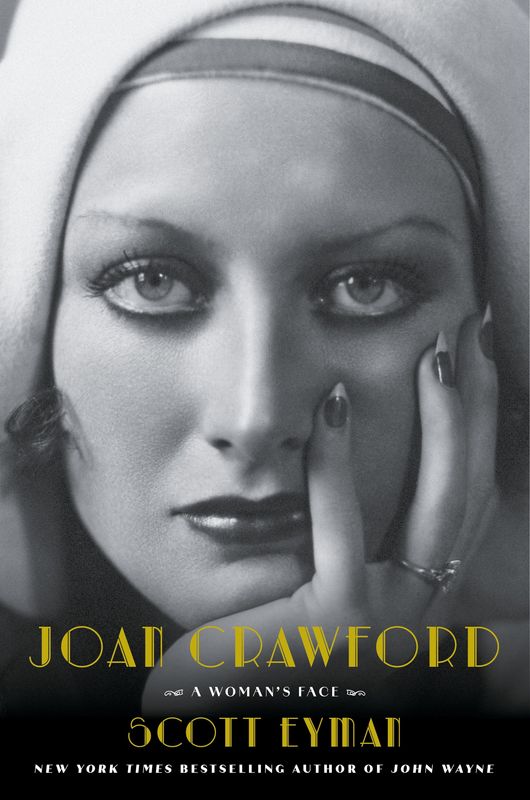
“She had an intrinsic electrical current,” writes film historian and best-selling biographer Scott Eyman in his latest book, “Joan Crawford: A Woman’s Face.”
“She had the capacity to draw attention without doing anything,” Eyman explains. “Even if Joan’s just sitting there listening, your eye goes to her.
“Electricity. People have it or they don’t. If you’ve got that quality, that’s worth money in the bank.”
A date with destiny (and Mae West)
Scott Eyman had a couple grand in the bank when he headed from Cleveland to Los Angeles in 1974, when he was 23. Like Billie Cassin, Eyman was chasing a dream.
He had fallen in love with silent movies when he was 12 and saw “Harold Lloyd’s World of Comedy,” a compilation of clips showing the bespectacled Lloyd performing stunts and pranks.
“Anything silent I’d watch — “The Gold Rush,” Chaplin’s two-reelers — I became fascinated by the distant past of the American film industry,” he says.
Then he picked up a copy of British historian Kevin Brownlow’s 1968 book, “The Parade’s Gone By,” a collection of interviews Brownlow had done with silent-film stars.
“It was a beautiful, glossy book on heavy-weight paper, and it cost $20, which was $20 more than I had,” Eyman says. “So I shoplifted it — and paid it back many times since, especially in meals to Kevin.”
“That book changed my life. If Kevin had not written that book, I don’t know if I would have become what I became.”
What Eyman became, according to The Washington Post’s Book World, is “one of the most distinguished and reliable of popular film historians,” and the author of 18 books on Hollywood legends, including New York Times best-sellers on John Wayne, Robert Wagner, John Ford, Louis B. Mayer, Cary Grant, Cecil B. DeMille, Henry Fonda, Jimmy Stewart and Charlie Chaplin. He also was a features writer and books editor of The Palm Beach Post for 24 years.
Eyman started at The Post a year before his first book came out, “Mary Pickford: America’s Sweetheart,” in January 1990.
He knew he could make a career doing what he loved because Brownlow’s book showed him how — and because he was inherently attuned to intrinsic electricity.
On that trip to L.A. in 1974, Eyman met a “cop who was fencing stills from the Los Angeles Herald-Examiner library. He’d show up at my motel room with a suitcase full of double-weight portrait stills from the ‘20s and ‘30s for $10 apiece.”
While other people were buying illicit drugs. Eyman was buying glossies of Chaplin, Lloyd, Pickford and Crawford.
“The cop happened to mention that Mae West was in the phone book,” Eyman recalls. “I looked, and by God, she was. I called her, she answered and pretended it wasn’t her, very Norma Desmond-like. Then she invited me over.”
West, 80, gave the working-class Cleveland kid the full star experience: dressed wig-to-toe in white, her skin porcelain and wrinkle-free, she vamped and posed and dropped one-liners, while mirrors reflected the delicate paleness of her light.
“She was my first movie queen,” Eyman laughs.
Collecting Hollywood stars
He discovered he had a knack for making old stars feel important again. Every time an Alice Faye or a Buddy Rogers came through Cleveland hawking some product or screening some classic movie, he’d interview them. And just in time, because the early movie greats were dying off.
Charles “Buddy” Rogers happened to have starred in 1927’s “Wings,” the first movie ever to be awarded a “best picture” Academy Award. He also was married to Mary Pickford, the biggest female star of the silent era, whose career spanned five decades.
“Rogers came through town to show ‘My Best Girl’, and I drove him around,” Eyman recalls. “I ended up with a 40-page transcript of Buddy Rogers talking about his wife.”
Eyman had a hard time selling his book on Pickford until he met publisher Donald I. Fine, known for publishing works by Elmore Leonard and Ken Follett. Fine called Eyman into his New York office, stared him straight in the face and declared: “I’m publishing your book for one reason. The first movie I ever saw was ‘Sparrows.’ I was 4 years old.”
“Sparrows,” a 1926 silent melodrama starring Pickford as a young woman who rescues a baby from kidnappers, had so emotionally torn up the young Fine, he never forgot the feeling, or the star.
“It was kismet. Blind luck,” Eyman says of that book deal. “Mary Pickford: America’s Sweetheart” got raves from People magazine and became a hit.
‘She was incapable of being dull’
Luck helped lead Eyman to his next great female subject, too.
He met Joan Crawford’s grandson, Casey LaLonde, on a Turner Classics Movie cruise several years ago. LaLonde brought along some of Joan’s home movies, circa 1939. The Kodachrome footage of a natural Joan traipsing through the woods and sunbathing naked revealed her freckles, her reddish hair and her natural friskiness.
“The home movies are a glimpse into the unexpected emotional accessibility of a woman often regarded as ferocious even by other ferocious movie stars,” Eyman writes in “Joan Crawford: A Woman’s Face.” The book’s title refers to the 1941 movie Crawford made with director George Cukor … and also to her undeniable beauty.
Watch “Grand Hotel” or “Possessed” if you want to wallow in that fabulous face and Crawford’s natural swagger.
“She was the ultimate work of art, crafted for us all,” Tennessee Williams said.
With gorgeousness infused with grit, Crawford represented women of her time in a way few stars could, Eyman writes.
“What Crawford did was mirror her audience. In the ‘20s, she’s a jazz baby, but in the ‘30s, she’s the archetypal Depression victim, fighting her way through, with nothing but her drive and her looks. In the ‘40s, she’s middle-aged, and made all these compromises, and the price is very very high, too high — but you don’t know that till the bill comes due.”
She had the brains and bravery of a modern star like Emma Stone, who develops her own projects. Crawford bought the book rights to “Whatever Happened to Baby Jane?” and demanded part of a movie’s royalties.
“In her career, Joan Crawford first anticipated, then dramatized every new social trend that affected women,” Eyman writes.
Joan’s characters have an edge because she did. “They have more bite as women. They’re more capable of anger. Their sexuality is apprehendable — they look at a man and appraise him.”
In her personal life, she appraised many men, including a young Robert Wagner, Eyman’s close friend and collaborator on three books. Wagner knew Crawford well and contributes some juicy anecdotes, such as the time she seduced him during a sexy skinny-dip at her house.
“She was a dynamic lover, both domineering — which you might expect — and yielding — which you might not,” Wagner told Eyman.
Crawford’s edge made it easier for her to be appraised, too, and never as sharply as in “Mommie Dearest.” Eyman quotes many sources who claim the book was a clear “hit job.”
The mother Christina Crawford describes …”that’s not a human being, that’s Cruella de Vil,” Eyman says. “The movie is a faithful adaptation of the book, and the movie got laughed off screens.”
When a biographer spends years with a subject, a relationship forms. Eyman chose to write about Crawford after writing his 2020 book “Cary Grant: A Brilliant Disguise.”
Grant’s life was a performance, Eyman says. “When he wasn’t performing, he was a neurotic wreck.”
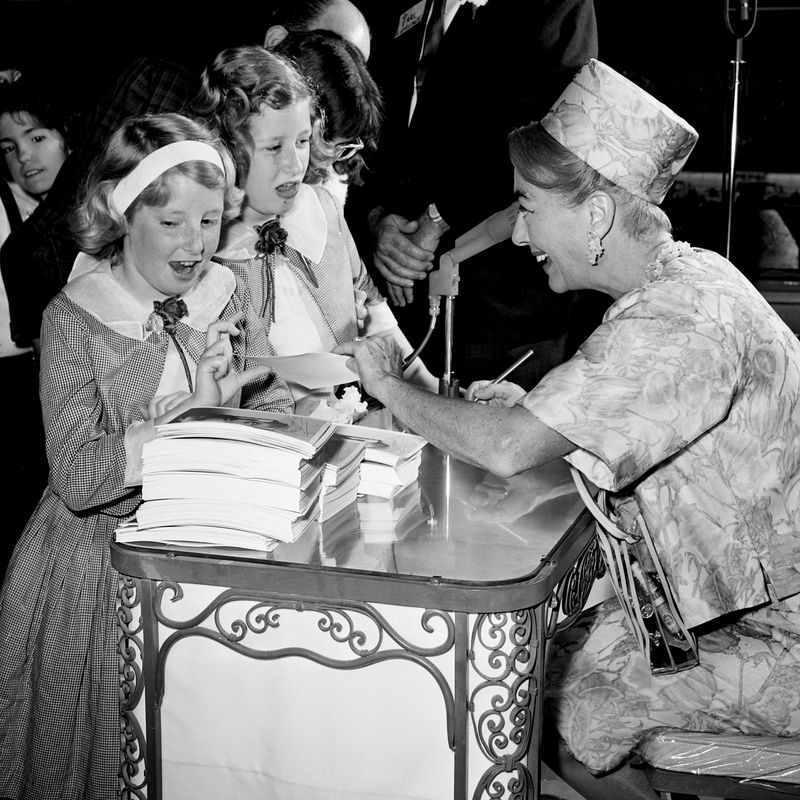
Crawford was the opposite. “Joan was Joan. I have a great deal of affection and respect for her. I would like to have spent time with her … she was a good broad. Difficult? Demanding? Probably … but no more than she was entitled to be.”
He discovered she was a great Tex-Mex cook, generous to her friends and fans and loyal, extremely loyal, he says.
“She was incapable of being dull.”
‘A woman’s face’
The historic house Eyman shares with his wife, journalist Lynn Kalber, who also was a longtime editor at The Palm Beach Post, is built on the coastal ridge in West Palm Beach’s Flamingo Park neighborhood.
The elegant Mediterranean Revival home might as well sit smack dab in the middle of the Hollywood Hills. With its arches and hallways adorned with movie posters, the house is what Joan Crawford would call “a real movie-star house.”
There are figurines of Charlie Chaplin and Harold Lloyd and marquee-size posters of Chaplin, Rita Hayworth, Douglas Fairbanks and more.
In this house, Hollywood’s golden parade has not gone by — it has lingered, as glamorous as when the house was built in 1924, the year Lucille LeSueur got her MGM contract.
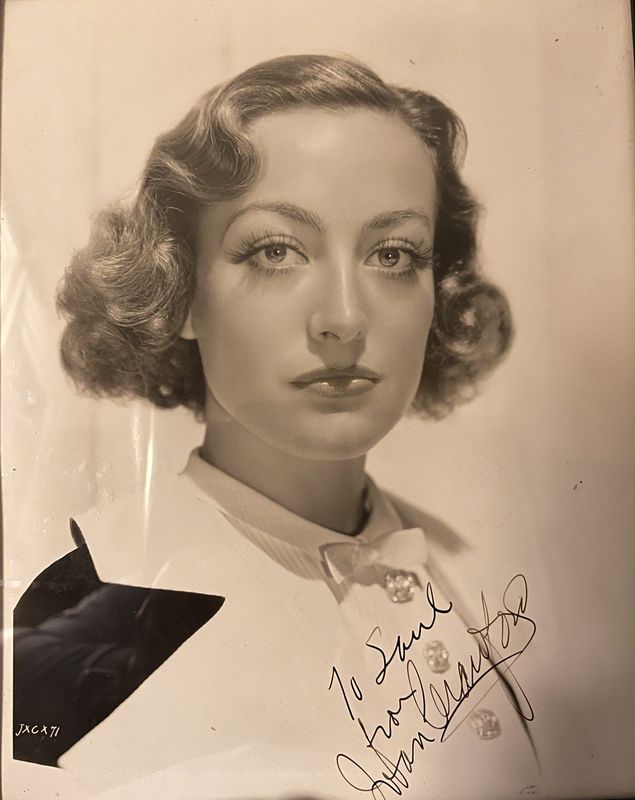
On one wall is a stunning George Hurrell photograph of a young Joan Crawford. It was a gift from Lynn Kalber to her husband last Christmas, when he had just turned in his manuscript.
Joan’s big blue eyes beckon, her lashes fanning out like fairy wings. Her expression is neutral, and yet, we are pulled in by what her first husband, Douglas Fairbanks Jr., called her “true magnetism.”
Of all the movie stars on the wall, all we see is … one woman’s face.
This article originally appeared on Palm Beach Post: Movie darling or ‘Mommie Dearest’? West Palm Beach author reveals real Joan Crawford
Reporting by Jan Tuckwood / Palm Beach Post
USA TODAY Network via Reuters Connect