For as far back as I can remember, my whole life, Juneteenth had an address: Vernon Dahmer Park, 1000 Country Club Road, Hattiesburg, Mississippi.
Vernon Dahmer Park is much more than an address or a city park.

It is, what I like to call, a portal.
Every third weekend in June, since before I was born, that space filled with thousands of people.
A citywide parade moved through the streets and emptied into this gathering space.
Gospel music rose over loudspeakers.
Blues and R&B blasted from candy-colored cars across the crowd.
Barbecue smoke hung in the thick Mississippi heat.
Softballs occasionally cracked car windshields parked too close to the fence.
Children ran between rides and games looking for friends and snacks.
Red clay clung to fresh sneakers and sandals.
Elders sat in folding chairs in rows beneath pine and magnolia trees, swatting horseflies and watching the teenagers move back and forth across the park, offering commentary on short shorts, chiseled chests and everything in between.
Fireworks closed out the night.
It was loud.
It was crowded.
It was familiar in the deepest way.
Juneteenth more than an event
The celebration is older than I am.
This year my hometown in Mississippi will host its 43rd Juneteenth Freedom Day Festival.
It existed before I was born, and it has continued every year since.
When I was younger, I didn’t have the words to fully grasp and express what I was witnessing.
I only knew that every June, we went to the same place.
I knew the rhythm of arrival.
I knew the feeling of stepping into that park and recognizing that I was exactly where I was supposed to be.
What I understand now is that Juneteenth in Hattiesburg was never just an event.
It was geography.
It was inheritance.
It was ritual in a place – and that place mattered.
A tradition — and much more
Vernon Dahmer Park carries history that sits beneath every celebration.
It is named for Vernon Dahmer, a civil rights leader who was killed by the Ku Klux Klan in 1966 after helping Black Mississippians register to vote.
His name lives on in the park where I’ve spent more than two dozen June weekends.
It became the space where I often learned about my roots and the place where I could witness freedom, memory, resilience and community.
There was something about experiencing Juneteenth in a place where the entire city stops for a weekend to celebrate culture and practice joy.
Those years gave me something deeper than tradition alone.
I was participating in a tradition that took root in a way that stays with me.
Even before I understood all of that, I understood how the holiday feels.
Holiday vs. tradition
Although June 19, 1865, marks the day enslaved people in Galveston, Texas were told they were free, more than two years after the Emancipation Proclamation, Juneteenth did not become a federal holiday until 2021.
Black Americans, across the United States and around the world, had been celebrating it for generations though, long before it appeared on the national calendar.
Food is always part of it.
Barbecue. Red drinks. Plates passed between folding tables.
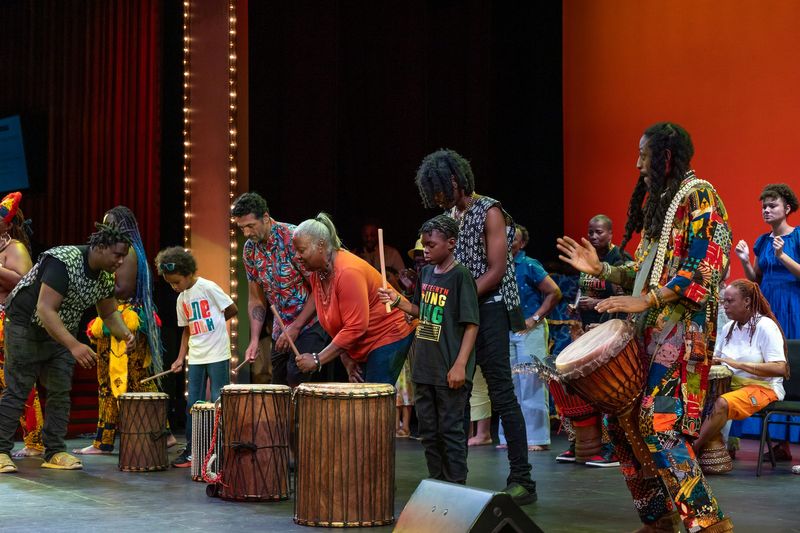
And music, too: gospel in the morning, blues and R&B as the day stretches on.
Children play freely.
Summer crushes meet up in the shade by the baseball bleachers, watched closely by older siblings.
Rims and candy-colored car paint glistened at dusk.
Police officers helped grandmas safely across the busy parade route.
It was never just celebration. It was, and is, continuity.
Juneteenth in Florida feels much different
I carried that version of Juneteenth with me when I moved to Florida in 2010.
Before I had known it in Mississippi, Louisiana, Texas and Georgia as something large and rooted.
It’s always been a full-community gathering that marked the year the same way every time.
I grew up inside a version of Juneteenth that structured our entire family’s summer travel.
So I can recognize when I don’t feel that same rootedness elsewhere.
In Florida, I’ve come to experience Juneteenth differently.
It is observed here.
It is honored and celebrated across cities and communities, including in Sarasota, where events bring people together along Dr. Martin Luther King Jr. Way in Newtown with live music, food vendors and family gatherings.
The scattered nature of the newer Juneteenth gatherings also helps me notice something I never had to think about before. In the past, I didn’t have to ask where Juneteenth was being celebrated.
In Florida, even as a journalist, I find myself checking.
Across the state, events are often pieced together or moved between spaces — which can make it a challenge to figure out which ones to attend.
There is nothing wrong with that.
It is simply different.
It’s a different rhythm and a different way of marking time and culture.
Juneteenth: A lived experience
In the Deep South — in Mississippi, Louisiana, Texas and Georgia, where Juneteenth has deep roots — the holiday is not new or tentative, or hard to find.
It is lived. It is expected. It has repetition. It has weight.
What I notice is that in other places I’ve celebrated, Juneteenth is often honored beautifully, but it does not always feel lived in the same way.
Sometimes it feels like an event to attend, rather than a tradition or moment you return to.
That distinction has stayed with me.
Because Juneteenth, as I first knew it, was never just about recognition. It was about return.
Don’t reduce Juneteenth to a date
For half my life, I would return to the same ground every June.
Return to the same music, the same food, the same faces that seemed to age alongside you.
Return to a kind of certainty I didn’t have to think about as a child, when Vernon Dahmer Park simply meant Juneteenth, and Juneteenth simply meant we would all be there.
It has always felt like a return to yourself and your roots, ultimately.
Now, years and states and seasons later, that is still how it begins in my mind:
A parade moving through the historic streets.
A park full of people.
Music rising over pine and magnolia trees.
And a city that has been gathering in the same place for more than four decades.
That is what I think we lose when Juneteenth is reduced to a date on a calendar, a federal holiday on a government schedule, or a new festival without the support or passion the day deserves.
The day is a day to commemorate freedom.
Freedom is not remembered because it is declared; it is remembered because people build something around it.
They built it with memory and community buy-in and support — year after year and generation after generation — in the same place with the same resilience, and under the same summer sky.
The communities that have carried Juneteenth for generations understood something deeper: freedom is not only something to commemorate.
It is something to practice, something to imagine, and something to experience.
What does Juneteenth mean?
For as far back as I can remember, Juneteenth was a portal.
I think that’s the lesson; celebration is important, recognition matters, but neither is as vital as the destination.
That is why I think of places like Vernon Dahmer Park as portals.
Not because they transport us back, but because they remind us that we can also move forward.
Every gathering holds memory, but what it holds that is evenly valuable is possibility.
Elders passing down stories as children create new ones.
Families, businesses, artists, organizers and neighbors occupying the same space, sharing skills and imagining what comes next.
In that way, Juneteenth is so much more than a celebration of freedom delayed.
It is an annual exercise in reimagining our community and our place in the world.
Juneteenth can be a cue to remind us that community matters and that it’s not inherited automatically but is created intentionally.
If you were to ask me, I think the future of Juneteenth is not simply remembering where we have been, but using these gatherings to actively envision where the collective could go and make choices as a community about who is leading us there.
A holiday becomes history when it is recognized.
But it becomes culture when people know exactly where to go — and when they leave with a clearer sense of what they can build together once they get there.
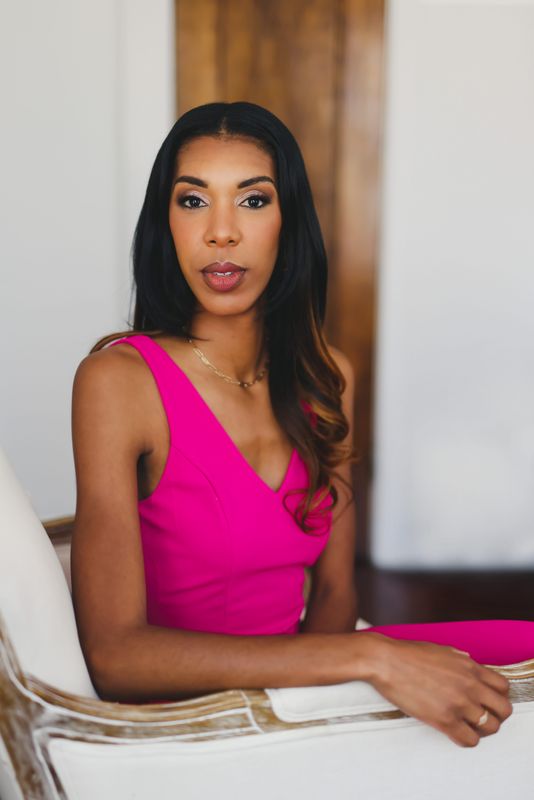
Samantha Gholar is an enterprise journalist for USA TODAY Co. and the Herald Tribune. Support local journalism by subscribing.
This article originally appeared on Sarasota Herald-Tribune: Juneteenth is more than freedom delayed, it helps me understand myself
Reporting by Samantha Gholar, Sarasota Herald-Tribune / Sarasota Herald-Tribune
USA TODAY Network via Reuters Connect
By Samantha Gholar, Sarasota Herald-Tribune | USA TODAY Network