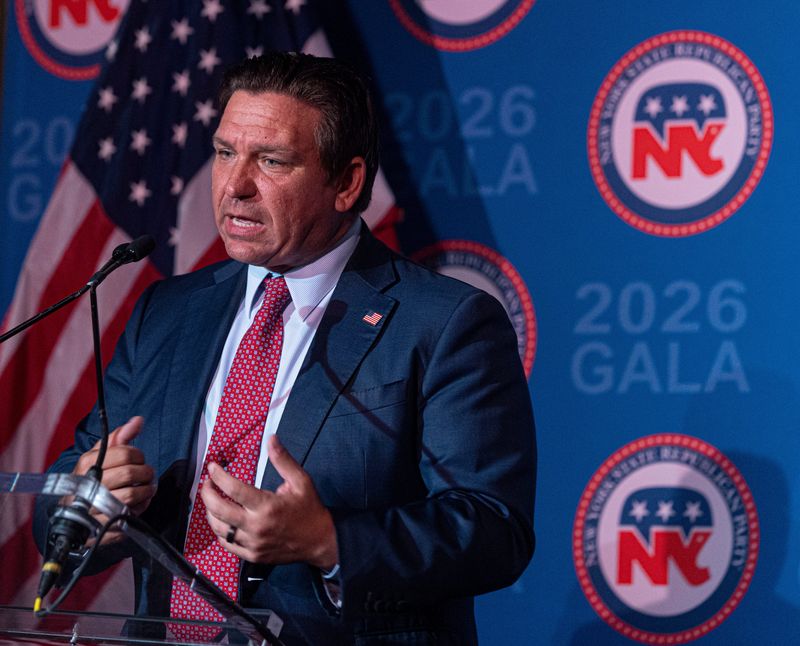
Special Session Spring continues. Gov. Ron DeSantis announced another special session of the Legislature to advance his plan to all but end property taxes on homes.
The plan would dramatically shift fiscal decision-making away from Florida’s cities and counties and centralize it in Tallahassee. And all sold to voters with populist rhetoric.

The state Senate is preparing its usual rubber stamp. The House, which had passed its own property-tax slashing amendment during the regular session, is awaiting details but seems game. “We are pleased the governor has finally gotten around to share an actual proposal,” was House Speaker Daniel Perez’s faint praise.
Amendment, if passed, would increase homestead exemption to $250K in 2028
The amendment would increase the homestead exemption to $150,000 in 2027 and $250,000 in 2028. The exemption is currently about $50,000. ($25,000 for school taxes). The governor estimates the quarter-million-dollar exemption would end property taxes for 60% of Florida homeowners, but that might be closer to 50%. In any case, this is all Phase 1. More to come! Next up according to the governor: a $500,000 exemption.
This proposal would need to pass with at least 60% of the vote in the Legislature to get on November’s general election ballot. Voters would then need to approve it with a 60% or more yes vote for it to become part of the state constitution.
Florida, it should be remembered, does not have an income tax. An income tax prohibition has been enshrined in the state constitution since it was passed in 1924. Something set in stone. Part of the state sales pitch for more than a century.
How will public services in Florida be funded? Your guess as good as anything
But this means schools, police, fire departments, ambulance services, libraries, parks, water, garbage collection, playgrounds, public hospitals, local roads and sidewalks all depend to varying degrees on property taxes. The sales tax pays for a lot, but not everything.
About a third of county government revenue comes from local property taxes. Public schools will receive almost $22 billion in property tax revenue this fiscal year. (And remember about half of that is set by the Legislature, not your local school board.)
So with little or no property taxes, how would Florida’s already underfunded public schools operate? The governor’s office says that under his plan, “core services” would still be funded. Seven core services are listed in the legislation including education. Localities would not be allowed spend property taxes outside of those areas.
Where would the money for these core public services come from? When the House developed its own property tax-cut plan during the regular session, it couldn’t answer that question. So it carved out education funding from the homestead exemption increase. The governor’s plan does not have that exclusion. Making up the difference would take either magic or a whopping sales tax hike.
As costly as the core functions of local government are, many are still missing from the list of allowable local spending: holding elections, assessing taxes and appraising property. All mandated duties of the state’s constitutional officers. Quite an oversight.
Counties, cities to Legislature: ‘Please, sir, may I have some more?’
To fund core public needs — however those get defined, refined and reworded — while eliminating property taxes or cutting them back dramatically, means city and counties would need to go to the Legislature hat in hand and ask for their allowance each year. This would be especially true of smaller counties with less of a tax base.
Funding levels would likely be more determined by political clout than local needs. This is the Florida Legislature we’re talking about.
And bear in mind that legislative masterminds have not been able to produce a state budget in time for the second year in a row and the budget process this year has been especially closed, secretive and late. Now they also want to be the City Hall for every Florida city. What could possibly go wrong?
Florida’s taxation system evolved in bits and pieces over time as it grew from a sunny backwater into a Sun Belt superstate. Its sales tax is filled with oddball exemptions. It brings in lots of money in good times and less money in bad times when funds are most needed. Fees, tolls, assessments and special districts have multiplied to fill in year-to-year gaps.
So now, in a three-day special session the Legislature is going to upend the financing of all local government and replace it with, well, something.
Will a supermajority of legislators and voters move toward defunding their cities, counties and schools? To centralize decisions affecting their cities and counties? To see new fees pop up everywhere as local governments scramble to address the inevitable budget crunch?
Oh probably, but I would hope not. This plan is being whipped together on the fly so it can be served up to voters this election year and the consequences are anything but clear.
Mark Lane is a News-Journal columnist. His email is mlanewrites@gmail.com.
This article originally appeared on The Daytona Beach News-Journal: If property taxes in Florida go away, then what?
Reporting by Mark Lane, Special to The News-Journal / The Daytona Beach News-Journal
USA TODAY Network via Reuters Connect