On July 4, 1776, as delegates in Philadelphia prepared to sign the Declaration of Independence, Southwest Florida belonged to Britain’s East Florida colony.
Not that it mattered much here. Sparsely governed and largely beyond the reach of colonial authorities, this remote corner of the empire was tied more closely to Havana than to the rebelling colonies to the north.

Had a traveler landed here 250 years ago, they would have found no churches, courthouses, or British forts. Instead, they would have encountered a coast punctuated by the shell mounds of a vanished Calusa kingdom, plied by Cuban fishing boats and frequented by Creek hunters and traders.
At the nation’s founding, Southwest Florida was a watery world of wildlife and fisherfolk, a network of seasonal island fishing communities called ranchos, stands of cypress, coastal shell mounds and Indigenous settlements inland.
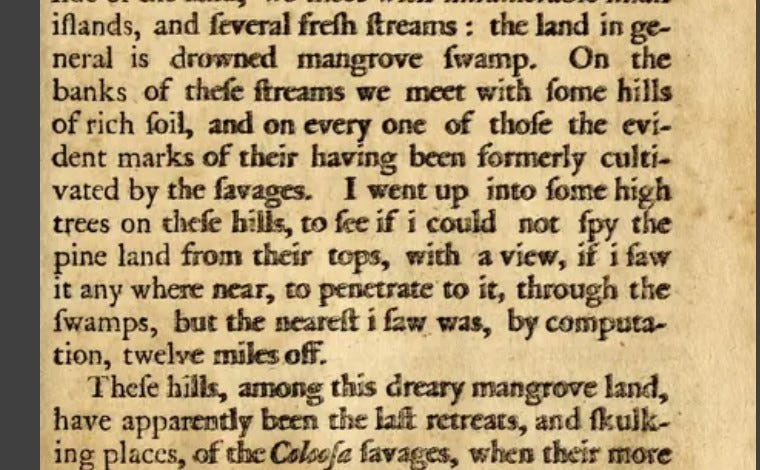
A ‘drowned mangrove swamp’
As for daily life in what would become Lee and Collier counties, “From the stories I’ve heard, it was sort of Eden.” That is, “if you could overlook the mosquitoes,” says Sanibel-raised David Rahahę́·tih Webb, whose ancestors include the first children documented to have been born on the island. His elders described vast shoals of fish flashing through the crystal shallows and flocking birds darkening the sunset – including flamingoes, “that would fly over like clouds,” says Webb, whose family’s Florida memories stretch back 10 generations.
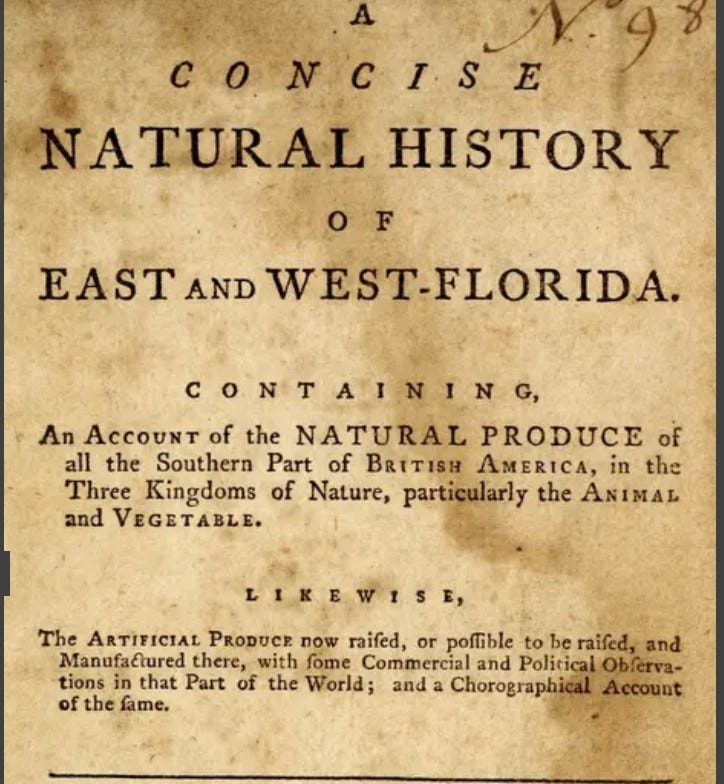
One of the few Europeans to leave a detailed description of Florida in that era was surveyor and naturalist Bernard Romans, who explored the Southwest Gulf coast, from Charlotte Harbor to the Ten Thousand Islands, writing, “The land in general is drowned mangrove swamp.”
He marvels at a bay where “several rivulets of fine water empty themselves into the sound (so) that a man may stand with one foot in fresh, and the other in saltwater. When the tide is out, freshwater boils up through the sand.” Romans describes “large old fields, being the lands formerly planted by the Calusa savages” ― a land at once wild yet shaped by people who had lived there for centuries.
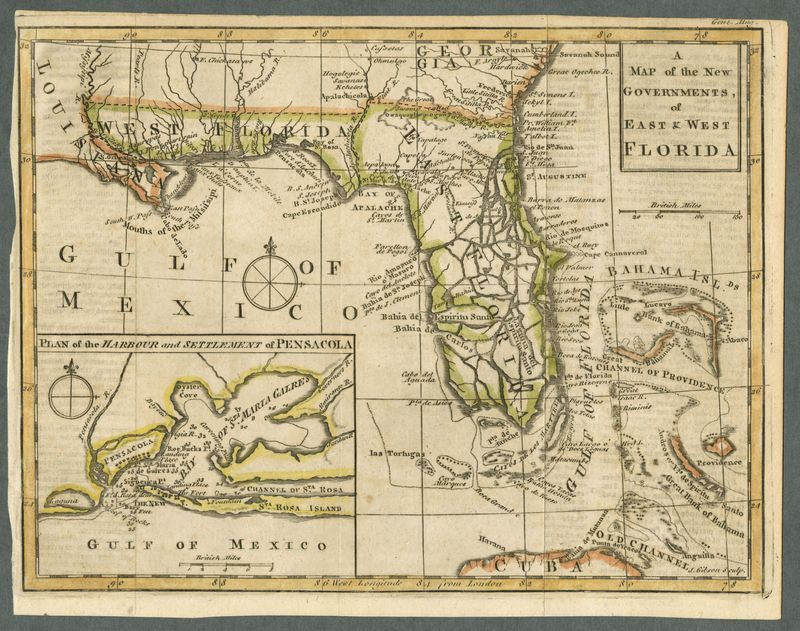
The region’s place in the British Empire had been decided 13 years earlier in Paris, when diplomats redrew maps after the Seven Years’ War. Britain divided its new acquisition into East Florida, governed from St. Augustine, and West Florida, governed from Pensacola. Southwest Florida lay within East Florida and would remain there for another seven years.
Yet legal sovereignty and practical control were two different things.
A British colony shaped by Indigenous and Cuban fishermen
Much of peninsular Florida remained beyond the effective reach of colonial governments. Instead, according to University of West Florida anthropology Professor John Worth, the region was shaped by Cuban fishermen who worked its waters seasonally and the Indigenous groups who worked and traded with them.
Worth documents Creek emissaries traveling to Havana as early as 1766, with repeated diplomatic visits between 1771 and 1777 facilitated by Cuban fishing vessels.
Even before the Declaration was signed, tight commercial and diplomatic links connected Florida’s Gulf Coast to Havana. In this seasonal maritime frontier, Cuban fishing boats arrived every fall, Creek visitors traded and traveled to Cuba, and the foundations of a new culture were being laid.
As events in Philadelphia set a new nation on its course, Southwest Florida remained oriented toward the Caribbean.
“Southwest Florida was more indirectly ruled from Cuba than from St. Augustine or Pensacola,” says historian Adam Knight, former manager of the Mound House on Fort Myers Beach and now education director at the San Mateo County Historical Association.
“Florida has always been a part of the Caribbean, and you can’t really separate those two … It was a very globalized world, even on this frontier of the Spanish empire.”
How Southwest Florida fish fed the enslaved on sugar plantations
The smell would likely have washed over that traveler first: fish drying in the winter sun, salt, wood smoke, tar, mangrove muck.
If Philadelphia’s business in 1776 was revolution, the business of Southwest Florida was unquestionably fish.
Salted fish processed along Southwest Florida’s coast was shipped to Havana, where it entered an economy increasingly dominated by sugar plantations. The fish became an inexpensive source of protein for enslaved workers, linking this remote coast to the expanding plantation economies of the Caribbean.
Not only were Seminole-descended Webb’s grandfather and great-grandfather commercial fishermen, in the 1700s, his ancestors worked on fishing “ranchos,” largely Indigenous island communities that “ushered a shift from traditional sustenance efforts to work which was concentrated on one activity ― intensive fishing for the purpose of raising capital in a new economic paradigm,” the historian writes in his book, “The Spanish Seminole: The Untold History of the Spanish Indians as Told by a Descendant.”
For two centuries, the fisheries spanned from Apalachicola to Southwest Florida. “At their peak, there were estimated to be more than 30 vessels supporting the trade, which fed much of Havana, including their enslaved population,” Webb writes. “In the 1830s an estimated 800,000 pounds ― or 400 tons ― of fish from the ranchos were brought to Cuba each year, supported by up to 600 Spanish Seminole people.”
Ancient Calusa skills powered a new economy
Instead of hooks and lines, those harvesting the Gulf’s abundance in 1776 used nets, traps and rounding-up strategies perfected by the ancient Calusa.
Known as “the fierce people,” they’d lived in Southwest Florida long before Europeans arrived (and famously helped send one of the early waves packing with a poison arrow to Ponce de Leon’s hindquarters in 1521.) With shell and wooden tools, they dug navigational channels and built sprawling mounds.
Though their towns had largely emptied by 1776, as disease, slave raids and migration thinned their numbers, much of the infrastructure remained. “You would’ve seen these massive shell works and canals,” says Michelle LeFebvre, director of the University of Florida’s Randell Research Center at Pineland on Pine Island, where they once thrived. “People had been there and in some of these places, people were still there in pockets … living and carrying out their lives, but certainly not at the scale of tens to thousands of people,” she says. “The Calusa as a 2,000-year-old polity … was not what it was.”
Remnant populations remained, some intermarried with Spaniards, and later interacted with Creek newcomers moving south.
Where were the ranchos? Sanibel, Useppa, Cayo Costa
Useppa Island’s rancho, the largest in the region, was thriving in 1776, says Adam Knight, and there were others on Sanibel, Cayo Costa and at Cayo Pelau off Gasparilla Island.
In his paper, “Creolization in Southwest Florida: Cuban Fishermen and ‘Spanish Indians,’ ca. 1766–1841,” in the journal Historical Archaeology, Worth notes that they sat hundreds of miles from both Cuba and the Creek homeland, making them a meeting ground between worlds ― essentially neutral ground.
As Tara Backhouse, curator and collections manager at the Seminole Tribe of Florida’s Ah-Tah-Thi-ki Museum describes it: “All were what remained of the ancestral people of Florida … There had also been some intermarriage between Idigenous and Spanish people. Therefore, some of the ancestral peoples left in Florida were known as Spanish Indians.”
Webb prefers the term Spanish Seminoles, which better captures the heritage of people like his ancestors, who spoke Seminole and Miccosukee languages, maintained ties to Cuba and sometimes served as translators between Indigenous and colonial leaders.
Most of that way of life is gone. The ranchos have vanished, and the Calusa kingdom survives only in archaeology and memory. The fish have thinned and great bird flights no longer darken the sky.
But traces linger. Seminole and Miccosukee communities endure in the Everglades. Some of the shell mounds rise above the coast. Boaters pass them daily, many not realizing they’re traveling through a landscape shaped long before the Declaration was signed.
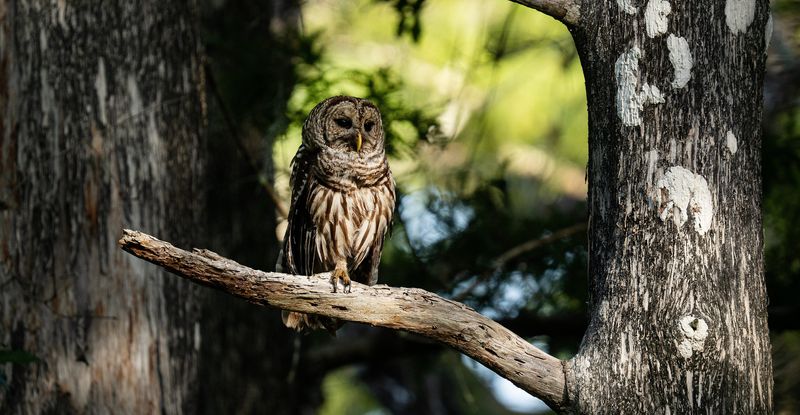
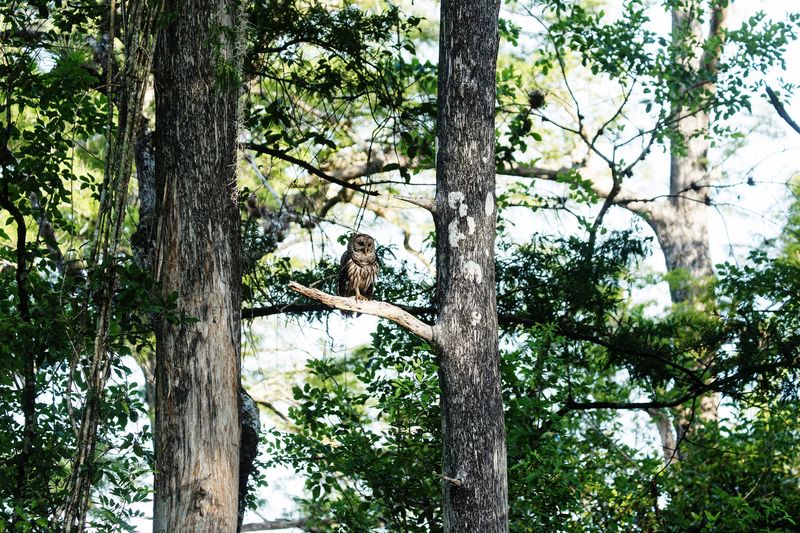
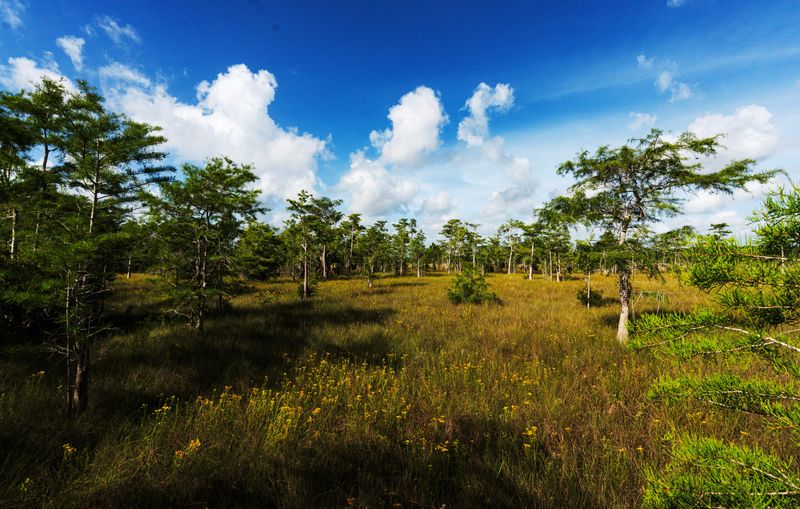
Yet some of the landscapes Romans described 250 years ago endure. Bald cypress that were already centuries old when he visited still stand sentinel at Corkscrew Swamp Sanctuary, and there remain places where clear freshwater meets the Gulf.
And this is where Webb sees both paradox and challenge.
“It’s Southwest Florida’s natural beauty that draws people to live here, and in doing so, (destroys) the very thing that we all love,” he says. “While we can’t return to the pristine wonder of 1776, we must protect what little we have left. My hope is that more people will actively do so.”
This article originally appeared on Fort Myers News-Press: America declared independence. Southwest Florida went fishing
Reporting by Amy Bennett Williams, Fort Myers News-Press & Naples Daily News / Fort Myers News-Press
USA TODAY Network via Reuters Connect
By Amy Bennett Williams, Fort Myers News-Press & Naples Daily News | USA TODAY Network