The 2026 Atlantic hurricane season starts in a few short weeks.
Are you ready?

Every year, no matter what the predictions are, forecasters urge residents to prepare early for hurricanes rather than wait until a storm is approaching.
To raise awareness about the dangers posed by hurricanes and tropical storms and encourage people to prepare early for storms, the National Hurricane Center and National Weather Service have established May 3-9, 2026, as Hurricane Preparedness Week.
➤ Weather alerts via text: Sign up to get updates about current storms and weather events by location
The week covers a different topic each day, providing valuable information for those new to hurricanes and good reminders to seasoned Florida residents.
Early predictions are for a below-normal season but in records dating back to 1851, Florida has been hit by more hurricanes than any other state so it pays to be prepared.
What to expect from Hurricane Preparedness Week 2026
To raise awareness about the dangers posed by hurricanes and tropical storms and encourage people to prepare early for storms, the National Hurricane Center and National Weather Service established May 3-9, 2026, as Hurricane Preparedness Week.
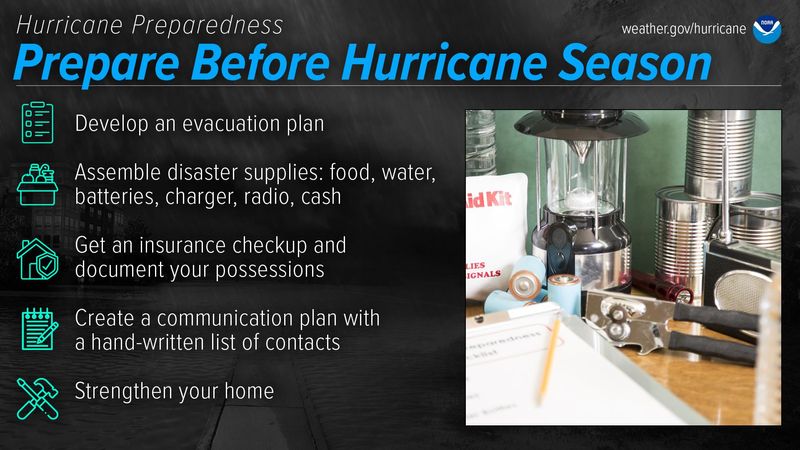
Hurricane Preparedness Week, Day 2: Prepare before hurricane season
“The best time to prepare is well before the official start of the season,” NOAA said.
“Avoid having to rush through potentially life-saving preparations by waiting until it’s too late.
➤ Quick look at 6 things you should do before hurricane season begins
“Get your disaster supplies while the shelves are still stocked, and get that insurance checkup early, as flood insurance requires a 30-day waiting period.”
Here’s what you can do now.
Develop an evacuation plan
“If you are at risk from hurricane impacts, you need an evacuation plan,” NOAA said.
“Now is the time to begin planning where you would go and how you would get there.”
➤ Do you live in an evacuation zone? Here’s how to find out
One thing to keep in mind is that during an evacuation, you don’t need to go hundreds of miles away.
“Your destination could be a friend or relative who lives in a well built home outside flood-prone areas,” NOAA said.
Be sure to plan several routes to get to where you’re going, and don’t forget your pets. Never leave them behind.
If you don’t have a vehicle, check with local officials to see what transportation options they may have available.
Not sure what to bring in a “go-bag”? See suggestions from ready.gov.
You need emergency supplies. Gather them now
“Whether you’re evacuating or sheltering in place, you’re going to need supplies not just to get through the storm but for the potentially lengthy and unpleasant aftermath,” NOAA said.
“Have enough non-perishable food, water and medicine to last each person in your family a minimum of three days. Store a longer than three-day supply of water, if possible.”
➤ Don’t have a hurricane supply kit? From the basics to the extras, here’s what you need
Remember, in the aftermath of a hurricane, electricity and water could be out for weeks.
“You’ll need extra cash, a battery-powered radio and flashlights. You may need a portable crank or solar-powered USB charger for your cell phones.”
Not sure what to put in an emergency kit? Here are a few checklists:
Get an insurance checkup. Document your possessions
“Call your insurance company or agent and ask for an insurance check-up to make sure you have enough insurance to repair or even replace your home and/or belongings,” NOAA said.
➤ Before hurricane season, what to check on Florida insurance policies
“Remember, home and renters insurance doesn’t cover flooding, so you’ll need a separate policy for it. Flood insurance is available through your company, agent, or the National Flood Insurance Program at floodsmart.gov.”
Flood insurance requires a 30-day waiting period so be sure to do this before the start of hurricane season, NOAA said.
“Take the time before hurricane season begins to document your possessions: photos, serial numbers, or anything else that you may need to provide your insurance company when filing a claim.”
Create a communication plan
“Take the time now to write down your hurricane plan, and share it with your family,” NOAA said.
“Determine family meeting places, and make sure to include an out-of-town location in case of evacuation.
“Write down on paper a list of emergency contacts, and make sure to include utilities and other critical services — remember, the internet may not be accessible during or after a storm,” NOAA said.
Strengthen your home now, before hurricane threatens
“Now is the time to improve your home’s ability to withstand hurricane impacts,” NOAA said.
“Hurricane-force winds can turn landscaping materials into missiles that can break windows and doors.
“Much of the property damage associated with hurricanes occur after the windstorm, when rain enters structures through broken windows, doors, and openings in the roof.”
Among the suggestions are:
What to do if you live in a mobile home
“If you live in a mobile home, make sure you know how to secure it against high winds and be sure to review your mobile home insurance policy,” FEMA said.
➤ What to know: Mobile home insurance
“Mobile homes are not safe in high winds, and you will need to move to a safer place before a storm hits. Always follow the advice of your local community officials.”
When is the Atlantic hurricane season?
The Atlantic hurricane season runs from June 1 through Nov. 30.
➤ Hurricane Center testing new cone: What’s changing this season?
Countdown clock to start of 2026 hurricane season
What are predictions for 2026 hurricane season?
Here are some of the predictions released so far for this year’s hurricane season. NOAA will release its forecast toward the end of May.
A major hurricane is a storm that is a Category 3 or stronger, with maximum sustained winds of at least 111 mph.
Sign up now to get latest weather alerts
Set up several different ways to get weather warnings so you’re always aware of the latest information and forecast.
The USA Today Weather Watch team sends SMS messages straight to your phone. Sign up today for the free service.
Could Florida be hit by a hurricane in 2026? See which counties have highest chance
What are names for 2026 Atlantic hurricane season?
Names for the 2026 Atlantic hurricane season, and how to pronounce them, are:
Stay informed. Get weather alerts via text
What’s next?
We will start providing daily tropical weather coverage May 15, unless something with potential for development appears earlier. Download your local site’s app to ensure you’re always connected to the news. And look for our special subscription offers here.
Cheryl McCloud is a journalist for the USA TODAY Network-Florida’s service journalism Connect team. You can get all of Florida’s best content directly in your inbox each weekday day by signing up for the free newsletter, Florida TODAY, at https://naples.com/newsletters.
This article originally appeared on Fort Myers News-Press: Hurricane Preparedness Week reminds us to prepare now. Here’s what to do
Reporting by Cheryl McCloud, USA TODAY NETWORK – Florida / Fort Myers News-Press
USA TODAY Network via Reuters Connect