Jacksonville is taking a break from the heat waves and cooling off with showers. A low-pressure system just off the coast of Florida is expected to bring torrential downpours and the potential for flash flooding across the state for the next few days, according to a July 23 update from the National Hurricane Center.
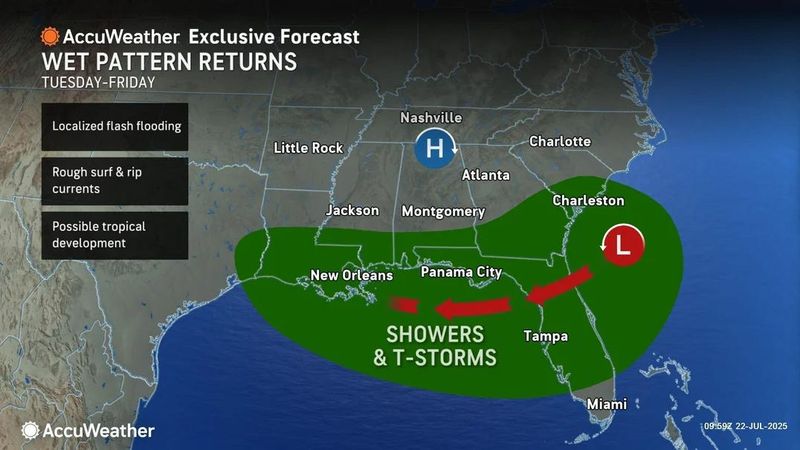
The NHC said there is very little chance the system, currently just off the coast around Jacksonville Beach and St. Augustine, will develop into a tropical depression before it hits the state. But the system will drench North Florida as it tracks across into the Gulf where there is a small chance it could strengthen before it threatens Louisiana and Texas through the weekend.

What’s the weather like in Jacksonville today: July 23, 2025
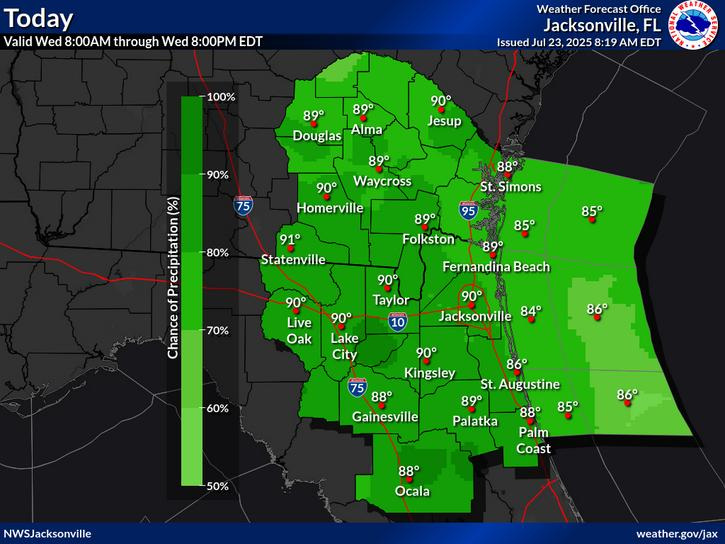
Today, Jacksonville is under a flooding rain risk advisory, with an 80 percent chance of showers and thunderstorms throughout the day. According to the National Weather Service, slow-moving heavy downpours are expected, with the greatest storm coverage likely between noon and 8 p.m. These storms could lead to localized flooding, especially in low-lying or poorly drained areas.
It will also feel steamy, with highs reaching near 90, and even hotter as heat index values may climb to 103. Winds will shift from the north to the east at 5 to 10 mph, with gusts up to 16 mph..
Tonight, showers and thunderstorms are likely before 11 p.m., with a slight chance of lingering showers until midnight. Skies will remain mostly cloudy, with a low around 75. Winds will be light and variable after midnight. Rainfall totals are expected to be light, except in areas with stronger storms.
Wednesday weather alert: Jacksonville flooding rain risk. Will it rain today?
Yes, rain is in the forecast and not just a passing shower.
Multiple rounds of storms are expected to bring heavy rainfall to the region today. Forecast totals range from 0.5 to 1.5 inches, with isolated areas possibly receiving up to 4 inches.
The National Weather Service is closely monitoring conditions for the potential of isolated flash flooding, particularly across inland southeast Georgia and the Suwannee Valley region of northeast Florida. These areas, including Jacksonville, can expect periods of intense rain through this evening.
In Jacksonville, localized flooding is possible, especially in urban areas, low-lying spots, and locations with poor drainage. The National Weather Service urges residents to stay alert and never drive through floodwaters.
The National Weather Service’s Weather Prediction Center has also issued a Marginal Risk for much of the Southeast given the potential for localized flash flooding through Thursday.
“Several inches of rain are likely along the Interstate 10 corridor, with some locations potentially receiving over 6 inches in a short time,” AccuWeather said in an email. “Flash flooding is possible in urban and low-lying areas, leading to dangerous road conditions and travel disruptions.”
The NHC is also tracking another tropical wave that just left the coast of Africa, making that three to watch in the Atlantic.
➤ Weather alerts via text: Sign up to get updates about current storms and weather events by location
The next named storm of the 2025 Atlantic hurricane season will be Dexter.
Historically, the fourth named storm of the Atlantic hurricane season arrives Aug. 15. The last two named storms of the season — Barry and Chantal — developed earlier than normal.
Here’s the latest tropical advisory from the National Hurricane Center as of 8 a.m. July 22:
Where is the disturbance threatening Florida?
A trough of low pressure on the southern end of a frontal boundary is located just offshore of the Southeastern U.S. coast and is associated with a broad area of disorganized showers and thunderstorms. Over the next few days, this system is forecast to move west-southwestward into the north-central portion of the Gulf, where environmental conditions could allow for some slow development.
By this weekend, the system is likely to move inland, ending its chances for development. Regardless of formation, heavy rainfall could be possible for portions of Florida over the next day or so, and for the northern Gulf coast through this weekend.
What else is happening in the tropics?
The National Hurricane Center is tracking three tropical waves.
Florida heat wave lessening on paper, still feels hot
Meanwhile, it’s still hot in the Sunshine State with temps in the high 80s to low 90s and heat index values of 103-109 possible in North Florida, but the only heat advisory for Wednesday is for Escambia County, Santa Rosa, and coastal Okaloosa from 10 a.m. to 6 p.m. CT.
Heat risks across the state are moderate in the north and north-central, minor across the lower half, with some spots of major and even extreme heat possible in the western Panhandle, according to the NWS Heat Risk map.
Weather watches and warnings issued in Florida
Florida weather radar for July 23, 2025
National Weather Service Florida forecast for July 23
➤ How to set up emergency cellphone notifications for flash flood warnings and safety tips
➤ Excessive rainfall forecast
2025 hurricane season so far
An average Atlantic hurricane season has 14 named storms, seven hurricanes, and three major hurricanes.
Here’s when this year’s named storms have developed, compared to historical averages:
Hurricane names for 2025 season
Here are the names for the 2025 Atlantic hurricane season, along with how to pronounce them:
When is the Atlantic hurricane season?
The Atlantic hurricane season runs from June 1 through Nov. 30.
Ninety-seven percent of tropical cyclone activity occurs during this time period, NOAA said.
The Atlantic basin includes the northern Atlantic Ocean, Caribbean Sea and Gulf of America, as the Gulf of Mexico is now known in the U.S. per an order from President Trump. NOAA and the National Hurricane Center are now using Gulf of America on its maps and in its advisories.
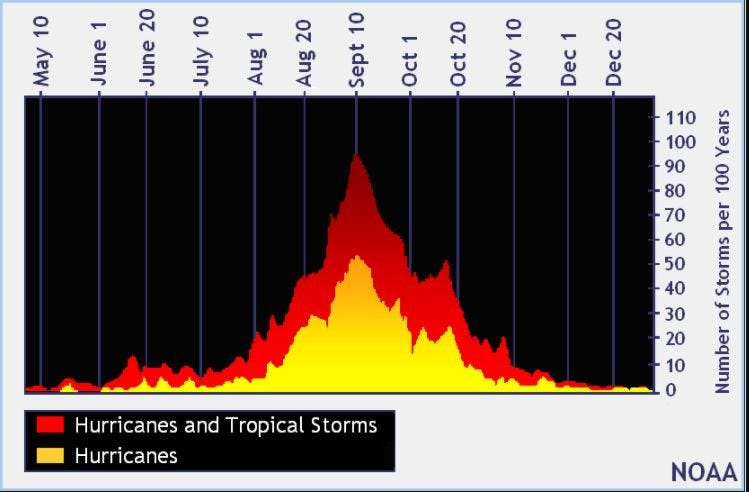
When is the peak of hurricane season?
National Hurricane Center map: See what forecasters watching now
Systems currently being monitored by the National Hurricane Center include:
Why does NHC say ‘tropical cyclone’ on its maps instead of hurricane or tropical storm?
Tropical cyclone is the generic term used by the National Weather Service, NOAA and the National Hurricane Center for any tropical system, even if it’s in the tropical Atlantic basin.
To be more precise, a tropical cyclone is a “rotating, organized system of clouds and thunderstorms that originates over tropical or subtropical waters and has closed, low-level circulation,” NOAA said.
Once maximum sustained winds reach 74 mph, what it is called is determined by where it originated:
Interactive map: Hurricanes, tropical storms that have passed near your city
Stay informed. Get weather alerts via text
What’s next?
We will update our tropical weather coverage daily.
Download your local site’s app to ensure you’re always connected to the news. And look for our special subscription offers here.
This article originally appeared on Florida Times-Union: Hurricane Center tracks potential flood-causing system in Jacksonville area. Here’s the timing
Reporting by Doris Alvarez Cea and C. A. Bridges, Jacksonville Florida Times-Union / Florida Times-Union
USA TODAY Network via Reuters Connect