The four astronauts who charted a course to the moon and back earlier in April are preparing to meet with a president who has lauded the spacefarers as “modern-day pioneers.”
The word “pioneer” is one laden with connotations that cast the crew of NASA’s landmark Artemis II mission as trailblazing explorers of the cosmos. Pioneers, of course, also famously lay the groundwork for more people to follow in their footsteps.

And in the years ahead, plenty more astronauts using data from the Artemis II mission that launched from Florida are due to not only head back near the moon, but land on it for the first time in more than 50 years. Even farther in the future, the first humans could even head to Mars.
So what exactly is next under NASA’s Artemis campaign? As President Donald Trump prepares to host NASA’s Reid Wiseman, Victor Glover and Christina Koch, as well as the Canadian Space Agency’s Jeremy Hansen on April 29 at the White House, expect that to be a topic of conversation.
Ahead of that upcoming meeting, here’s a timeline of the Artemis moon missions in the years ahead under NASA’s revamped plan.
2026-2027: Uncrewed robotic lunar landings
NASA and its commercial partners have landed three robotic vehicles on the moon since 2024 – all to varying degrees of success.
For 2026, at least four more uncrewed lunar landing missions are in the works.
None of the missions have a firm target launch date yet, but the first – Pittsburgh-based aerospace company Astrobotic’s Griffin-1 mission – appears to be on track for liftoff sometime in July, according to NASA. Three more landers could follow this year, including Blue Origin’s Blue Moon Mark-1, Texas-based Firefly Aerospace’s Blue Ghost and Houston-based Intuitive Machines’ Nova-C.
In 2027, NASA plans to dramatically increase the number of robotic landers carrying cargo and science instruments with up to 30 more uncrewed landings.
The missions, contracted under NASA’s Commercial Lunar Payload Services program, would all help pave the way for a human landing.
2027: Artemis III test of lunar landers
As for NASA’s next mission under the Artemis program, that is slated to get off the ground sometime in 2027.
In fact, preparations for Artemis III are already underway, with the core stage of NASA’s gigantic 322-foot Space Launch System rocket already arriving in Florida for assembly.
The Artemis III mission will send a new crew of astronauts on the Orion spacecraft to Earth orbit. There, they will dock with at least one of the commercial lunar landers being developed by Elon Musk’s SpaceX and Jeff Bezos’ Blue Origin.
NASA will also use the mission to test space suits, known as extravehicular activity suits, being developed by Axiom Space for astronauts on the lunar surface.
2028: Artemis IV moon landing
In 2028, humans could be stepping foot back on the moon for the first time since the Apollo 17 mission in 1972.
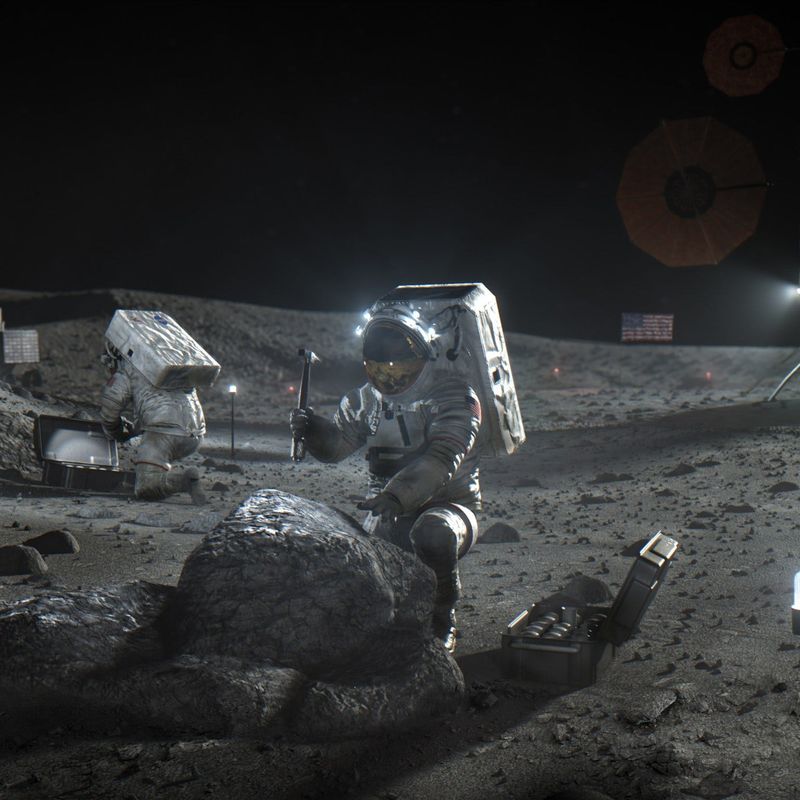
Whichever lander ends up being selected for Artemis IV would rendezvous with NASA astronauts aboard an Orion vehicle in lunar orbit and then ferry them to the surface. After the astronauts conduct a moon walk and a series of scientific experiments, the lander would then transport them up to Orion, which would make the journey back to Earth, according to NASA.
NASA previously identified nine possible landing sites near the moon’s largely unexplored south pole for human surface operations.
All the possible locations are further south than any of the Apollo astronauts landed or ventured, according to NASA. There, a permanent shadow is thought to shroud an area abundant with water ice – a valuable resource that could be extracted and used for drinking, breathing and as a source of hydrogen and oxygen for rocket fuel.
2028 and into the 2030s: Artemis V, moon base and onto Mars
But this time, those next astronauts who step foot on the moon’s surface won’t simply plant the stars and stripes before heading back to Earth.
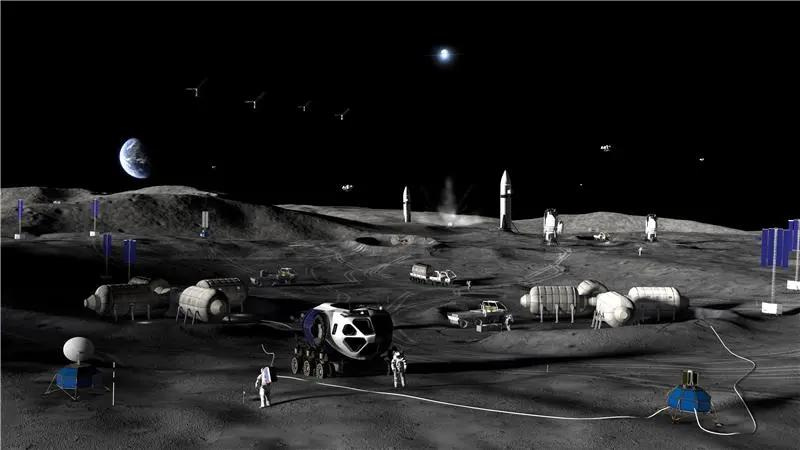
The ultimate goal is for NASA to spend the next few years using a series of both crewed and uncrewed lunar landings to build a $20 billion moon base where astronauts could live and work longterm.
After the Artemis V mission also targeted for 2028, NASA Administrator Jared Isaacman has said the agency wants to launch a human lunar landing mission up to twice a year – if not more often.
Once that cadence is established and the infrastructure for a sustainable settlement is in place, NASA will set its sights on humanity’s next giant leap: sending the first astronauts to Mars, possibly in the 2030s.
Eric Lagatta is the Space Connect reporter for the USA TODAY Network. Reach him at elagatta@usatodayco.com. Subscribe to the free Florida TODAY newsletter.
This article originally appeared on Florida Today: Here’s what’s next for NASA’s Artemis program as moon missions ramp up
Reporting by Eric Lagatta, USA TODAY NETWORK – Florida / Florida Today
USA TODAY Network via Reuters Connect