Title VI of the Civil Rights Act of 1964 exists to prevent discrimination based on national origin, gender or religion.
The Court Interpreters Act of 1978 and the Amendments to the Act from 1988 provide more effectively for the use of court interpreters in the courts of the United States. Additionally, the Department of Justice has an abiding interest in securing state and local court system compliance with the language access requirements of Title VI.

There are many watchdogs over the due process rights for individuals so they have full and effective participation in their court hearing, but this court also complies because it is the right thing to do.
Just as a person who plays the piano is not necessarily a concert pianist, a bilingual person is not necessarily a certified court interpreter.
Prerequisite skills include superior, native-like fluency in both languages, depth and breadth of general vocabulary and specialized terminology, sociocultural competency, consecutive and simultaneous skills and higher order cognitive skills. Developing court interpreter skills demands rigorous formal training, extensive practice and hours of self-study.
The 10th Judicial Circuit, serving Polk, Highlands and Hardee counties, has eight certified court interpreters on staff who perform their duty every day in court, and whereas they are certified in Spanish, the court still must rely upon contract court interpreters for other foreign and exotic language translations.
These contractors receive hourly compensation at the agreed-upon rate when they execute their contract with the circuit. Other judicial circuits have a similar arrangement and use a hybrid approach with staff and contractors. Each of these interpreters must undergo a time, labor-intensive and costly process to become certified in the State of Florida.
Because of the extensive training, the time invested and the requirement to pass a written and oral exam, some persons who aspire to become a court interpreter are turned away, having failed to meet the training and certification requirements. The first-time pass rate for the exam is less than 15% nationwide.
Some circuits have had staff interpreter positions vacant for more than 90 days and could be in jeopardy of losing those positions. To further compound the problem, Florida’s courts will be required to provide foreign language translations for all court hearings in the not-too-distant future.
It is easy to understand why Florida’s courts will need more staff interpreters, and more contractors as we move to the future.
While there are few institutions that offer specialized training programs to assist with the certification process, the 10th Circuit is working outside the box to expand its training opportunities for aspiring court interpreters.
This effort is not confined to those who wish to work in the 10th Circuit. Our training program is designed to assist anyone in Florida who is seeking certification. The intent is to increase the pool of certified court interpreters for all of Florida’s courts.
There is a vocabulary-based mentoring group that has grown from two to more than 35 students in the past year. Work is done daily with students on subjects such as court terminology and exam preparation, using AI platforms to enhance learning and engagement.
Some of this training is done in collaboration with other circuits. The 12th Circuit and the 10th Circuit lead an eight-week preparatory course with realistic practice exams using AI tools. They, in turn, refer students to the 20th Circuit that offers a note-taking class.
In order to inspire next-generation interpreters to pursue this vocation, staff interpreters have engaged in outreach efforts in the community. Presentations are made at career job fairs at high schools within the circuit. Their goal is to rouse interest in high school students so they consider court interpreting as a dynamic and meaningful career.
And, annually, in the month of August, staff in the Court Interpreter’s Office conduct a statewide workshop in Bartow for certified and aspiring court interpreters. These workshops offer advanced training and education in an effort to keep interpreters relevant in current court interpreting and to help interpreters throughout the state connect with peers and deepen their expertise.
To obtain certification, an applicant must attend a two-day orientation, obtain a grade of 80% or higher on a 135- question written exam in English, obtain a grade of 70% or higher on a three-part, 45-minute long oral exam, undergo a background check and undergo 20 hours of court observation. Then, once certified, an interpreter must complete continuing education credits and complete 20 law-related interpreting assignments.
Over the next few years, the State Courts System will be expected to provide language interpreting for all people in all court proceedings. Fortunately, the Supreme Court understands that the trial courts will need to have the resources necessary for this expansive process and the Florida Legislature will be asked to fund these resources.
Only then will the due process rights of all individuals who access the court system be fulfilled.
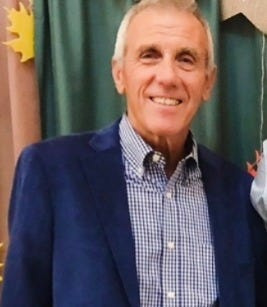
Nick Sudzina is the trial court administrator for Florida’s 10th Judicial Circuit, serving Polk, Highlands and Hardee counties.
This article originally appeared on The Ledger: From bilingual to bench-ready: Developing court interpreters | Guest commentary
Reporting by Nick Sudzina / The Ledger
USA TODAY Network via Reuters Connect