An outbreak of hantavirus on a luxury cruise ship has grabbed worldwide attention.
Three people have died and eight cases of the virus were confirmed on the ship as of May 6.

If hantavirus sounds familiar, it’s because it was in the news just over a year ago. The wife of actor Gene Hackman died from hantavirus pulmonary syndrome in February 2025.
Concerns over hantavirus have exploded after eight cases were confirmed and linked to the cruise ship MV Hondius.
Three people who were infected with the virus have already died, according to the World Health Organization.
Hantaviruses, like coronaviruses, are a family of viruses. The Andes virus, which can spread among people, has been confirmed as the type of hantavirus from the cruise ship.
Andes virus is known to cause severe respiratory disease in people, called hantavirus pulmonary syndrome (HPS), according to the Centers for Disease Control and Prevention.
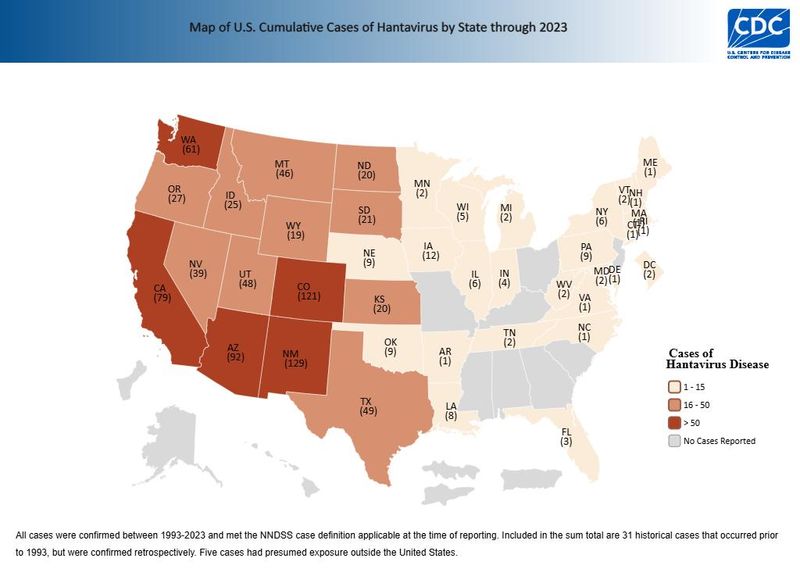
No hantavirus cases have been reported in Florida as of May 11, but HPS isn’t something new to the state. Cotton rats, which can be commonly found in sand pine scrub, pine flatwoods and tropical hammock, have been known to carry a hantavirus strain called Black Creek Canal virus.
Human cases of hantavirus in Florida are extremely rare. There have only been three confirmed cases in the state between 1993 and 2023, according to the Florida Department of Health.
Here’s what Floridians need to know about hantavirus and how the virus is spread.
Is hantavirus in Florida?
Hantavirus cases can be traced back to hispid cotton rats in Florida, but human cases are extremely rare. There have only been three confirmed cases of hantavirus in Florida between 1993 and 2023, according to the CDC.
The United States began hantavirus disease surveillance in 1993. As of 2023, there have been 890 cases reported throughout the country, with 35% of cases resulting in death, according to the CDC.
All three of the people related to Florida’s cases survived. There have been no confirmed cases in the state beyond that data.
Hantavirus in Florida rats
Hantavirus cases in Florida are so rare that the bulk of the state’s information on the subject comes from a single 1993 case and its follow-up investigations in Dade County.
The case involved a 33-year-old Florida man who was hospitalized in October 1993 and diagnosed with sepsis, acute renal failure, acute rhabdomyolysis and suspected disseminated intravascular coagulation following a four-day bout of fever, chills, myalgias, abdominal pain, emesis and malaise.
Prior to his illness, the man had reported seeing rodents in his home and the grassy fields surrounding it. The group of researchers who conducted the study in south Dade County caught and tested nearly 200 rodents, including 90 hispid cotton rats.
Antihantaviral antibodies were found in 12 (13%) of the hispid cotton rats. None of the other rodents tested had antibodies.
The study led to the identification of a “previously unrecognized hantavirus,” Black Creek Canal virus. Researchers concluded that the virus naturally circulates in the population on an ongoing basis.
Why are hantavirus cases in humans so rare?
It boils down to transmission methods. The COVID-19 pandemic was the result of a novel strain of the coronavirus, which spread quickly from person to person through airborne respiratory droplets.
Hantavirus transmission must work through more difficult constraints to spread. The Andes virus type of hantavirus is spread through contact with an infected rodent or its urine, saliva or feces; by touching an object that has been contaminated with the virus and then touching your mouth, nose or eyes; or through close contact with a person infected with Andes virus, according to the CDC.
Most hantavirus types are spread from rodents to humans through direct contact with the infected rodent or its excrement. The Andes virus does spread between people, but it also requires close contact with an infected person.
This article originally appeared on Pensacola News Journal: Florida rats can carry hantavirus. Why don’t we see more cases?
Reporting by Brandon Girod, Pensacola News Journal / Pensacola News Journal
USA TODAY Network via Reuters Connect