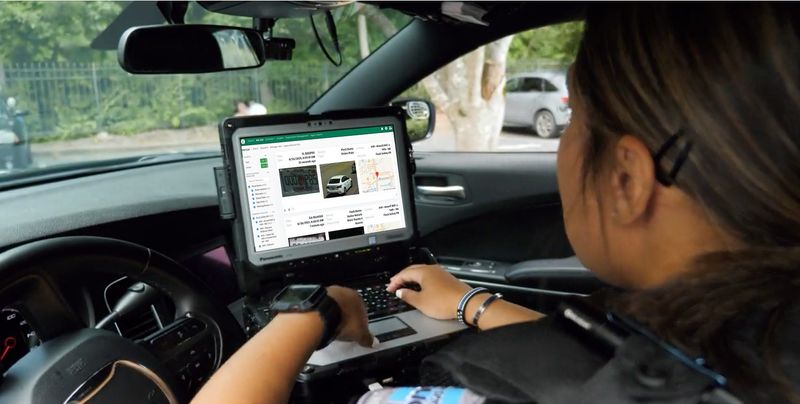
Florida law enforcement agencies share hundreds of thousands of license plate records with other agencies around the country each month, including immigration-related surveillance, police records show.
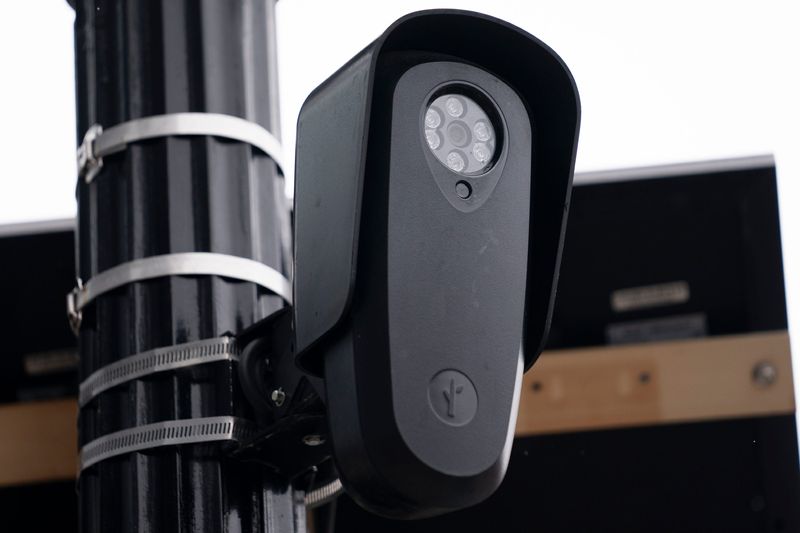
Most agencies use AI-powered license plate reader cameras made by the private company Flock Safety. Its cameras record everything from tag numbers to bumper stickers to car colors. Police do not need a warrant to track drivers, and the data can be stored for weeks.

Flock says its cameras help small police departments find missing people or stolen cars. But a TCPalm analysis of over 5 million Flock searches in Florida show that, since the start of the Trump administration, its cameras increasingly are being used to track down suspected undocumented immigrants.
Three Treasure Coast agencies have said they don’t actively participate in immigration enforcement, but they ran at least 25 searches for immigration reasons in 2025. The number of searches is likely higher, because permissive laws do not require police to disclose why or how they are using this mass surveillance technology.
That lack of transparency temporarily allowed a 2025 Customs and Border Protections program to track U.S. citizens for “suspicious” driving patterns using Flock cameras nationwide, leading to innocent people being stopped and searched, according to the Associated Press.
Flock cancelled its pilot partnership with CBP and other federal agencies last year after public safety and privacy concerns, such as Flock’s history of helping authorities track protestors, abortion-seekers and their ex-romantic partners.
Flock did not respond to TCPalm’s requests for comment.
Florida Flock immigration searches increase
Requests for Florida agencies’ immigration-related Flock surveillance rose 82% from 2024-25. That increase correlates with the start of Trump’s mass deportation campaign, which pledged to remove “millions and millions” of undocumented immigrants.
Although Flock does not currently have a partnership with CBP nor Immigration and Customs Enforcement, Florida police agencies still track license plates on those agencies’ behalf, including some on the Treasure Coast.
“Once you create that data, any police officer who has access to it and has a brother in ICE can share it,” said Jay Stanley, a senior policy analyst at the American Civil Liberties Union.
Treasure Coast police use Flock cameras for ICE
Most Treasure Coast agencies use Flock cameras, which trumpet the technology as an “invaluable force multiplier.”
These agencies used their cameras to help ICE this many times and for these noted reasons:
These agencies previously said they do not take an active role in immigration enforcement, as it falls under federal jurisdiction. Their role often entails storing ICE detainees in local jails until federal agencies take custody under the 287(g) program, which grants local law enforcement limited powers to assist immigration agents, said St. Lucie Sheriff’s Office spokesperson Capt. Andrew Bolonka.
“Immigration is not our primary role,” Bolonka told TCPalm. “Our primary role in 287(g) is typically incarceration. We’re not out there chasing people in cars and knocking on doors.”
Spokespeople for all three agencies declined to comment on their use of Flock cameras, as they are not legally required to disclose “specific investigative actions or individuals.”
St. Lucie County Sheriff Richard Del Toro and Indian River County Sheriff Eric Flowers declined requests for comment.
Tracking Flock’s mass surveillance
When requesting Flock data on a particular target, the user is prompted to enter a reason. Many entries are vague, such as “investigation” or “misc,” or simply a single letter.
“These meaningless descriptions mean we don’t know what the technology is being used for or if it’s justified,” Stanley said.
Because of the loose record-keeping requirements, the use of Flock cameras for immigration enforcement is likely higher than the data shows, he said.
Some users are more specific. For example, the Florida Highway Patrol conducted 1,218 searches from 2024-25 tied to immigration, including entries such as “assist ICE” and “immigration enforcement.”
Here is how the use of these terms increased in Florida in 2025:
The secretive nature of this technology also makes it hard for drivers to know when it is used against them — especially for suspected undocumented immigrants.
“I suspect most people wouldn’t even know if their detention was the result of this technology,” said Paul Chavez, litigation director at the nonprofit Americans for Immigrant Justice, which provides free legal services to low-income immigrants. “They are not likely to be told and not likely to ask.”
How Florida law enforcement use Flock cameras
There are hundreds of Flock cameras around Florida, used by police departments including Sebastian, Vero Beach and Port St. Lucie Police. Others, including Stuart, use similar technology from the private company Vigilant Solutions.
TCPalm was not able to verify if these agencies have used their cameras for immigration enforcement. Nor could it count the number of cameras being used because several agencies declined to provide that number. However, there are online, open-source tools that track reported Flock camera sightings, such as DeFlock.org.
Immigration enforcement represents a small portion of how the technology is used, as Flock cameras collect data on every passing vehicle.
The sheer volume of searches makes it impossible for small police agencies to monitor how the data is used, said Dave Maas, investigations director of the Electronic Frontier Foundation, a nonprofit digital rights group.
“You might trust your local police department or city council, but as soon as you start sharing that data outside your city or state, you lose control of it,” Maas said.
License plate readers used against protesters, abortion seekers
Flock’s dragnet surveillance network has come under fire from members of the public, media and Congress for its use tracking protesters, immigrants, people seeking abortions and drivers pulled over by mistake.
For example, an FHP trooper stopped a driver in Franklin County in March 2025, but the “Flock camera read tag incorrectly. Flock tag expired, vehicle tag is valid,” records show.
The Electronic Frontier Foundation analyzed 12 million Flock search logs and found law enforcement agencies logged hundreds of searches related to protesters during the 50501 No Kings demonstrations in June and October.
In May, the Johnson County Sheriff’s Office in Texas searched 83,000 Flock cameras to track a woman seeking an abortion in Illinois, according to 404 Media, an independent online news outlet. Flock’s search log shows deputies cited the reason as: “had an abortion, search for female.”
What is Flock Safety?
Flock Safety sells law enforcement agencies its surveillance technology and access to its nationwide license plate reader network. During its eight years in business, Flock has mounted cameras in over 5,000 communities across 49 states. The cameras can be fixed roadside or on moving vehicles.
Flock also partners with private businesses, homeowners associations and gated communities. While businesses can’t search the network, law enforcement agencies can access their data. Flock recently made headlines when it cancelled its proposed partnership with Ring’s home surveillance cameras after public backlash.
Clients own their data and can get real-time alerts when a targeted vehicle is scanned by one of their cameras. Users also can search key words and vehicle descriptions using a unique AI feature called “Vehicle Fingerprint.”
The article continues below.
Flock users often request tag data from all Flock clients in a region or state at once. That means when a user wants license plate data in Florida, most Flock-connected agencies statewide receive the same request.
TCPalm’s analysis is based on statewide data stored in the Vero Beach Police Department’s Flock system.
Flock CEO Garrett Langley argued the public should have less insight into how the data is being used. In a Dec. 12 email to clients, Langley said journalists are “trying to turn a public records process into a weapon against you and against us.”
Police Chief Michael Kochis of Charlottesville, Virginia, replied: “People have a right to disagree and have issues with things,” and that “at the end of the day, communities get to have a say on how they want to be policed.”
Jack Lemnus is a TCPalm enterprise reporter. Contact him at jack.lemnus@tcpalm.com, 772-409-1345, or follow him on X @JackLemnus.
This article originally appeared on Treasure Coast Newspapers: Florida police use Flock license plate cameras for ICE surveillance
Reporting by Jack Lemnus, Treasure Coast Newspapers / Treasure Coast Newspapers
USA TODAY Network via Reuters Connect