STUART — Fishing guide Mike Holliday drifts in the channel off Sailfish Point flats and watches small blue crabs float by his skiff in the current.
Just a few years ago, there were no blue crabs, which are bait for such prized gamefish as tarpon and snook. Queen conch and other species of marine life have also returned.

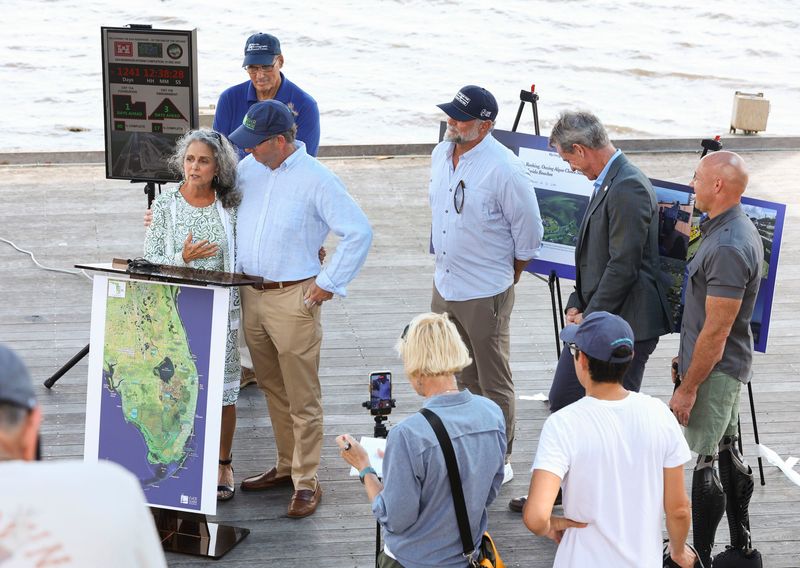
Holliday, a representative of Captains for Clean Water, on Aug. 7 hosted a group of scientists from the Florida Oceanographic Society, the Everglades Foundation, and the Stuart-based Rivers Coalition to commemorate the successes of a series of statewide water quality projects and the positive benefit it has had on the St. Lucie River and Indian River Lagoon.
In 2016, Stuart was ground zero in the battle to take nitrogen and phosphorus-rich water coming out of Lake Okeechobee, clean it and send it south through the Everglades and to the freshwater-starved Florida Bay.
The effort led to some of the most critical components of the Comprehensive Everglades Restoration Project being not only planned and constructed, but in the case of the Everglades Agricultural Area Reservoir, accelerated.
Florida town blanketed in toxic algal blooms
Within the past year, Gov. Ron DeSantis and the state, with the blessing of President Donald Trump, took greater control of the EAA and other CERP components to accelerate the timelines.
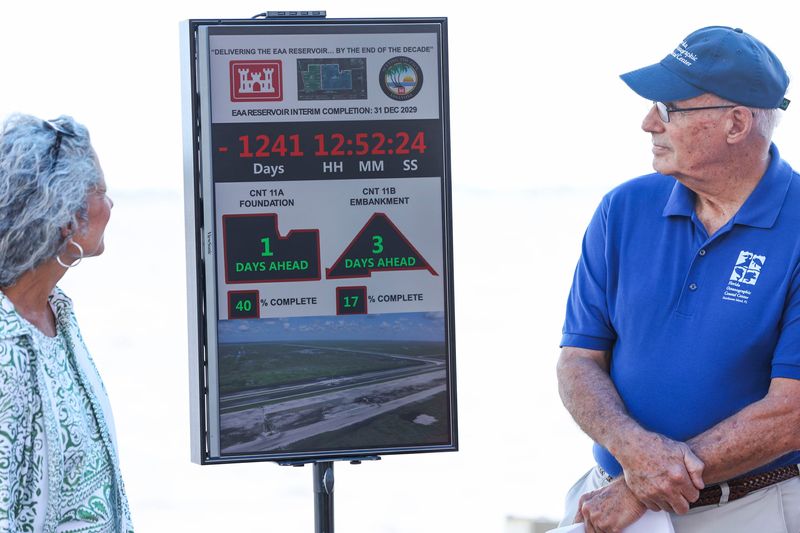
The $4 billion, 1-square-mile EAA Reservoir is expected to be completed in 2030 — five years earlier than planned. The CERP projects still remain the biggest partnerships in Florida between the South Florida Water Management District and the Army Corps of Engineers.
“The whole food web is coming back,” Holliday said. “We are seeing pinfish, mojarras and blue crabs coming back. We had not seen this in 10 years. Five years ago, we would not see blue crabs here. The (St. Lucie) River is extremely resilient and will come back quickly.”
“Life is coming back,” Florida Oceanographic Society Executive Director Mark Perry added. “We know what it can be like. It’s not all gloom and doom, but we have to be vigilant.”
In 2016, the St. Lucie River, Indian River Lagoon and local beaches were blanketed with thick guacamole-looking toxic green algae. Stuart residents and others traveled by bus across the state and to the Florida and U.S. Capitols to stop the discharges from Lake Okeechobee and to move the water south.
The 2016 Lake Okeechobee discharges released about 237 billion gallons of polluted freshwater into the St. Lucie River estuary and the Indian River Lagoon, causing severe ecological damage, massive toxic algae blooms and economic hardship for Stuart and Martin County.
Nutrient loads — including millions of pounds of nitrogen and phosphorus carried from the lake — fed thick, foul-smelling, and toxic blue-green algae cyanobacteria mats that blanketed local canals, marinas and shorelines in and around Stuart, Sewall’s Point and Palm City.
The combined shock of low salinity and reduced water clarity killed roughly half of the surviving oyster populations that had partially rebounded from the devastating “Lost Summer” discharges of 2013, alongside widespread seagrass loss.
Toxic algae forced “do not touch” public health advisories and led waterfront hotels and restaurants in Stuart and Martin County to close during the lucrative Fourth of July holiday.
The 2016 discharges into the river and lagoon served as the catalyst for billions of dollars in projects because of the small, but vocal, community of Stuart and the Treasure Coast.
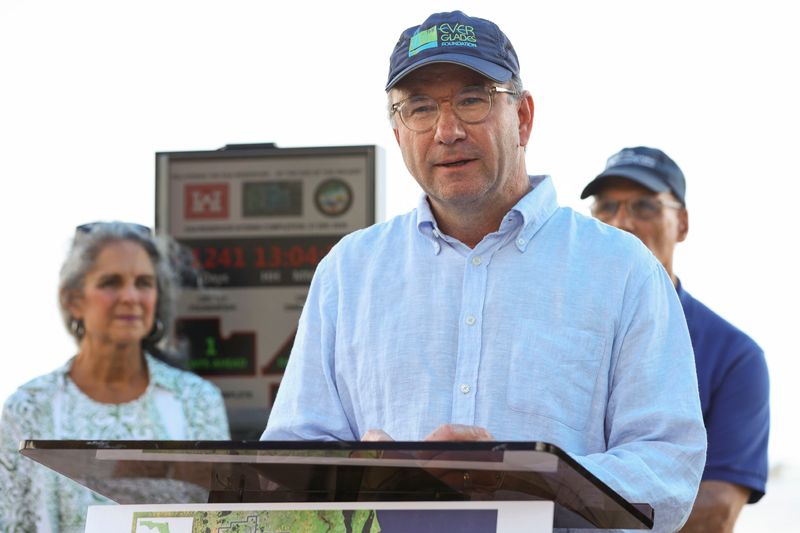
“We are here to commemorate 10 years of progress,” Everglades Foundation Chief Executive Officer Eric Eikenberg said. “It really started in Stuart. I stood at the banks of this river and thought what is going on here?
“The Indian River Lagoon and the St. Lucie River suffered a major catastrophe. This river was covered in blue, green algae,” he said. “The dumping of billions of gallons of polluted water from Lake Okeechobee not only destroyed the environment, but took away jobs. It was a crisis. You never waste a crisis. We rallied together.”
By 2016 the plight of the St. Lucie River and the lagoon reached the attention of then Florida Senate President-elect Joe Negron, a Stuart native who would announce that year the ambitious plan that would become the EAA reservoir south of Lake O.
“He expended a lot of political capital for this,” said Jackie Thurlow-Lippisch, a former South Florida Water Management Board member and Sewall’s Point commissioner. “He would have been governor if he did not spend all of his political capital on this.”
“An impossible dream came true,” Thurlow-Lippisch said of the EAA reservoir.
Florida addresses toxic algal blooms
The discharges and hundreds of tons of nitrogen and phosphorus have declined significantly with the completion of the C-44 Reservoir in western Martin County in 2021. Two other reservoirs in western St. Lucie County, the C-23 and C-24 Reservoirs, are currently under construction and should be operational in the next decade.
Once complete, the EAA reservoir will span parts of Palm Beach, Hendry and Broward counties, extending from the southern edge of Lake Okeechobee to southern water conservation areas.
“We all care because this is our home. Our home is our castle,” U.S. Rep. Brian Mast, R-Fort Pierce, said at an Aug. 7 news conference. “They believed in it, and they fought for it and that’s why we are here. It worked because people believed in it.”
Tim O’Hara is TCPalm’s St. Lucie watchdog, environment and fisheries reporter. Contact him at tim.ohara@tcpalm.com.
This article originally appeared on Treasure Coast Newspapers: Florida city was catalyst for $4 billion Everglades restoration plan
Reporting by Timothy O’Hara, Treasure Coast Newspapers / Treasure Coast Newspapers
USA TODAY Network via Reuters Connect
By Timothy O'Hara, Treasure Coast Newspapers | USA TODAY Network