Florida’s arts community is seeing a rebound in funding in the proposed 2026 –27 state budget.
Lawmakers have proposed spending about $65.9 million in arts and cultural funding, with about a third of that total earmarked as grants for libraries, museums, operas, theater and so on.

But arts and culture program funds in Florida come from two buckets, which makes getting an over-all total to make year-to-year comparisons challenging.
There is the Cultural and Museum Grants (CMG) section, which has $20 million for a list of programs vetted by the Florida Arts Council and Secretary of State’s office. That bucket also has the Culture Builds Florida grant program, which adds another $3.1 million.
At the same time, lawmakers diverted another $38.3 million to the Cultural Facilities Program (CFP), which funds legislators’ requests for local projects that build and renovate museums, theaters and other cultural spaces.
To further complicate the quest to get to the bottom line for the arts, not all the $20 million of CMG money has been allocated. Officials are vetting a second list of applicants to award about $7.5 million of the money. And all of this is spread across a 551-page, $114 billion spending plan.
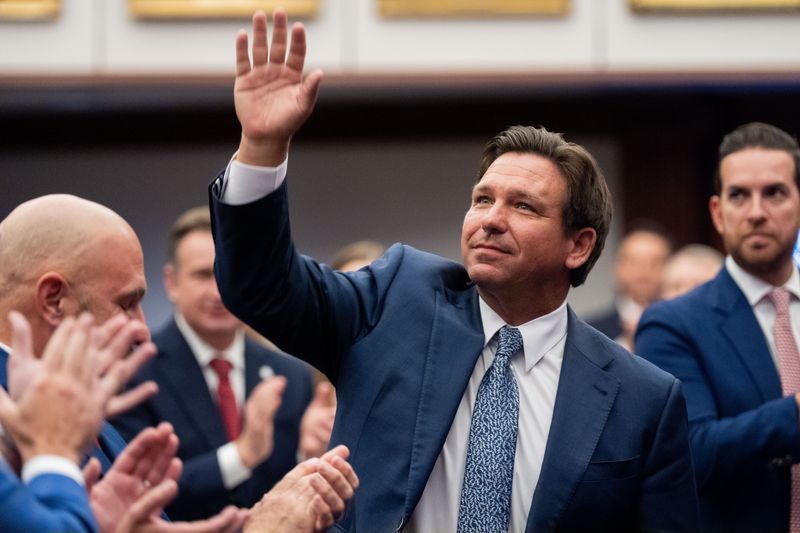
There does appear to be at least $23.4 million in grants for arts- and culture-related programs in the budget awaiting Gov. Ron DeSantis’ review.
“I think it’s been a good year for art advocacy with the decision makers hearing their constituency,” said Jennifer Jones, executive director of the Florida Cultural Alliance, which lobbies for arts and culture organizations.
Arts and culture are funded with “nonrecurring revenue,” which means there are no guarantees that programs will receive state funds every year.
“We made an appeal that we would like to see more funds for more programs, and they said, ‘Here’s some more money,’ so in that respect, that’s good,” Jones said.
Arts funding follows boom-bust cycle
Using comparable state program totals, money for arts and cultural programs in the state budget has followed a sharp boom-bust cycle.
The trend line since 2022 is a ragged arc. It starts with a peak of $59 million, drops to zero in 2024 when DeSantis vetoed the entire grant system, then shot up to $21 million in 2025. Now a slightly larger number is proposed this upcoming fiscal year.
Arts supporters in the Legislature acknowledge an improvement in funding the past two years – but say they also have concerns about how money is allocated.
Rep. Allison Tant, D-Tallahassee, said there has been an increase but the funds have not rebounded to what they were before the 2024 vetoes.
“I would like to see more,” Tant said. “It does not fund everybody that had been on the list, like historic preservation. That’s a big one to me personally, as a native Floridian. I’d like to see more, but we’re just going to keep on keeping on.”
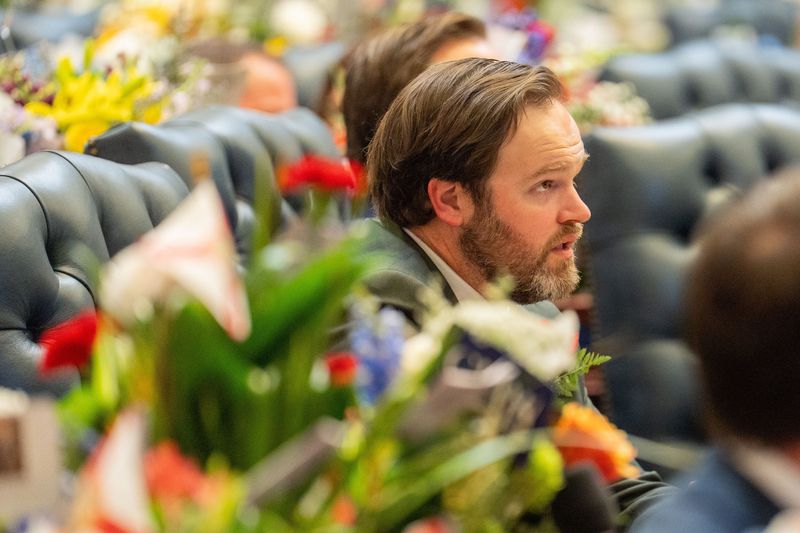
Rep. Alex Andrade, R-Pensacola, chaired the House committee that awarded arts spending in 2024 when DeSantis vetoed all the grants the panel had awarded. He said those vetoes still shape how lawmakers construct the cultural affairs budget.
“That was pretty frustrating,” Andrade said about the vetoes. “I hope he doesn’t veto arts funding this year, especially because if he does, the Florida Department of State approves the list of things that qualify for funding. So if he vetoes that, it’s kind of a referendum on the Florida Department of State more than it is on the Legislature.”
The $20 million CMG fund awards money to a list of applicants compiled by the state and reviewed by the council and forwarded to the Legislature. Having the Department of State prepare the initial list of recommended grant recipients is a post-2024 change, a response to DeSantis zeroing out the arts budget with line-item vetoes.
The list is the starting point for the Legislature, but it is not binding. Lawmakers decide how much funding to allocate overall and how many projects from the ranked list to include in the budget.
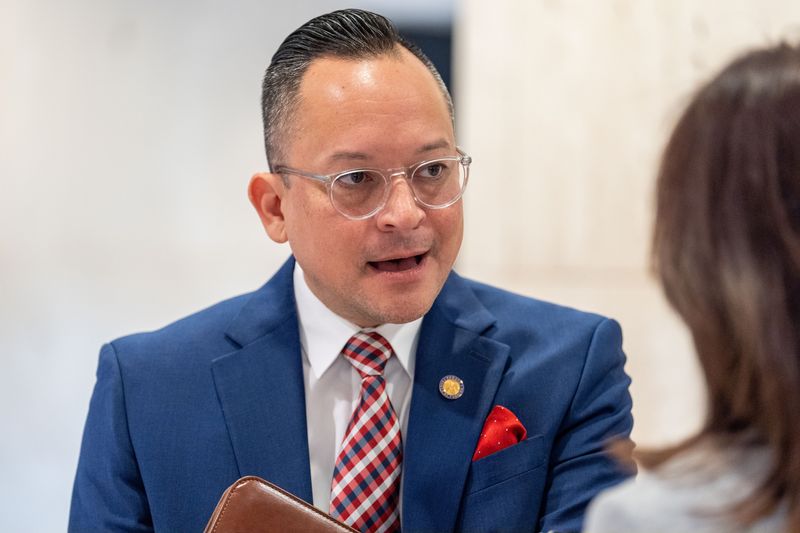
Sen. Carlos Guillermo Smith, D-Orlando, supports the grant system because the programs are vetted by experts. He criticized the larger bucket of $38 million as a threat that “politicizes the arts.”
Arts landed in a better place this year
“When you look at what’s funded in cultural facilities, they didn’t fund any of the projects that were vetted by subject matter experts,” Smith said. “They funded member projects that only got very limited review by the Legislature. That’s not how we should be doing business.”
Smith agrees with Tant and Jones that the arts landed in a better place this year than it had the past two years, but he still has concerns about having the Secretary of State, a gubernatorial appointee, making the initial recommendation of grant recipients.
“The governor has politicized funding for the arts, and until we take a merit-based approach, this is what we have to live with,” Smith said. A request for comment is pending with the governor’s office.
While it appears lawmakers are pouring more money into buildings and facilities, it is not clear exactly how much money is being spent.
The CFP includes large, targeted investments to expand museums and arts centers, such as $2.5 million for the Elie Wiesel Exhibition and Learning Center at the Florida Holocaust Museum in St. Petersburg, and $1.1 million for the Opera Naples Luciano Pavarotti Foundation Arts Center that is being built in Naples.
This year the CFP is also directing money to smaller projects tied to specific communities such as $500,000 for a Florida Orchestra facility project, $225,000 for the Panhandle Heritage Village in Blountstown and $160,000 for enhancements to the Tampa Firefighters Museum.
But there is no single budget line for “arts capital improvements,” that calculates total infrastructure spending. One must add individual projects across the budget to get a comprehensive “all in” number that includes projects not clearly documented as arts or cultural programs.
What is clear is funding for the arts has fluctuated between expansion and retrenchment over the past six years.
Since budgets written in 2022 through this past May, funding has followed a volatile path through policy shifts, legislative priorities, and gubernatorial vetoes. According to data from the Department of State and the Florida Senate, the totals are:
In practical terms, the 2026 proposal represents a structural shift. Rather than relying heavily on member projects alone, lawmakers are funneling money into centralized programs — particularly capital projects — while restoring grant funding at a lower level.
DeSantis has described the veto as a tool to curb what he calls “pork-barrel spending,” saying that when lawmakers approve funding he disagrees with, “I can ‘X’ that out and still sign the entire budget.”
He has also framed his decisions in terms of public accountability.
“If I’m walking down the street and somebody says, ‘Governor, why are we spending money on ‘X’?’ I’ve got to be able to give them an explanation,” DeSantis said after his 2024 vetoes. “If you say, ‘Why are we spending money on gender theory ideology?’ I can’t give an answer to that.”
The proposed 2026–27 budget reflects an effort by lawmakers to rebuild arts funding after those vetoes. In the spending plan they balance grants with money for infrastructure.
But the governor has the final word. Under Florida law, DeSantis must review the budget and decide which items to approve or veto before it takes effect.
That means that even with $65.9 million in arts and cultural funding on the table, the ultimate question for artists and organizations across the state remains how much of that funding will survive the governor’s red pen.
What Florida art projects are being funded?
The budget provides $20 million in programming support, less than half of the $51 million recommended by the Florida Council on Arts and Culture to fully fund grants for 563 non-profit organizations. Of that, $12.4 million will be divided among 121 arts and culture organizations that were included on a list of recommendations by Secretary of State Cord Byrd. Here are those organizations
James Call is a member of the USA TODAY NETWORK-Florida Capital Bureau. He can be reached at jcall@tallahassee.com. Follow on X: @CallTallahassee.
This article originally appeared on Sarasota Herald-Tribune: Florida arts funding grows but faces uncertain future under DeSantis
Reporting by James Call, USA TODAY NETWORK – Florida / Sarasota Herald-Tribune
USA TODAY Network via Reuters Connect