Florida lawmakers have unfinished business.
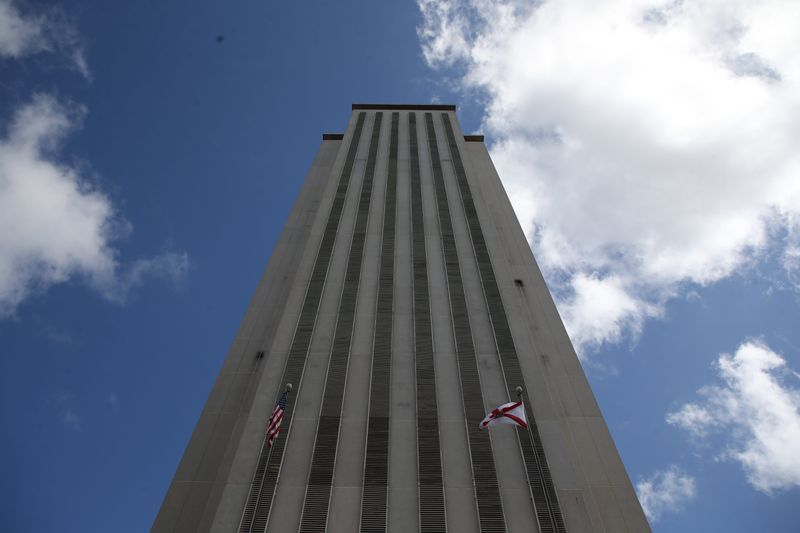
They were supposed to return to the Capitol on May 12 for an extended regular legislative session to negotiate and pass a budget for the fiscal year that begins July 1.

The budget is the only bill the Legislature is required to pass each year, but House and Senate leaders deadlocked during the 60-day session, mainly on the issue of tax cuts. On the scheduled final day, May 2, a “framework” for a deal emerged.
Then it “blew up.”
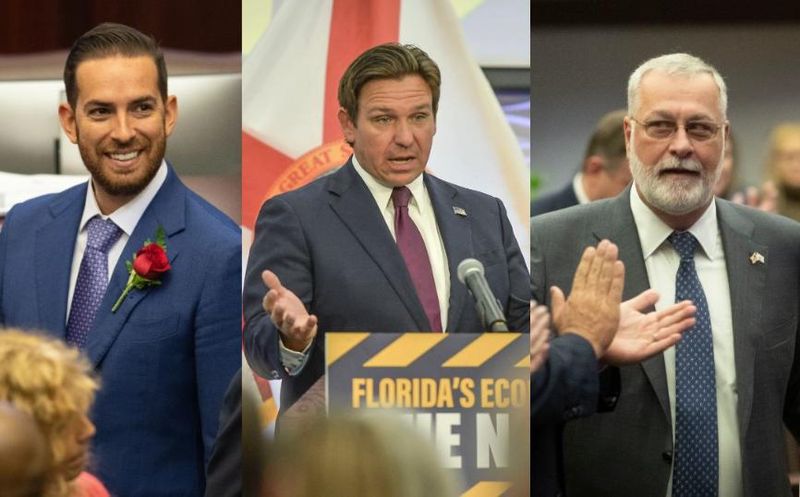
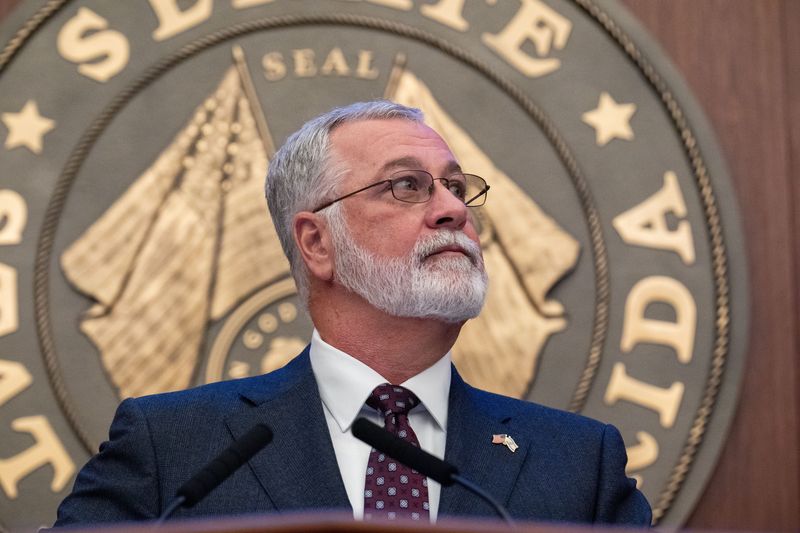
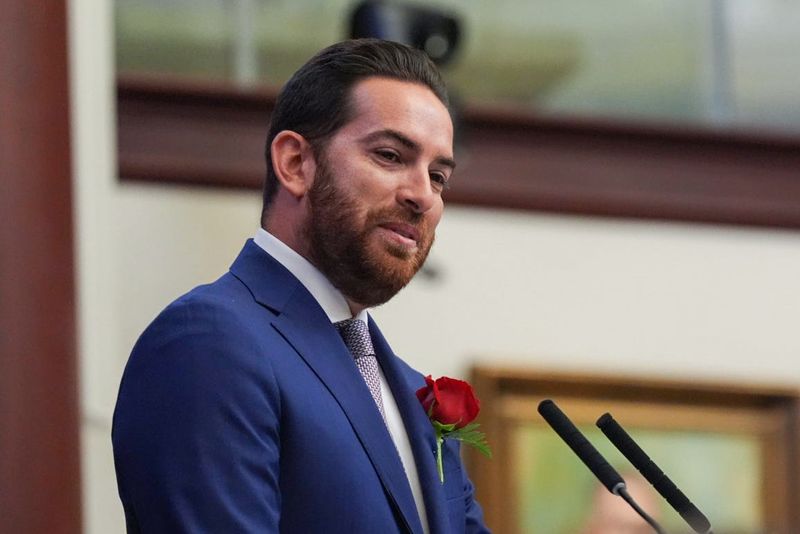
In a May 9 memo to his members that was released to the news media, House Speaker Daniel Perez, R-Miami, said Senate President Ben Albritton, R-Wauchula, broke “his commitment to the House” by saying he would “no longer bring the House’s historic tax proposal to the Senate floor.”
It was for good reason: Gov. Ron DeSantis earlier in the week said he would veto any proposed cut to the state sales tax, Perez’s signature plan, claiming it would jeopardize his own push for cuts to property taxes. “Any ‘Florida last’ tax package is going to be dead on arrival,” he told reporters at an event in Tampa.
Even if some form of tax cuts are agreed upon, there are wide discrepancies between the House and Senate on several major issues that will no doubt require tense negotiations to reach agreement. No one now expects any budget work to happen the week of May 12.
Albritton had, for the most part, remained cordial with Perez despite the gridlock. Yet he’s repeatedly cautioned against cutting taxes too drastically in the face of projected budget shortfalls and uncertain economic headwinds. He has insisted on his signature priority, dubbed the “Rural Renaissance” bill, that the House has resisted.
But he also told his members, after Perez suggested the extra session might have to go as long as June 30, that he wouldn’t trouble them to come back to Tallahassee just for a “procedural” vote to again extend session.
It adds up to an overtime session with much to be resolved. The budget passed by the House in April was $113 billion, about $4.4 billion less than the Senate’s spending plan and $5.6 billion less than the current budget.
Here’s a look at five of the major questions yet to be answered:
Taxes: Will Florida see cuts in sales, property taxes? What about tax holidays?
The framework for the tax cut deal had been this: A $2.8 billion cut overall, with $1.6 billion of that in the form of a 0.25% cut in the state sales tax, lowering it to 5.75%.
What a tax cut bill looks like now remains to be seen, now that the original deal was detonated.
In the House’s initial bill, they included a plan to provide property owners with a rebate by using tourist development taxes, also known as bed taxes, to backfill the money. Counties would be able to determine the details of who would get the rebates.
And going forward, counties would be able to use bed tax revenues for any purpose. Under current law, bed taxes must be used for specific tourism-boosting purposes, including advertising, promotion, stadium and convention center upgrades.
Those provisions are opposed by the tourism industry and aren’t included in the Senate plan.
The Senate bill, though, includes a variety of sales tax holidays lawmakers have passed in recent years, such as on back-to-school items, disaster preparedness items, gear and supplies related to outdoor activities, tools and guns and ammunition.
DeSantis included the “Second Amendment sales tax holiday” in his budget recommendation. But the House didn’t include any sales tax holidays in its bill.
The delay over the budget has already affected one of the planned sales tax holidays. The disaster preparedness holiday in the Senate bill was to run from May 15 to May 31, and the budget isn’t likely to be completed, much less signed into law before that timeframe.
Education: Teacher salaries, vouchers separate Florida House, Senate
For K-12 school funding, the chambers are $237 million apart, with the Senate providing $29.6 billion, and the House at $29.3 billion.
Teacher salaries are the source of much of that difference. The Senate sets aside $1.5 billion for pay increases, which is $248 million more than the current year and $147 million more than the House plan.
There are also major differences in how the chambers approach vouchers. In the Senate plan there’s $4 billion for the Family Empowerment Scholarship program that’s included in the main funding formula for K-12 schools. The House has nearly the same amount, almost $4 billion, but it isn’t part of the main funding formula.
The House also wants to eliminate a fund, known as the Educational Enrollment Stabilization Fund, which is used to prevent cuts to school districts with drops in student levels throughout the year.
The Senate prefers to allow the fund, which had $118 million in the current year, to be used to pay for private school scholarships if the applications for the vouchers exceed the money set aside for those programs.
Health care: Access to health programs, reimbursements to rural hospitals separate Florida House, Senate
The chambers are $1.7 billion apart in spending on health and human services, but the most difficult gap to resolve likely involves initiatives championed by Senate leaders but resisted by the House.
Part of Albritton’s “Rural Renaissance” includes $72.5 million to the Department of Health and the Agency for Health Care Administration to boost access to health care programs in rural areas and provide greater reimbursements to rural hospitals. The House doesn’t include those measures in its budget.
It also wants to reverse a decision by the Legislature last year to fund several parts of the “Live Healthy Act” that Albritton’s predecessor, Sen. Kathleen Passidomo, R-Naples, made a top priority. Passidomo stepped aside as Senate president but remains chair of the Rules Committee and will be an influential voice in budget talks.
The Live Healthy Act put an additional $38 million per year into programs to help those pursuing medical education and set up the Health Care Innovation council. The House would eliminate those in its budget plan.
Gambling revenue: Should money go to environmental programs or state’s general fund?
The House also wants to put all revenue from the state’s gambling compact into the General Revenue Fund, the main pot to pay for many state operations. That would reverse a decision made by lawmakers last year to distribute the funds to specific environmental programs.
Under the current law, more than $834 million goes to water quality improvement projects, land buying programs and other environmental uses, including $32 million for state parks and $100 million for the Florida Wildlife Corridor. That was another top priority for Passidomo during her tenure as Senate president.
Economic uncertainty could affect Florida, with its heavy reliance on sales taxes
Underlying the budget battle are state economists’ projections for the revenue Florida will receive next fiscal year.
Those projections were made in March, before President Donald Trump’s April 2 announcement of new tariffs on imports from nearly every country.
➤ Trump teases ‘major trade deal’ announcement amid tariff fight
The tariffs sent stock markets into a tailspin and upended previous economic predictions. Trump, though, is sticking to his tariffs as a way to get companies to bring back manufacturing jobs to the U.S., even if that means massive disruption to supply chains and less trade with other countries.
“I’m just saying they don’t need to have 30 dolls. They can have three. They don’t need to have 250 pencils. They can have five,” Trump told NBC’s “Meet the Press” on May 4.
But if people buy less stuff that would be bad for a state like Florida that is so reliant on sales taxes for revenue. Sales taxes are projected to account for 76% of the state’s revenue in the current fiscal year.
If a prolonged economic downturn results in less consumer spending, it could put a significant dent in revenues, bringing lawmakers back to the Capitol to either make large spending cuts — or undo whatever tax cuts they eventually agree on.
Gray Rohrer is a reporter with the USA TODAY Network-Florida Capital Bureau. He can be reached at grohrer@gannett.com. Follow him on X: @GrayRohrer.
This article originally appeared on Tallahassee Democrat: Five big budget issues: Tense times ahead as feuding Florida lawmakers take on DeSantis
Reporting by Gray Rohrer, USA TODAY NETWORK – Florida / Tallahassee Democrat
USA TODAY Network via Reuters Connect