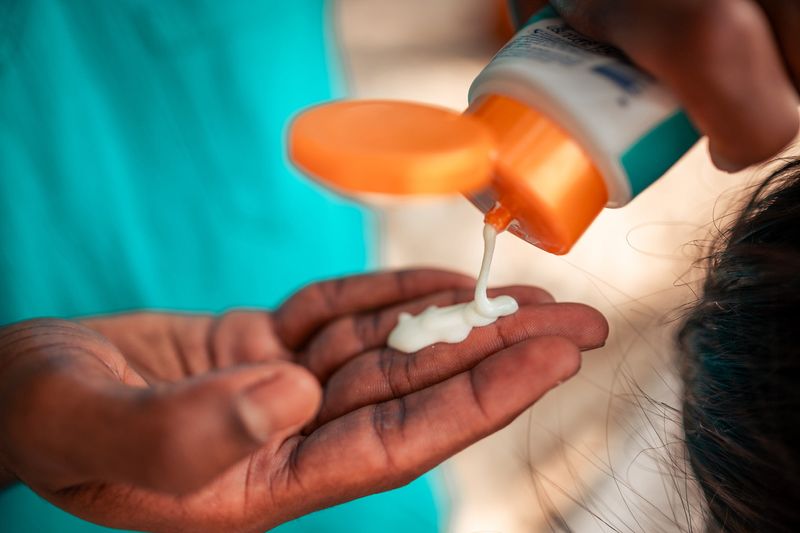
July may be National UV Safety Month but we South Floridians have long known that our tropical climate means we need to be vigilant year-round when it comes to sun protection.
But what we may not be aware of is that an alarmingly high number of sunscreens on the market are not as effective as they purport to be.

At least that’s according to Environmental Working Group’s annual report on sunscreens, which was released in late May.
Environmental Working Group is a consumer watchdog organization and has been scientifically reviewing sunscreens since 2007.
Among the headlines in its most recent report: Of the 2,200 sunscreens available to consumers, around 500 of them — that is, fewer than 25% — meet the organization’s criteria for being worthy of recommendation.
“Our criteria include the ability of the sunscreen’s active ingredients to provide balanced protection against both UVA and UVB rays, as well as any hazardous chemical ingredients in the product,” said Environmental Working Group Chief Acting Science Officer David Andrews.
“There are nearly 500 products we are recommending consumers seek out as their first option. We want people to wear sunscreen and at the same time recognize there are other ways to protect their skin as well — seeking shade, wearing wide-brimmed hats, lightweight long-sleeve shirts and pants and covering up your feet are very effective ways, especially if you’re concerned about sunscreen ingredients.”
Understanding how sunscreens work
Sunscreens come in one of two classifications: “chemical” or “mineral.”
With chemical sunscreens, organic compounds, such as oxybenzone and octinoxate, are supposed to work like sponges to absorb UV radiation.
With mineral sunscreens, inorganic compounds containing zinc oxide and/or titanium dioxide shield the skin, thus reflecting and/or scattering UV radiation off the user.
“The most important things to consider when choosing a sunscreen are spectrum of coverage, SPF (sun protection factor) and water resistance,” said Cleveland Clinic Florida dermatologist Dr. Paul Benedetto.
“People should choose a broad-spectrum sunscreen, meaning that it protects against both UVA and UVB light. SPF of at least 30 or greater is appropriate for routine daily use and SPF of 50 or greater for expected heavy sun exposure,” Benedetto said. “And if you’ll be participating in water activities or sweating heavily, you’ll want a high water-resistance rating, like 80 minutes or more.”
While Benedetto didn’t differentiate between sprays, lotions, sticks, creams or gels and recommended people use whatever felt best on their skin, a recent report by CNN noted that “testing released in 2019 by the US Food and Drug Administration found seven chemical ingredients — avobenzone, oxybenzone, octocrylene, ecamsule, homosalate, octisalate, and octinoxate — were absorbed from the skin into the bloodstream after a single day of use. The concentration of the seven chemicals in the blood increased each day after application and remained above FDA safety levels a week later. Two of the chemicals — homosalate and oxybenzone — were still above safety thresholds at day 21.”
CNN also noted that “oxybenzone has been linked to lower testosterone levels in adolescent boys, hormone changes in men, and shorter pregnancies and disrupted birth weights in babies.”
Environmentalists also decry that these chemicals can make their way into our wastewater and oceans, potentially harming both marine life and coral reefs.
The lowdown on sunscreen ingredients
Environmental Working Group said that in recent years, while the use of oxybenzone in chemical sunscreens has significantly decreased (down from a peak of 70% of sunscreens to just 9% now), it is concerned about the increasing use of underregulated SPF “boosters” in sunscreens. The organization says these boosters “may inflate a product’s SPF values without enhancing broad spectrum protection against the sun’s ultraviolet A or B, or UVA and UVB rays.”
The organization points out that unlike Europe and Asia, where stricter rules govern UVA protection, the U.S. still permits the sale of sunscreens carrying inflated SPF numbers while offering little assurance of UVA protection against deep skin damage.
The 2025 report says that the increasing use of the booster ingredient butyloctyl salicylate, or BOS, in sunscreens is of particular concern.
BOS is a common sunscreen additive that’s purported to improve texture, boost SPF ratings and stabilize active ingredients.
But Environmental Working Group cautions that it also may contribute to misleading information about a product’s sun protection capacity and also notes that some research suggests that the body may have trouble fully absorbing and metabolizing salicylic acid.
More than 60 sunscreens earn highest marks
With so many sunscreen products to choose from, Environmental Working Group takes seriously its mission to provide consumers with as much information as possible — as well as a host of recommendations.
“Even if a sunscreen delivers its labeled SPF, it may fall short by containing concerning ingredients,” said Andrews. “Our top-rated products offer balanced protection from UVA and UVB radiation.”
The Environmental Working Group’s 2025 Guide to Sunscreens features a myriad of options for consumers — including categories such as beach sunscreens, sunscreens for babies and kids, moisturizers and lip balms with SPF.
It also noted that more than 60 sunscreens qualified this year for the organization’s mark of verification — meaning they “meet Environmental Working Group’s highest standards for safety, transparency and UVA/UVB protection.”
You can read Environmental Working Group’s 2025 Guide to Sunscreens by visiting ewg.org/sunscreen/.
This article originally appeared on Palm Beach Post: Consumer group says 77% of sunscreens don’t meet safety, efficacy standards — does yours?
Reporting by Steve Dorfman, Palm Beach Post / Palm Beach Post
USA TODAY Network via Reuters Connect