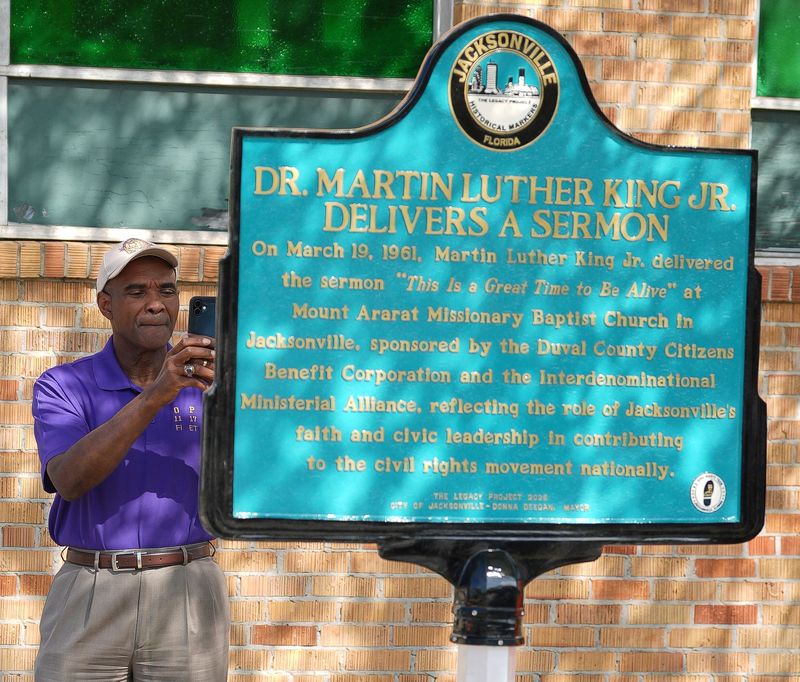
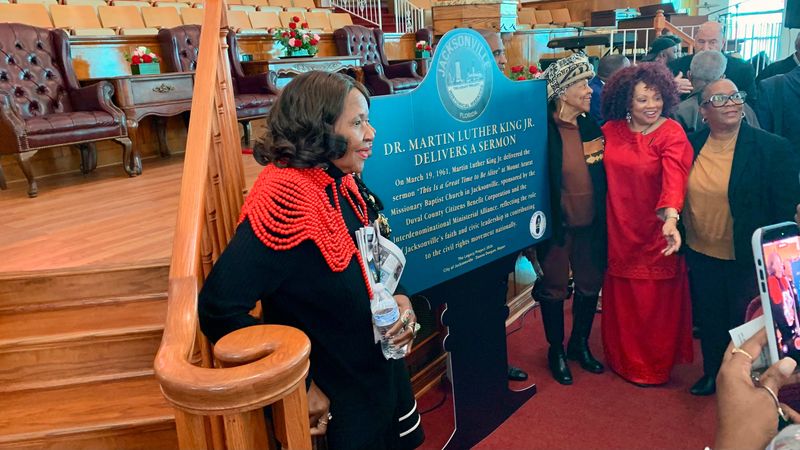
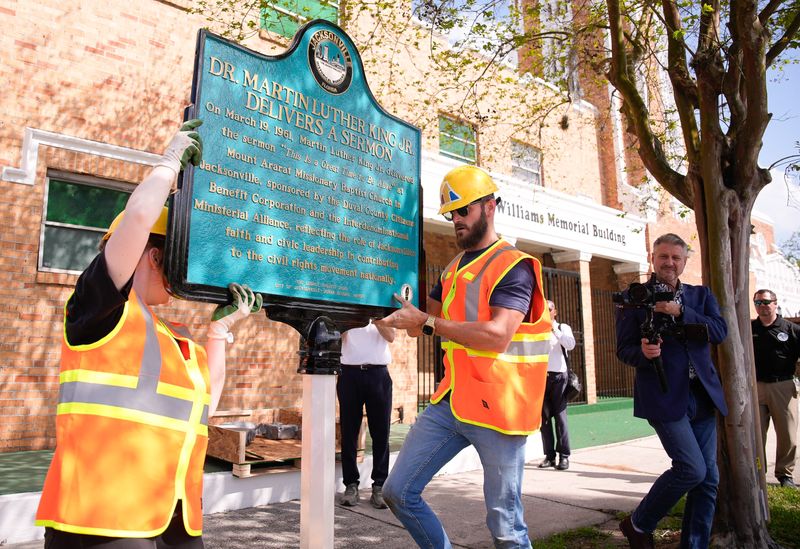
The kickoff event for Jacksonville joining the U.S. Civil Rights Trail featured a marker standing a few feet from the pulpit where Martin Luther King Jr. delivered a sermon titled “This Is a Great Time to Be Alive.”
In the coming months, dozens of such markers will go up around Jacksonville highlighting places where all the facets of the Civil Rights Movement — sit-ins and court battles, non-violent protests and violent reactions, sermons and organizing, riots and unrest, the presence of King and other civil rights leaders — left their mark on the city.

Mayor Donna Deegan made joining the U.S. Civil Rights Trail a goal when she took office in 2023. The city officially got the designation in February, capping a pursuit started in 2018 by city Chief Financial Officer Anna Brosche when she was City Council president.
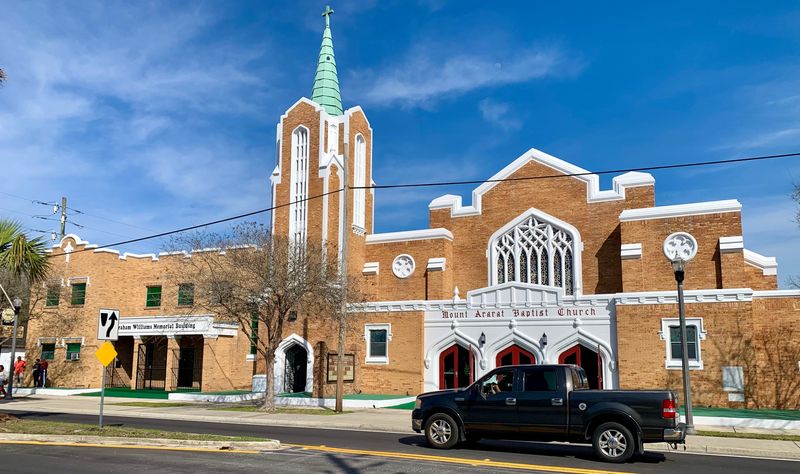
“Eight years is a long time but the arc of the moral universe is long and it bends toward justice,” Jacksonville NAACP President Isaiah Rumlin said at a Feb. 25 event at Mt. Ararat Missionary Baptist Church.
He said the next step should be to create a “world-class African-American museum right here in the city of Jacksonville” as other Civil Rights Trail cities have done.
Here are the places that are in the pipeline to get the markers people will be able to check out when they follow an online map taking them on a journey through the Civil Rights Movement. Some spots are familiar landmarks. Others will be at places where buildings no longer exist.
Protests and lunch counter sit-ins
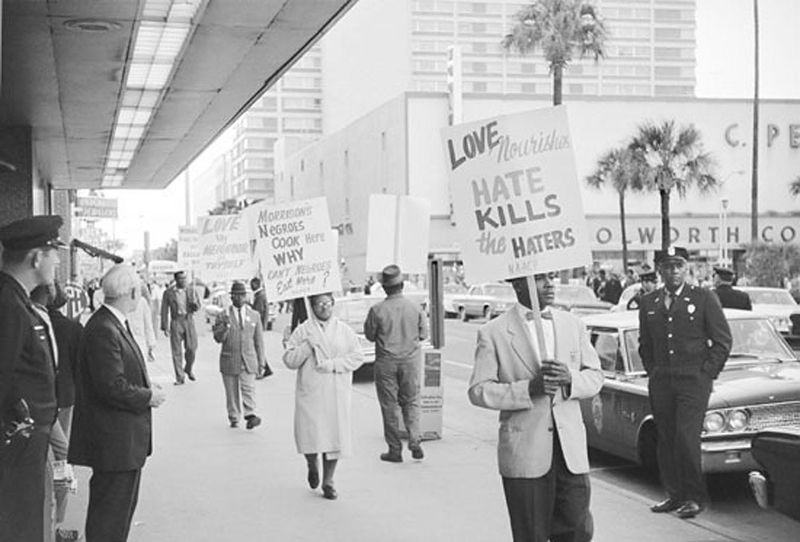
Five markers will show where protestors did lunch counter sit-ins at segregated businesses. The markers will be at the former sites of F.W. Woolworth, Morrison’s Cafeteria, the W.T. Grant Department Store, Leb’s Restaurant and Robert Meyer Hotel.
The passage of time means the buildings and their counters are long gone. The U.S. Civil Rights Trail in Greensboro, N.C. includes the International Civil Rights Center & Museum featuring the original seats and counter from the Woolworth in that city where the sit-in movement started and spread to other cities including Jacksonville.
Jacksonville doesn’t have a piece of history like that, but the Civil Rights Trail markers will illustrate how close together the protest sites were when downtown was the gathering place for Jacksonville.
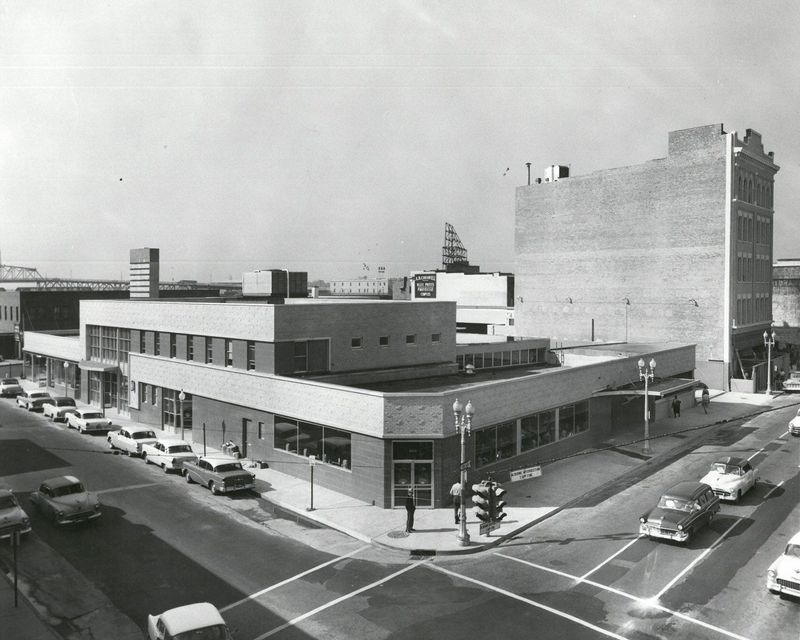
Freedom Riders at Greyhound bus station
Jacksonville native Hank Thomas was one of the 13 original Freedom Riders who rode on Greyhound buses to protest racial segregation in transportation. The bus stopped in Jacksonville at the Greyhound station that has since been demolished.
Thomas later won a Purple Heart during service in the Vietnam War and went on to develop and operate hotels and restaurants. Thomas is the last surviving Freedom Rider.
Ax Handle Saturday: Racist violence and a sanctuary
Three markers about Ax Handle Saturday will be installed at James Weldon Johnson Park, Snyder Memorial Church and Springfield Park. A fourth marker will highlight an NAACP leader who helped guide the youth-driven protests.
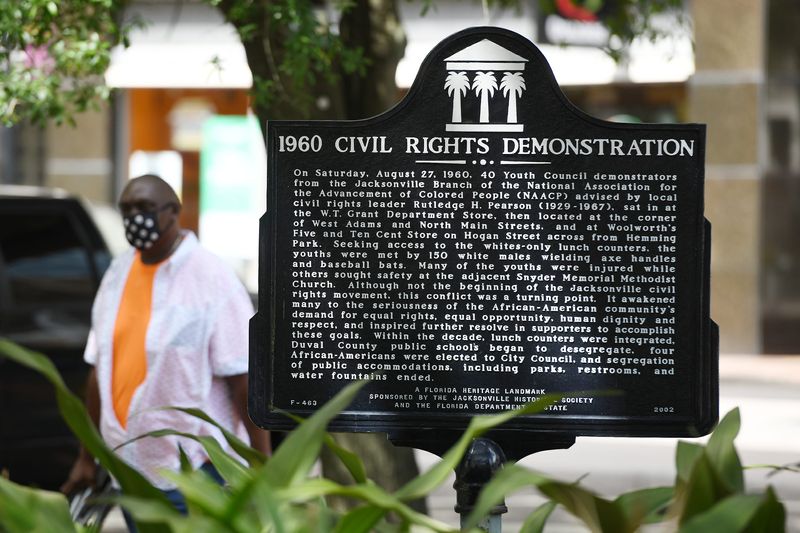
James Weldon Johnson Park already has a marker installed in 2002 that recounts how a white mob armed with baseball bats and ax handles attacked 40 youth council members of the NAACP doing a sit-in at W.T. Grant Department Store on Aug. 27, 1960. The mob also threated Black residents who happened to be in that part of downtown.
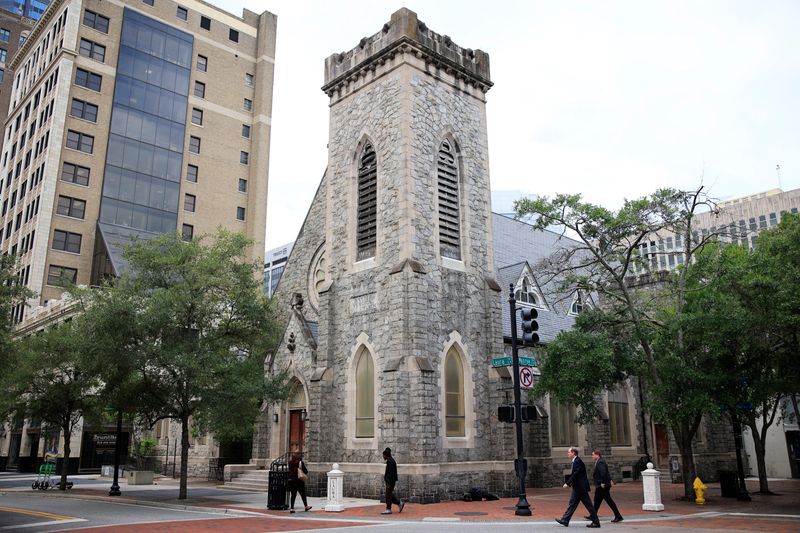
A second Civil Rights Trail marker for Ax Handle Saturday will go at Snyder Memorial Church along Laura Street. The church was a safe haven that day and was served afterward as a meeting place for white businessmen, ministers and activists.
The church has been vacant for years but the city is seeking an owner who would restore it for public use.
The U.S. Civil Rights Trail also will have a marker at Springfield Park (formerly Confederate Park) that the Ku Klux Klan used for organizing the Ax Handle Saturday attack.
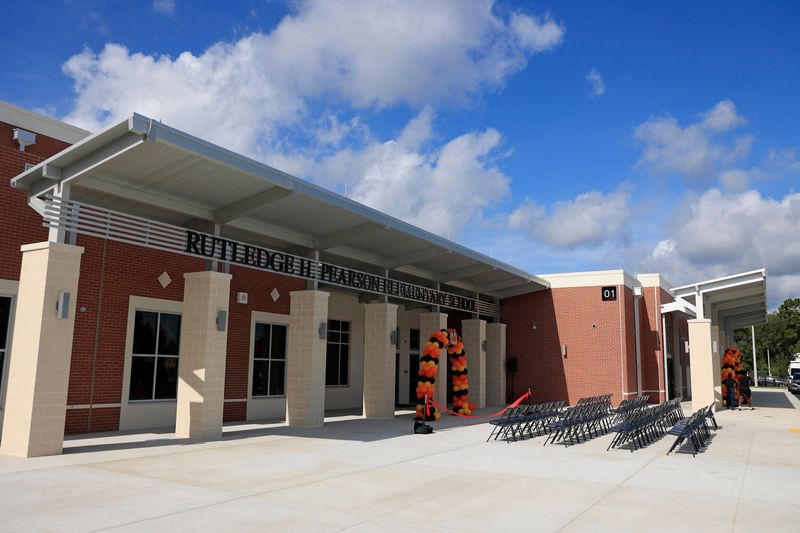
The Civil Rights Trail will put a marker at Rutledge H. Pearson Elementary School recognizing the work Peason did organizing peaceful demonstrations in Jacksonville. He worked closely with youth protestors including those who took part in lunch counter sit-ins that Ax Handle Saturday rioters attacked.
Black churches gave “refuge, unity and sense of strength”
Three markers will go at Mt. Ararat Baptist Church, St. Paul A.M.E. Church and The Bethel Church for the roles they played as hubs for organizing and community education. They are among the many churches designated for inclusion on the Civil Rights Trail in Jacksonville and other cities.
“In all of our civil rights, the church has played a major role,” Elder Lee Harris, senior pastor Mt. Olive Primitive Baptist Church, said at the event inside Mt. Ararat Baptist Church.
“If you look back across history, the African-American church — the Black church — was more than a site of religious worship,” Harris said. “It transformed into an important hub of education, political action and social organization, especially in moments of racial oppression in a country that systematically oppressed African-Americans. The church provided refuge, unity and a sense of strength.”
MLK and JAX: King’s path from pulpit to homes to jail cell
Five of the markers will highlight the presence of King in Jacksonville during his continuous travels for the Civil Rights Movement.
In addition to the marker at Mt Ararat where King preached on March 19, 1961, the Civil Rights Trail will mark where King went after the sermon to meet local Black civic leaders at the Moncrief home of Isadore Singleton.
Singleton was president of the Jacksonville Negro Chamber of Commerce. His wife Mary made history in 1967 when she and Sallye Brooks Mathis were elected as the first Black members of Jacksonville City Council in decades and the first women ever on City Council.
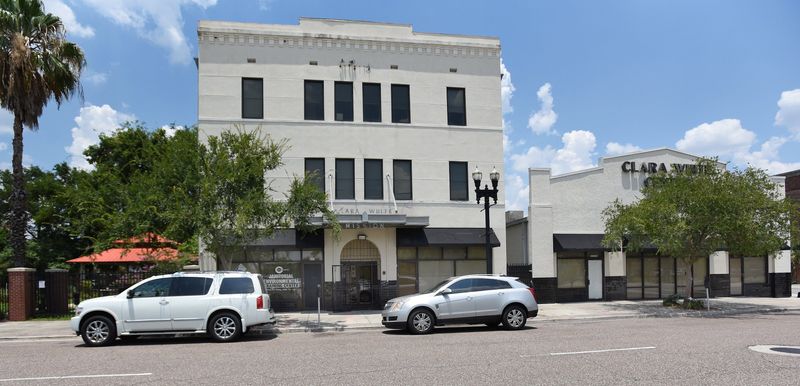
On a later trip, King stayed in 1964 at the current site of the Clara White Mission. The building in downtown is the former home of Jacksonville civil rights leader Eartha M.M. White.
After St. Augustine authorities arrested King on June 11, 1964, as he led protests in that city, he was held first in the St. John County jail and then moved to the old Duval County jail after facing death threats in St. Johns County. A marker will designate his jail confinement.
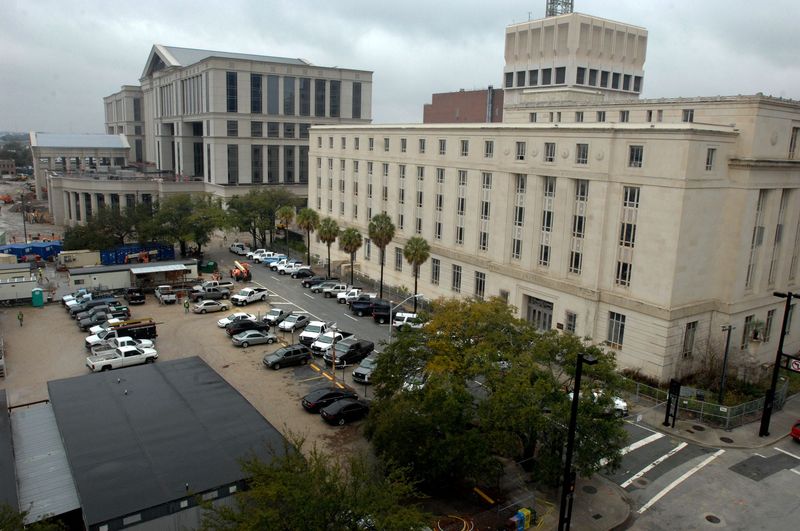
A fifth marker about King will go at the former federal courthouse where he appeared before U.S. District Judge Bryan Simpson on June 13, 1964. Simpson ordered St. Augustine city officials to not interfere with King’s organization of marches and protests.
The former federal courthouse is currently occupied by the State Attorney’s Office, which has noted young people and other visitors are able to sit in the same witness box where King sat.
Just weeks after Simpson issued his order, King joined President Lyndon Johnson when he signed the sweeping Civil Rights Act on July 2, 1964.
School integration: Lawsuits and a bombing
Seven of the markers will recognize the importance access to education played in the Civil Rights Movement.
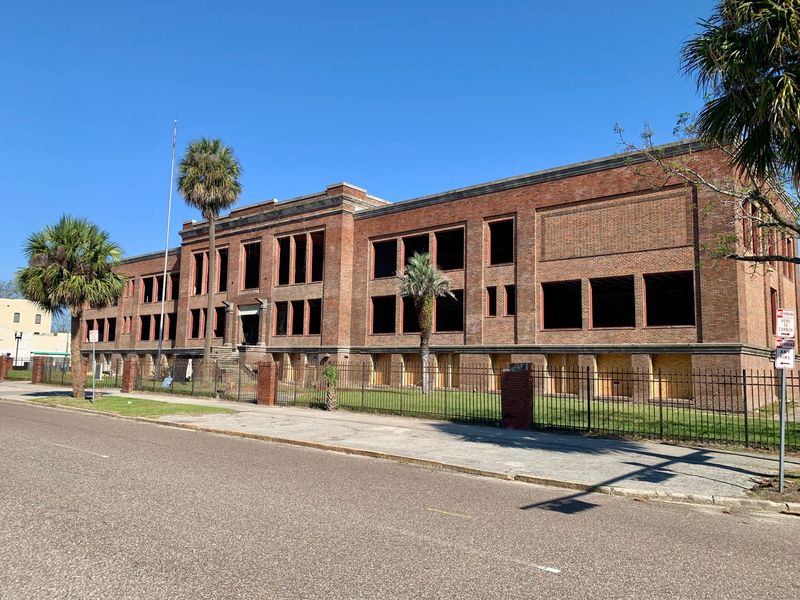
Two markers will be in Murray Hill where Donal Godfrey’s family enrolled him in Lackawanna Elementary in 1963 when at the age of 6, he was the first Black student at the neighborhood school for Murray Hill.
One marker will go at Lackawanna Elementary (vacant now since it closed in 2008) and the other at the place where an explosion tore through his childhood home on Gilmore Street on Feb. 16, 1964.
He and his family survived the bombing because the sticks of dynamite placed by Klansmen exploded on the opposite side of the house where they were sleeping.
Another marker will describe the long legal battle to end segregation in Duval County public schools that started in 1960 with the Braxton v. Duval Schools. Simpson — the federal judge who heard the case involving King — ordered an end in 1962 to segregated schools.
Desegregation moved slowly. In 1971, local NAACP leader Eddie Mae Steward sued in federal court on behalf of her daughter and the court ordered a comprehensive plan for ending segregation in the school system that included busing of students.
The Civil Rights Trail will put a marker at the U.S. post office on Main Street in the Springfield neighborhood named after Seward, who was a leader of the NAACP in Jacksonville and at the state level.
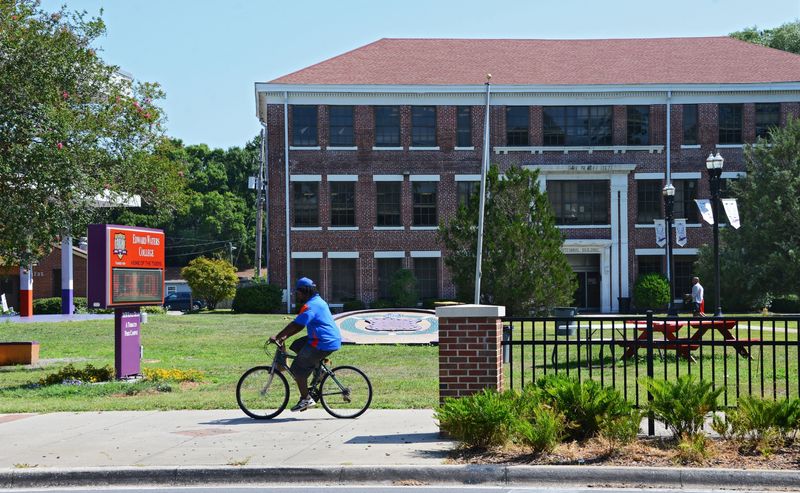
Three markers will go up at schools: old Stanton Vocational High School, Darnell-Cookman School of the Medical Arts and Edward Waters University.
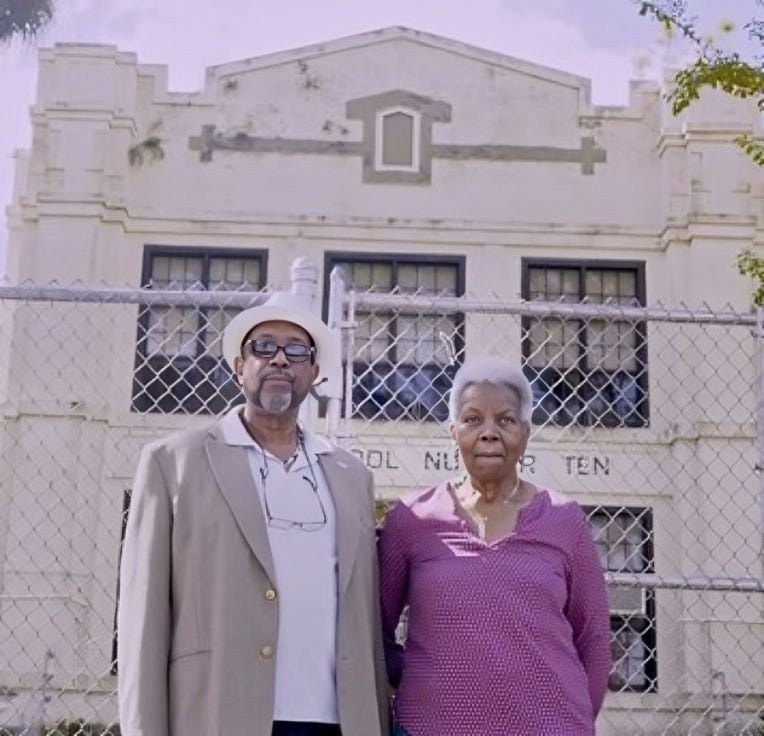
The old Stanton Vocational High School at Broad and Ashley streets tapped into the energy of students for civil rights activities. The building is vacant but an effort is underway to preserve it for future use.
The Civil Rights Trail will spotlight Darnell-Cookman school for representing educational advancement and professional opportunities that are possible for Black students. The school takes its name for the Rev. S.B. Darnell who founded the Cookman Institute in 1872 and named it after Rev. Alfred Cookman as Florida’s first school of higher education preparing Black students to become teachers.
Edward Waters University, founded in 1866 by members of the African Methodist Episcopal (AME) Church, was the first institute of higher education in Florida. Previously known as Edward Waters College, it was a center of student activism and community organizing during the civil rights movement.
Riots and a woman killed solely because of her skin color
Three markers will describe how riots that broke out in U.S. cities shook Jacksonville.
During a month of civil rights protests at Jacksonville hotels and restaurants, Mayor Haydon Burns vowed Jacksonville would remain a segregated city. The city “exploded into a violent confrontation between African-Americans and white citizens” on March 22, 1964, according to a U.S. Department of Justice report. “At least 10 fire bombings occurred that night and over 140 people, all African-American, were arrested.”
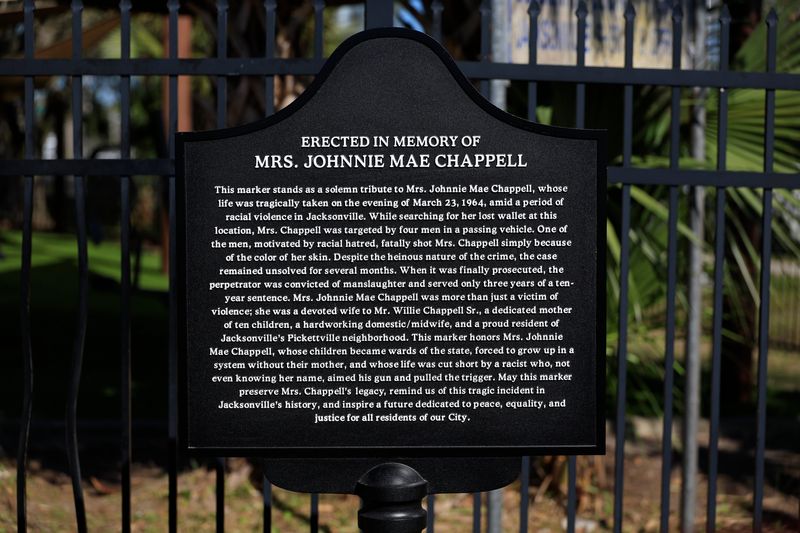
Miles away from the violence, Johnnie Mae Chappell was walking along New Kings Road searching for a lost wallet when a gunman in a car full of white men shot her based solely on the color of her skin. She died while an ambulance took her to the hospital. She was 35 and left behind a husband and 10 children.
The city of Jacksonville erected a marker in February 2025 memorializing Chappell.
A third marker will designate the Halloween Riot of 1969. After a white cigarette salesman shot at a group of young Black men near his truck on Florida Avenue (now called A. Phillip Randolph Boulevard) in the Eastside neighborhood, riots broke out along eight blocks of Florida Avenue in 1969.
A. Philip Randolph: A civil rights giant shaped by Jacksonville
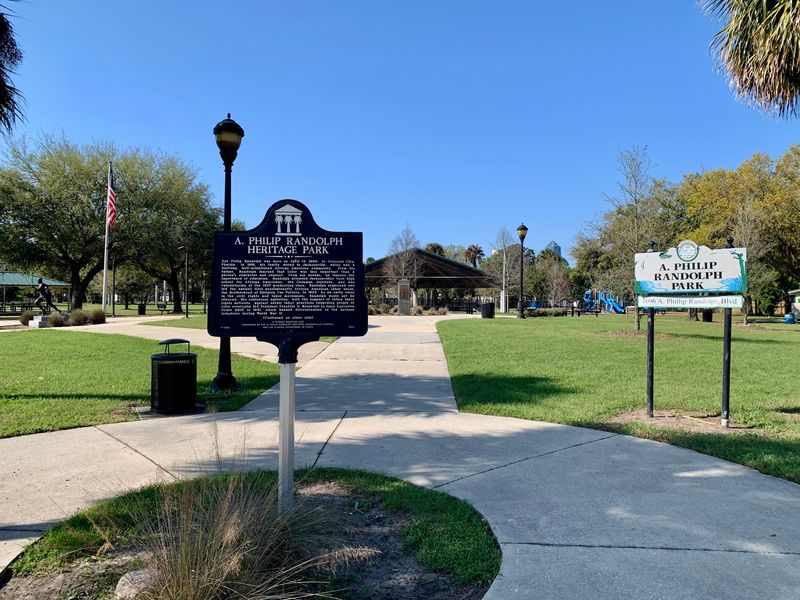
An existing marker at the Eastside park named for A. Philip Randolph says after graduating in 1907 from high school in Jacksonville, Randolph went on to lead nation’s first predominantly Black labor union — the Brotherhood of Sleeping Car Porters. His protests against racial discrimination in the armed forces helped convince President Harry Truman to end the practice in 1948.
“Randolph’s effective use of non-violent civil disobedience was an inspiration for later civil rights leaders,” the plaque says. “In 1963, he partnered with Dr. Martin Luther King, Jr., and other activists to carry out the March on Washington for Jobs and Freedom, one of the largest civil rights demonstrations in American history.”
A second marker for Randolph will go at A. Philip Randolph Career Academies of Technology, formerly the Northside Skills Center, recognizing Randolph’s drive for education and career advancement.
J.P. Small Memorial Park
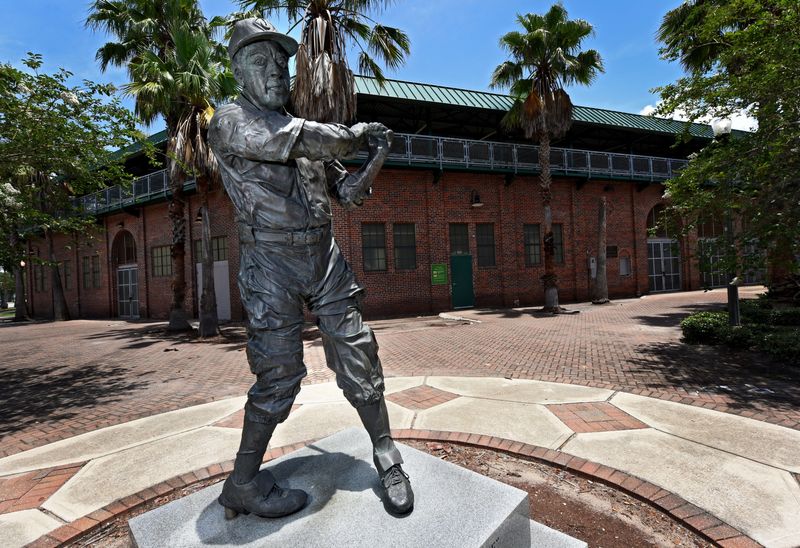
The longtime fixture of the Durkeeville neighborhood was known as Durkee Field when it was the home stadium for Negro League and minor league baseball teams. Henry Aaron, Leroy “Satchel” Paige, Roy Campanella, James “Cool Papa” Bell and William “Judy” Johnson were among those who played at Durkee Field. The city has made several million dollars of stadium upgrades in recent years.
The Armory
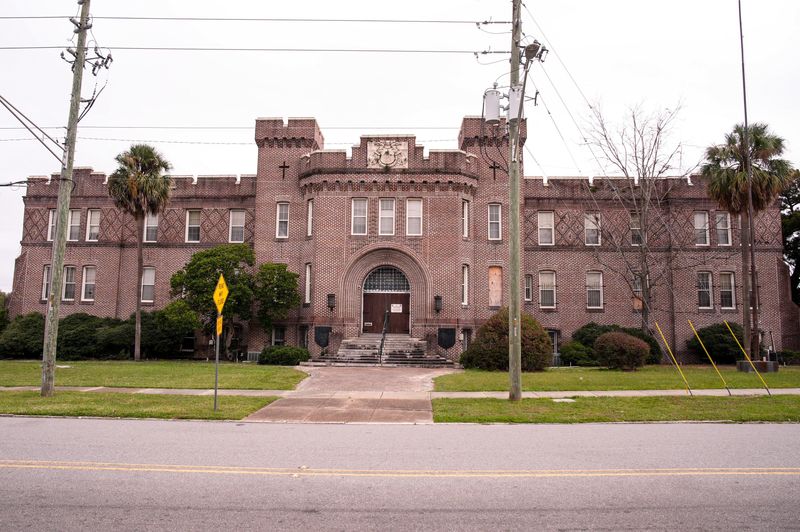
When famed opera singer Marian Anderson refused to perform before a segregated audience at The Armory in 1952, her shows Jacksonville and Miami were the first integrated concerts in Florida since the Reconstruction era. The building is vacant but a developer has plans for it to become a food hall and place for artists.
Brentwood Golf Course
A legal challenge ended segregation at city-owned golf courses as the civil rights era broke down Jim Crow laws at public facilities.
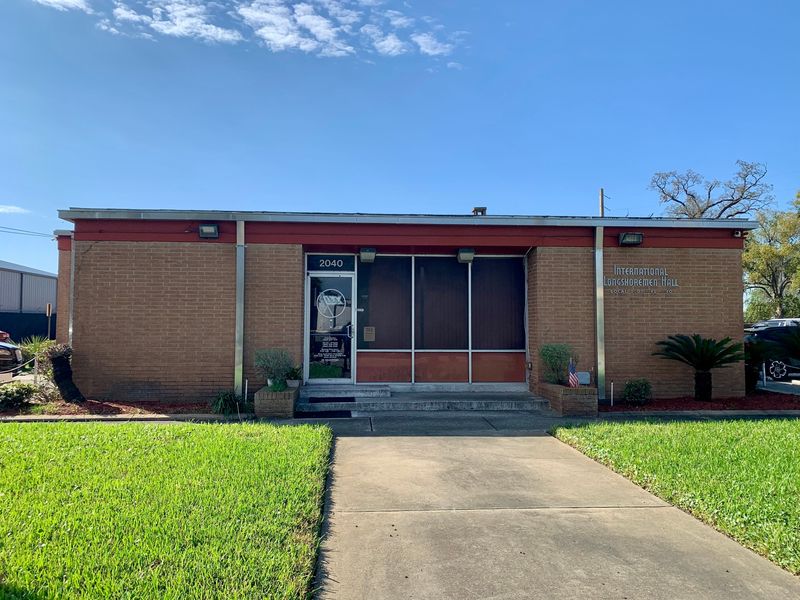
International Longshoremen’s Association Hall
The Civil Rights Movement generated a drive for economic justice for Black dockworkers so they could gain long-term financial equity for the work they do.
John Milton Bryan Simpson United States Courthouse
Judge Simpson’s legacy in enforcing civil rights protections was memorialized when President George W. Bush signed a bill naming the new federal courthouse in downtown after Simpson. Judge Simpson was appointed to the federal bench in 1955. He served on Fifth and Eleventh Circuit Courts of Appeals.
This article originally appeared on Florida Times-Union: Civil Rights Trail: where movement and Jacksonville marked each other
Reporting by David Bauerlein, Jacksonville Florida Times-Union / Florida Times-Union
USA TODAY Network via Reuters Connect