We read the June 21, 2026, Tallahassee Democrat commentary by Sally Butzin with appreciation for the attention it brings to important questions about public education. At the same time, we believe a few distinctions are important to clarify so that the conversation about school quality and accountability reflects the full landscape of Florida’s public education system.
It is helpful at the outset to be precise about structure. Florida does not operate “three separate and unequal school systems” in the way the column suggests. Traditional district schools and public charter schools are both public schools. They are funded with public dollars, tuition-free, open to all students, and accountable under state law.

Charter schools were not created to dismantle public education. They were created within it. Charter schools are public schools, by law and by function. Charter schools operate under contracts approved by the elected district school boards. They are subject to state accountability systems, including state assessments, financial audits, open records laws, and renewal or termination based on performance. If a charter school fails—academically or fiscally—it can, and does, close. That level of accountability is a core feature of the model, not an exception to it.
Unlike private schools accepting vouchers, charter schools may not charge tuition, may not teach a private curriculum untethered from state standards, and may not exclude students at will. With respect to students with disabilities, charter schools are required to comply with federal and state law. They provide services to students they can serve and, like district schools, work collaboratively when a different setting is determined to be more appropriate. These are decisions rooted in educational needs and legal requirements, and they occur across all public-school settings.
Charter schools are also publicly governed. Charter governing boards operate under Florida’s Sunshine Laws, public records requirements, ethics rules, and financial oversight. As board members, we are accountable to the authorizers, families, educators, and the broader community. As parents of students who attend these schools, that accountability is also deeply personal.
The commentary also references for-profit management companies as if that structure defines charter schools as a whole. In Florida, charter schools operate under a range of governance models. Many, including the schools we serve, are governed by nonprofit boards and do not use for-profit management organizations.
The real constitutional question is whether families are being served as required by law—not whether systems look identical.
Article IX of the Florida Constitution requires a system that is “uniform, efficient, safe, secure, and high quality.” Uniformity in this context has not been interpreted to mean sameness in structure or delivery. It does not require that every public school be organized the same way, governed the same way, or deliver education in the same format. Rather, it requires that the state provides access to quality public education statewide that meets these standards. Charter schools exist within the framework as one of several public school governance models.
Families choose charter schools for a variety of reasons. In our experience, these choices are not rooted in a rejection of public education, but in a desire for environments that better meet individual student needs. This may include smaller learning communities, thematic programs, different instructional approaches, or school cultures that align with a child’s learning style. These are practical considerations that families make within the public system.
Finally, we agree with one premise of the column: public education is foundational to democracy. Where we part ways is in the conclusion that reinvesting exclusively in traditional district structures is the only path forward. Democracy is strengthened when families have meaningful, accountable public options.
Public charter schools are not a diversion from public education. We are part of it. And many of us are here to make it work better for the children entrusted to us.
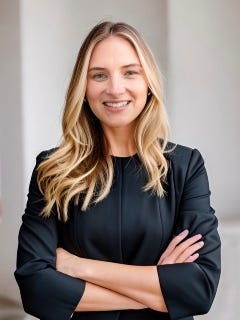
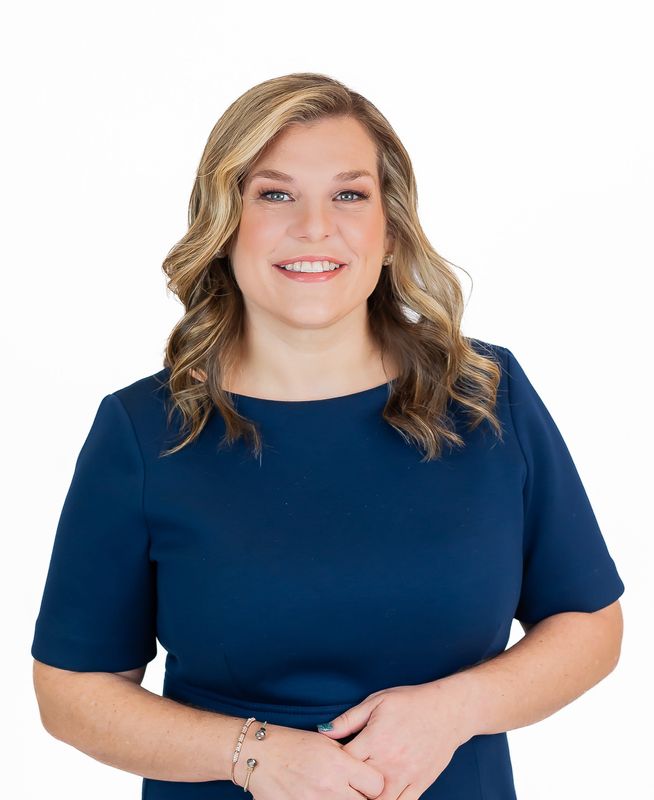
Laurel Niles and Sara Hassler serve as vice chair, and chair, respectively, of a 501(c)(3) non-profit organization that supports and governs two tuition-free public charter schools in Leon County.
JOIN THE CONVERSATION
Send letters to the editor (up to 200 words) or Your Turn columns (500-550 words) to letters@tallahassee.com. Please include your address for verification purposes only, and if you send a Your Turn, also include a photo and 1-2 line bio of yourself. You can also submit anonymous Zing!s at Tallahassee.com/Zing. Submissions are published on a space-available basis. All submissions may be edited for content, clarity and length, and may also be published by any part of the USA TODAY NETWORK.
This article originally appeared on Tallahassee Democrat: Charter schools are public schools, too | Opinion
Reporting by Laurel Niles, Sara Hassler, Your Turn / Tallahassee Democrat
USA TODAY Network via Reuters Connect
By Laurel Niles, Sara Hassler, Your Turn | USA TODAY Network