Students at Aurelia M. Cole Academy in Clermont didn’t just study science this week; they beamed it in from 250 miles above Earth.
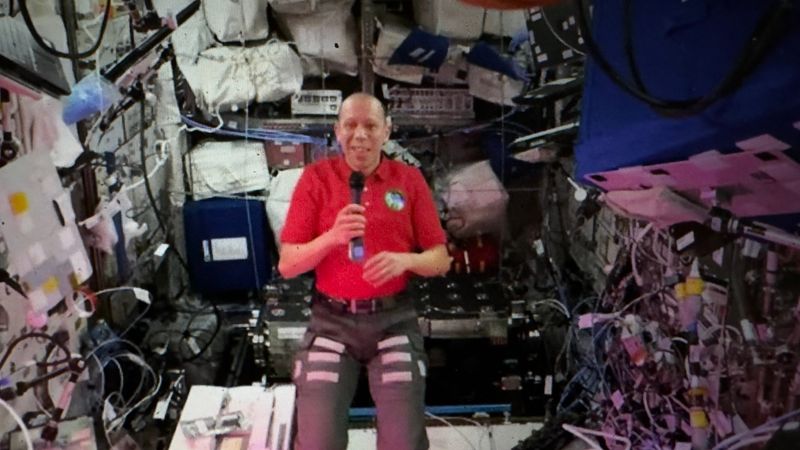
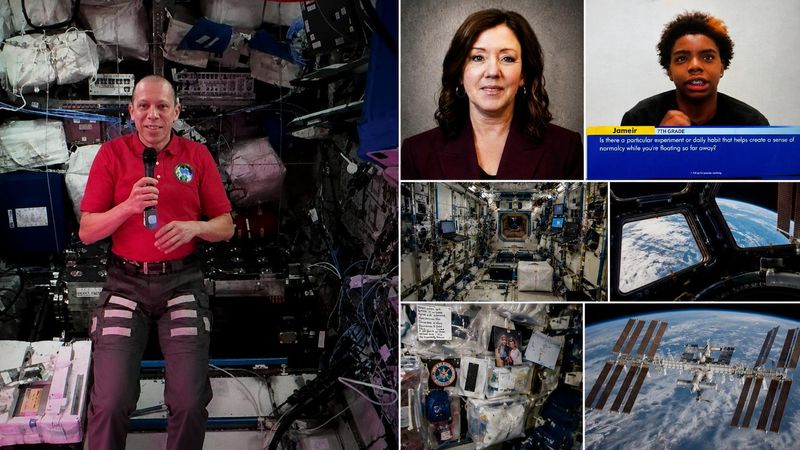
In a live in-flight interview with the International Space Station on May 8, students from the academy and South Lake High School spoke with NASA flight engineer Chris Williams. The session offered a rare glimpse into the daily routine of life aboard an orbital outpost traveling at 17,500 miles per hour.

Aurelia M. Cole Academy Principal Scott Voytko opened the event by introducing his “Trailblazers,” while science teacher Claudia Botero emphasized the significance of the connection: “We are honored to welcome you,” she said. “We hope this experience inspires students from all backgrounds to see that careers in STEM are within reach.”
Students submitted questions about life and work in space, experiments, and there were some surprising, big-picture space inquiries.
Twenty-one students’ questions were selected and submitted to NASA.
Floating tools and high-tech fashion
The students came prepared with questions that went far beyond the textbooks.
Jase, a 6th-grader, asked Williams what the hardest thing is to do when working in space, and, as with most jobs, the astronaut responded, “keeping track of things.” But unlike jobs on Earth, things “just float everywhere” due to the lack of gravity.
Second-grader Tobias was curious about how a mechanic works in microgravity, asking if the crew has a special toolbox. Williams confirmed that their tools are pretty similar to the ones in our garage, but they are kept in specialized kits with slots and Velcro to prevent them from drifting away. He added that tools for spacewalks are “super-sized” to accommodate the thick, pressurized gloves that make fingers feel like sausages.
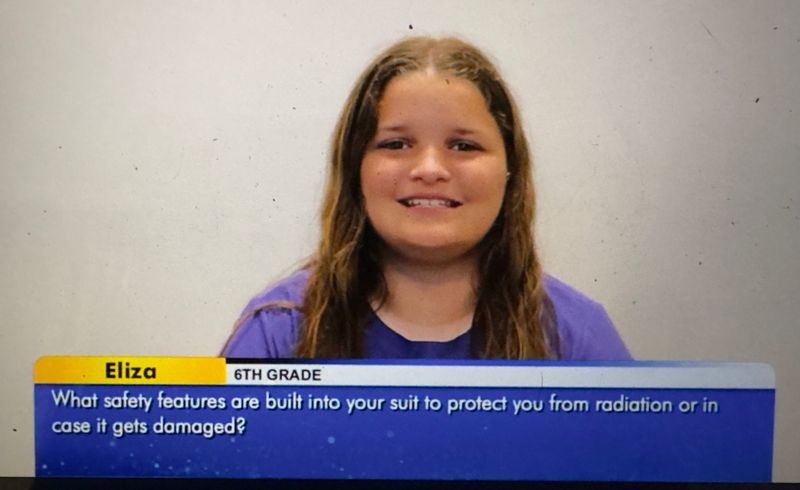
Eliza, an 8th grader, pivoted to safety, asking about the features built into the iconic white space suits. Williams explained that the suits are actually complex, multi-layered garments designed to protect against radiation and the vacuum of space. The fabric is incredibly thick to guard against tiny pieces of space debris that might strike an astronaut during a spacewalk.
Space snacks and zero-G logistics
When Emmett asked if space food is all frozen, he learned that the “kitchen” on the ISS is a bit different from home.
“We actually don’t have any frozen food because we don’t have a freezer for food on the space station,” Williams told the students. Instead, meals come in cans, pouches, or freeze-dried packets. To eat, astronauts inject hot water into the bags and warm them in a small oven roughly the size of a toaster.
Clocks, not morning light
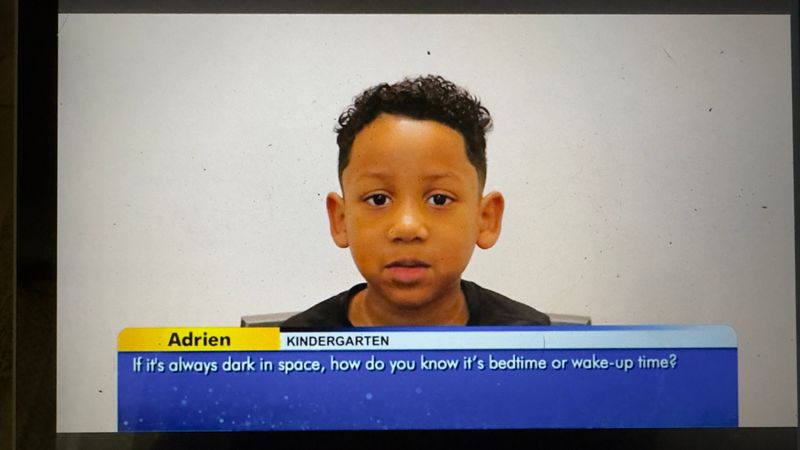
For student Adrien, the logistics of sleep were a top priority. Since the station experiences 16 sunrises and sunsets every day, the crew cannot rely on the sun to tell them when to hit the hay. Williams explained that the crew follows European/Greenwich Mean Time (GMT). They use alarms and artificial lighting to simulate a 24-hour cycle.
Advice for the next generation
The interview took a sweetly subjective turn when 8th-grader Violeta asked what Williams would tell his 15-year-old self.
The astronaut admitted that, as a teen, he viewed his current job as an “impossible” dream.
“Don’t be afraid to try new things and do things you don’t think you can do,” Williams advised. “Follow your passions. I decided that I didn’t think I could become an astronaut… but I still kept that dream alive.”
A word from our superintendent
As the session drew to a close, Lake County Schools Superintendent Diane Kornegay addressed the astronaut and the students, expressing the district’s pride in the program.
“I am incredibly proud of our students at both Aurelia M. Cole Academy and South Lake High School,” Kornegay said. She emphasized that experiences like the ISS interview are designed to “inspire curiosity and show students that a future in STEM is within reach.”
As the connection was cut and the station moved over the horizon, the message to the students in Clermont was clear: The sky isn’t the limit — it is just the beginning of the workspace.
This article originally appeared on Daily Commercial: An ‘out of this world’ chat between Clermont students and NASA astronaut
Reporting by Julie Garisto, Leesburg Daily Commercial / Daily Commercial
USA TODAY Network via Reuters Connect