Is Florida the Wild West of high school sports?
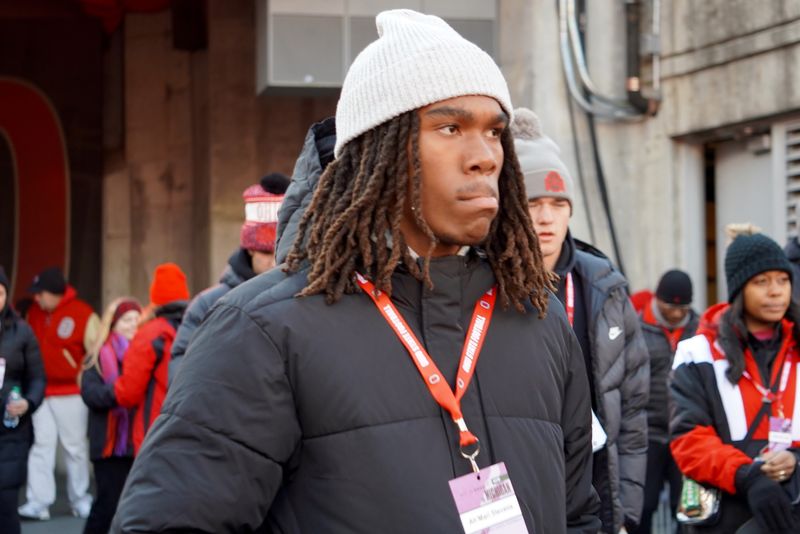
Wall Street Journal reporter Harriet Ryan’s latest story calls calling the future of youth sports a “mess” while using Florida’s free transfer laws as a backdrop. Chaminade-Madonna receiver Ah’Mari Stevens is used as the example, a player who has transferred four times before his senior year.

Ryan points out illicit pay-for-play schemes, rampant transfers and academic lethargy as symptoms of this era’s of high school sports’ overall future.
But is there something inherently wrong with today’s system? USA TODAY Florida Network recruiting writers Jon Santucci and Nick Wilson have thoughts:
Santucci’s take
The state of high school sports in Florida is pretty fairly represented in the Wall Street Journal article.
Transfers are rampant. Students constantly are on the move.
And that’s exactly the way the state wants it. The state legislature opened the path to open enrollment and the FHSAA is hamstrung trying to regulate what few rules they can enforce.
Even when FHSAA executive director Craig Damon tried to curb the number of transfer by saying students who transfer can’t get NIL money for a year, the Board of Directors immediately turned it down.
So here we are. In a state with basically limitless player movement and coaches openly saying they’re waiting for the high school transfer portal for upgrades.
And some schools are doing whatever they can to find those upgrades, Rumors of pay-for-play have been rampant for years, but those whispers have been shouts over the last 12-18 months. The rumors range from programs paying five figures for seven months in the football program to others essentially stealing Step Up for Students funds and funneling the money back to the students through creative channels like work-study programs.
Is every successful program cheating? No, and they’re definitely not all using government funds to field a playoff team in the fall.
In fact, the biggest reason for transfers isn’t NIL money now or later. It’s opportunity.
The opportunity to win. The opportunity to play for a coach. The opportunity to play with other elite players. The opportunity to be seen by colleges and get a scholarship. Because scholarship is the opportunity.
Yes, we’re in an NIL world and some kids are cashing in, but it’s not like kids are becoming millionaires by playing high school football in Florida. They’re playing for a chance to keep playing at the highest level possible. That’s still the biggest driver for transfers.
And in Florida, students can pretty much keep transferring all they want.
Wilson’s take
The Wild West comparison we keep hearing is actually pretty accurate, but not in the way the most people intend. The frontier had a semblance laws and rules, they just differed from “civilized” society back east. And that’s what we see in Florida.
Florida’s rules are different because our school system is different. And I would argue that it is ahead of the curve and best suited to match the collegiate market economy.
We have found that the real reason players transfer is to get more exposure, not chase high school NIL deals that are worth a drop in the bucket for what they will sign for in college. Transferring to a school that offers better opportunity could be the difference between a $100,000 deal at a Group of 5 school and a $350,000 deal at a Power 4 program.
I took particular issue with using Tampa Jesuit LB Kaden Henderson as an example of why players don’t transfer without truly acknowledging the other side of the coin. Henderson’s parents are a healthcare executive and an attorney, and they shrugged off NIL deals in high school because their “bills are paid.”
Consider the families whose bills aren’t paid, a much more common theme in Florida. For a family making less than $100,000 per year (the median income in Florida in 2024 was less than $75,000), these decisions have long term financial implications. And for most families, if the chance at life-changing money means transferring a few times, the decision is not a difficult one.
The story also talks about the academic implications of transferring, which are real. We see players get caught up in administrative challenges all the time when moving schools. But again, the other side of the coin is just as real. Those of us that go to practices, talk to players and coaches and follow these players’ careers for years know just how common it is for football to be the only reason a kid shows up to school.
Many players (probably more than we feel comfortable admitting) would be truant or in some sort of trouble if it weren’t for sports. Teddy Bridgewater was suspended for putting his players in Ubers after practice to make sure they weren’t just hanging around the school and getting in trouble. It’s a more systemic issue that we don’t have all the tools to discuss here, but it’s likely academics wouldn’t even be on a lot of these student-athletes’ radars if they weren’t chasing an opportunity to play college sports.
And now in today’s landscape, having good grades is the key to generational wealth, something I don’t think this article takes enough of into account. Have a good enough GPA, get a good collegiate deal, graduate with a solid degree with a nest egg secured, and begin your adult life that way — or if you’re good enough, make it to the pros. That’s the new blueprint, and players overwhelmingly know they have to take school seriously in order to get that big pay day in college.
The Wall Street Journal story gets a good snapshot at high school football in Florida, but it’s far from a comprehensive portrait. There isn’t much about colleges forcing families’ hands with deals worth 2-5 times their household income. There isn’t much about the dangerous amount of unqualified agents giving players bad advice that leads to their transfers and decommitments.
There’s even less acknowledgement of what may be an ugly truth — some high schools are just better equipped to get their kids high-end collegiate scholarships than others. Even outside sports, would we fault a student who transfers out of their home school because they don’t have an engineering program, and that student wants a full ride to a university with a renowned engineering program? Florida has free transfer laws precisely for this reason, but when sports are involved we tend to take this awkward moral high ground.
When those offers in today’s college NIL era can be worth more than a million dollars, how can the burden be placed on families to not take every avenue possible? Why do we not examine the state of college athletics, and how the outrageously high NIL deals and lack of guidance from the NCAA that have created a trickle down effect at the high school level?
It felt like this article is painting the state of Florida prep sports in a dark light filled with backdoor dealings. And while this is certainly true for a very, very small percentage of players, the rest are simply reacting to the new NCAA landscape with the tools provided to them under Florida law.
This article originally appeared on Fort Myers News-Press: Florida high school sports out of control? We sound off on WSJ report
Reporting by Jon Santucci and Nick Wilson, USA TODAY NETWORK – Florida / Fort Myers News-Press
USA TODAY Network via Reuters Connect