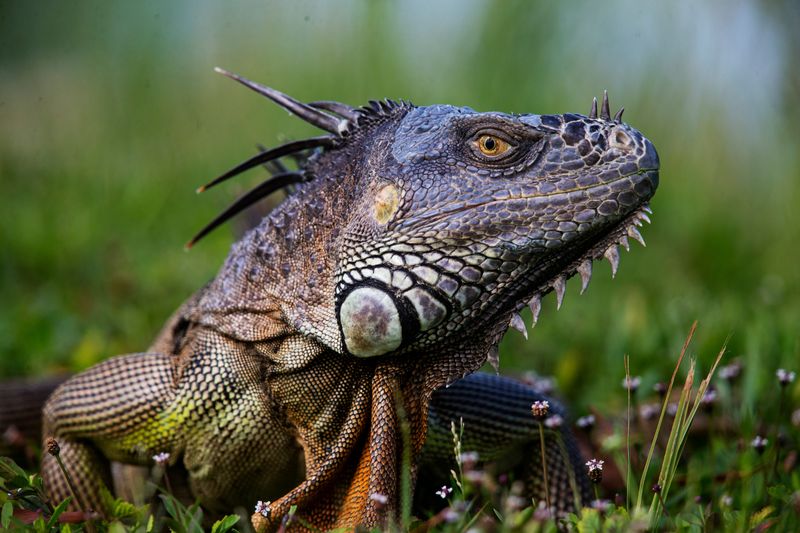
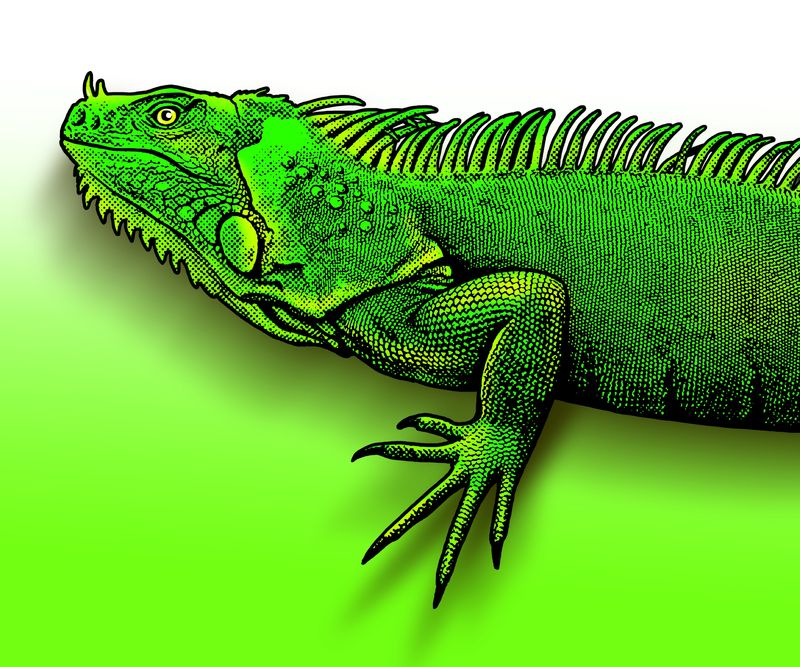
1. GREEN IGUANAS: Why are they a problem in Southwest Florida?

Green iguanas are not native to Florida and are considered an invasive species due to their impacts to native wildlife.
Green iguanas were first reported in Florida in the 1960s in Hialeah, Coral Gables and Key Biscayne along Miami-Dade County’s southeastern coast.
Iguanas have a wide variety of impacts on Florida’s native wildlife and plants and can also cause extensive property and infrastructure damage.
Green iguanas can typically live up to 10 years in the wild. – Provided by Lisa Thompson, Florida Fish and Wildlife Conservation Commission and Jeffrey Hrunka/USA TODAY Network-Florida
2. IGUANA DIET: What do they eat?
Green iguanas feed on a wide variety of vegetation, including shoots, leaves, blossoms and fruits of plants such as nickerbean, firebush, jasmine, orchids, roses, Washington fan palms, hibiscuses, garden greens, squashes and melons.
Their tendency to eat ornamental plants can make them a nuisance to homeowners. Adult green iguanas can also feed on bird eggs and dead animals. Juvenile green iguanas feed on vegetation, insects and tree snails.
3. WHAT TO DO: Is the green menace a problem in your yard?
Residents and property owners can deter iguanas from around their properties by taking the following steps:
This article originally appeared on Marco Eagle: 3 To Know: About green iguanas in Southwest Florida
Reporting by Marco Eagle / Marco Eagle
USA TODAY Network via Reuters Connect