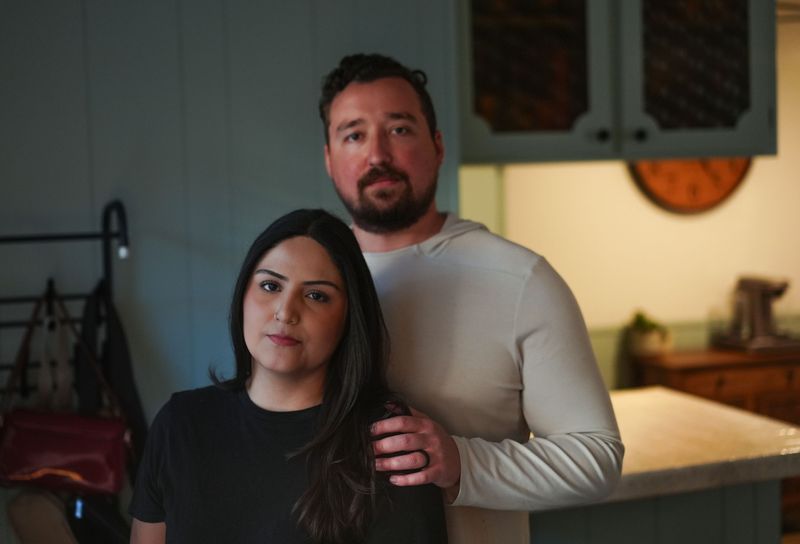
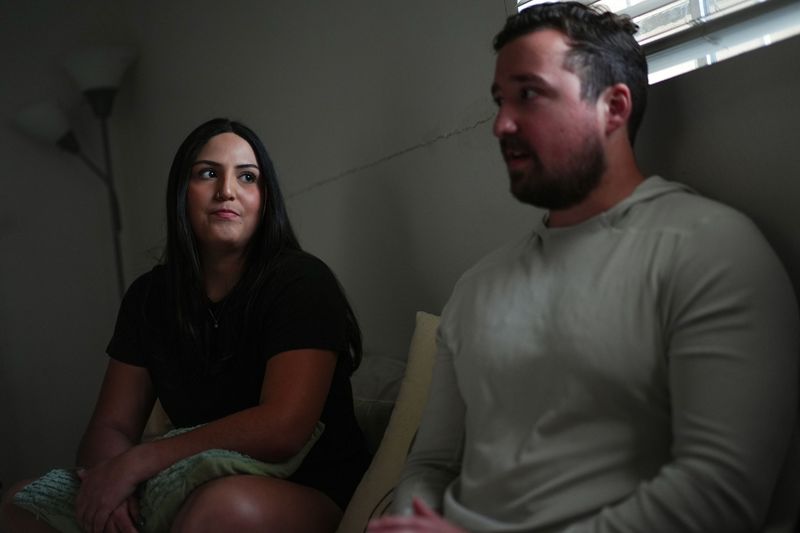
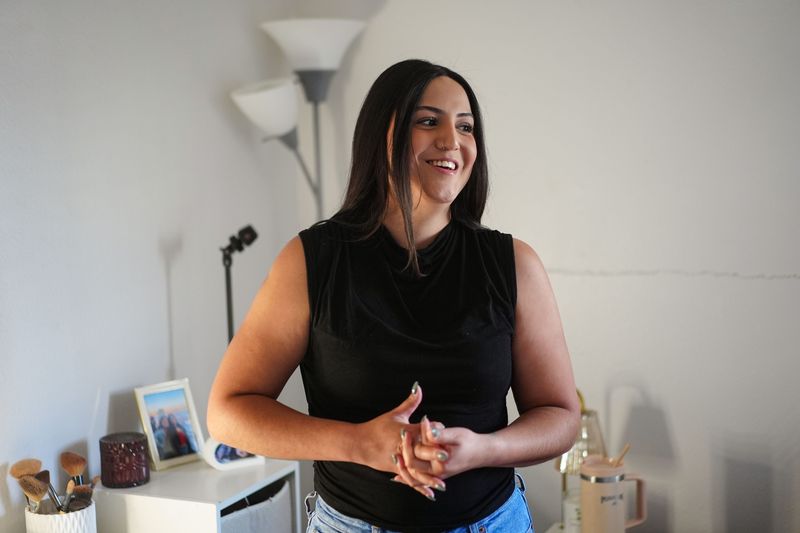
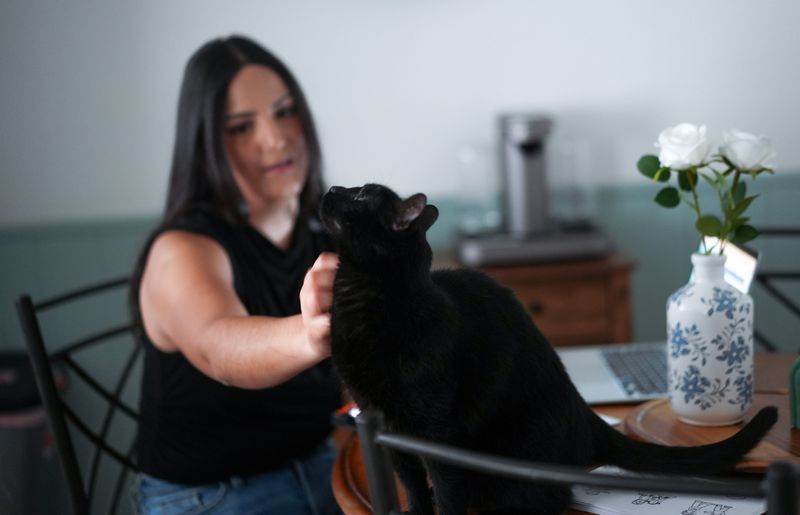
Milena Araya-Davis went to her green card interview in San Diego expecting to take the next step toward becoming an American citizen. Instead, she left in handcuffs.
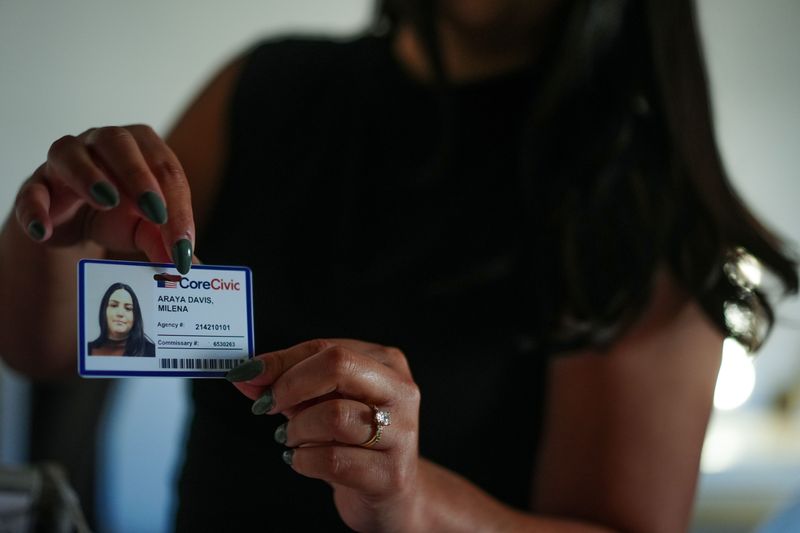
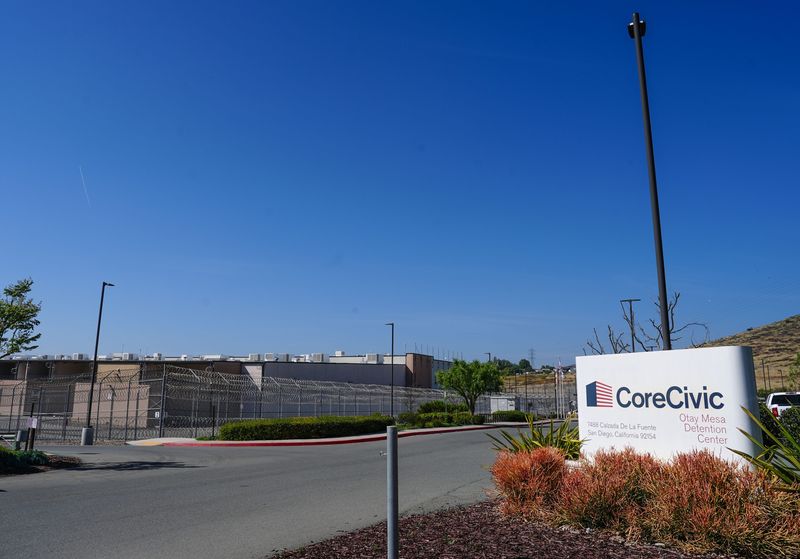
Ten days before Christmas, what began as a routine appointment for the Palm Springs High School graduate ended with her spending a weeklong detention at Otay Mesa Detention Center, a private facility operated by CoreCivic and long criticized for its poor conditions, overcrowding and allegations of abuse, including sexual assault complaints. In 2020, it also had the largest COVID-19 outbreak of any U.S. Immigration and Customs Enforcement detention center in the country.

Araya-Davis, 27, was brought to the United States as a child by her parents and later received temporary protection from deportation under Deferred Action for Childhood Arrivals, or DACA. She earned a master’s degree and became a therapist. She was in the process of applying for a green card through her husband, a U.S. citizen.
But as the Trump administration has intensified its crackdown on immigration and pushes for mass deportations to catch “the worst of the worst” undocumented immigrants, cases like Araya-Davis’ show the dragnet can also reach people without criminal records — including those who have spent most of their lives in the United States.
In the weeks that followed, she began sharing her experience on TikTok, where her story struck a nerve. Her videos drew thousands of responses from people who feared being detained or seeing a loved one taken into custody. Others were already living that fear.
Some even expressed disbelief, saying that her account challenged what they had heard about who was being targeted.
A future made possible by DACA
Araya-Davis, who was born in Peru, grew up in Palm Springs since she was 4.
“I’m very proud to be Peruvian and where I come from, but when I get asked, I add that I’m also American. I don’t remember anything from Peru, like at all. I grew up here. My life is here,” she said. “It’s a strange feeling to then have the government tell me that I’m not American. I’ve been here since I was 4. I don’t know anywhere else.”
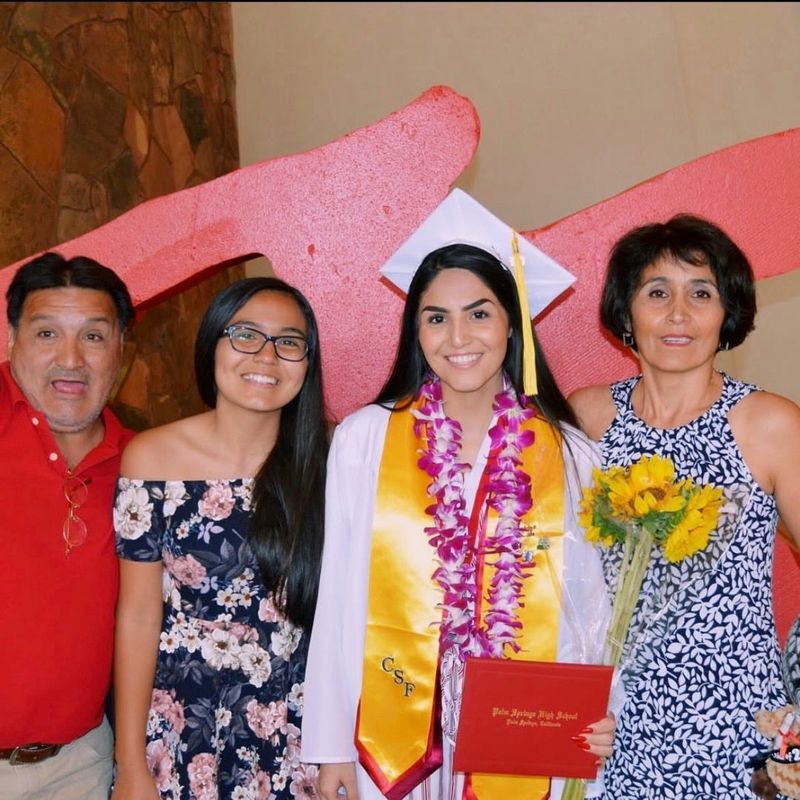
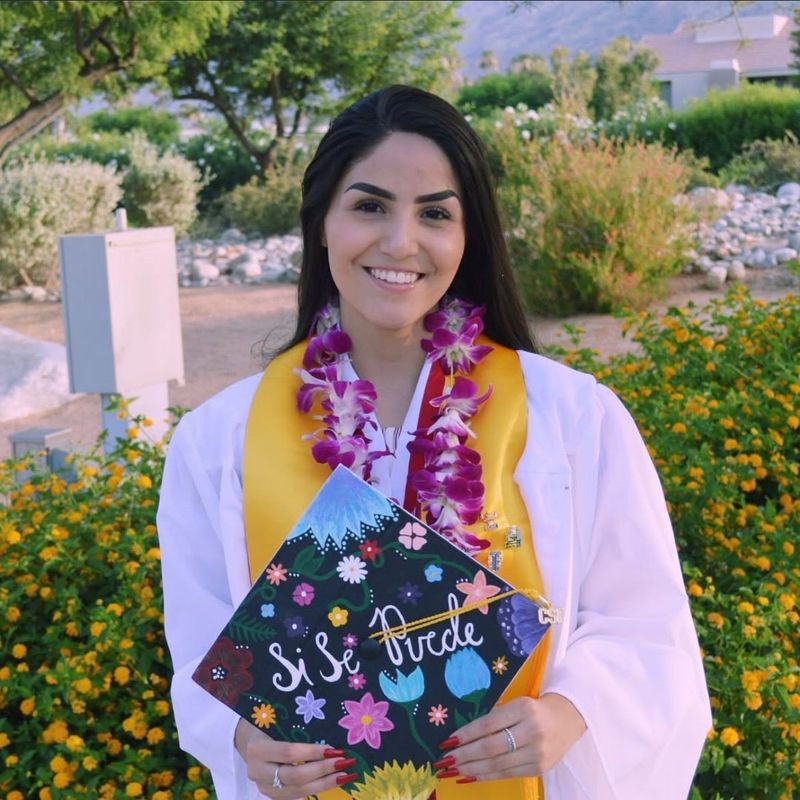
Her parents still live in the Coachella Valley, where she grew up alongside her younger sister. Araya-Davis attended schools across Palm Springs Unified School District and graduated from Palm Springs High School in 2017. Her legal status wasn’t something she fully understood when she was younger, and it wasn’t until later in high school that she began to connect the dots.
She had always been a strong student and active in extracurriculars. However, during her freshman year, as her classmates began talking about their college ambitions, she realized her future might look different than theirs.
“All of a sudden, (my studies) just came to a complete stop,” she said. “I did not care about school, I did not care about anything.”
About a year later, when she was about 15, Araya-Davis became a DACA recipient, known as “Dreamers” — an Obama-era program that allows eligible undocumented immigrants brought to the U.S. as children receive temporary protection from deportation.
DACA recipients must renew their status every two years, and the program does not provide a pathway to permanent residency or citizenship. It has been under steady attack from Trump, as well as a barrage of lawsuits and state and federal lawmakers who argue it is illegal to allow immigrants to stay in the U.S. without congressional approval.
In his first term as president, Trump unsuccessfully tried to shut down DACA entirely, a decision later blocked by the U.S. Supreme Court. Since he returned to office, at least 261 DACA recipients were arrested between January to November 2025 and between 86 and 174 were deported, according to reporting by The Texas Tribune, which noted that the U.S. Department of Homeland Security has provided conflicting data to members of Congress.
For those it helped, like Araya-Davis, DACA was a lifeline.
“(DACA) completely changed the trajectory of my life. (Before), I felt very hopeless with the future,” she said. “It wasn’t until I got DACA approved that I was like, ‘Oh, maybe I can do all this stuff.’ And so I quickly got my grades back up.”
Once college felt within reach, she began to take school more seriously. In 2021, she graduated from California State University, San Marcos with a bachelor’s degree in psychology, a degree that set her on a path to support families the way her therapist had once supported hers.
“At one point, I was seeing a therapist in the valley and she spoke Spanish, which was huge because my parents could communicate with her,” Araya-Davis said. “I didn’t have to be the translator. I had been so used to translating (for my parents growing up), and that really inspired me to become a person in the community that could help people.”
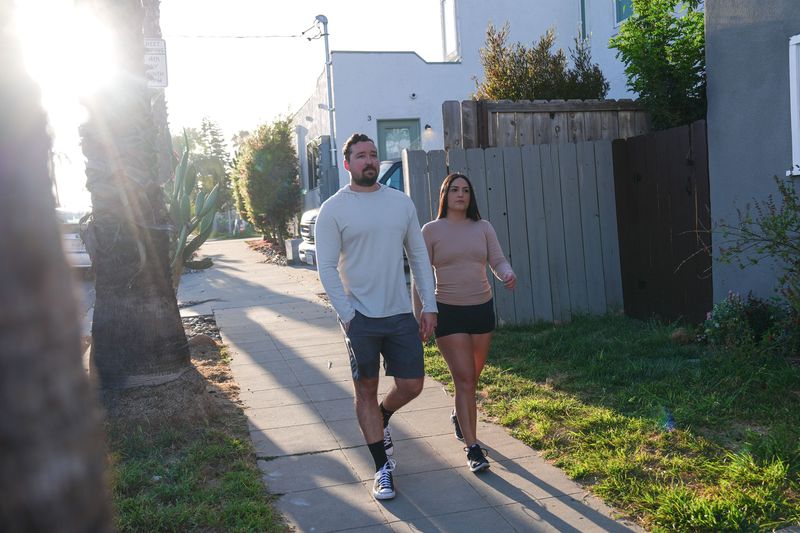
At Cal State San Marcos, she met Matthew Davis, 27, a classmate she mostly knew from afar — and who would later become her husband. They would not begin dating until after graduation and he, too, would become a therapist.
Araya-Davis went on to earn her master’s degree in marriage and family therapy from Alliant International University in 2023. While she was juggling her graduate coursework and clinical hours, her DACA status lapsed.
“I was not able to renew it… I was in school, and being a graduate student, I didn’t have a lot of money, so it just didn’t feel like a priority,” she said. “Thinking back, of course, I wish I had saved up the money.”
She later contacted an immigration attorney to learn about her options. Because her DACA status had lapsed more than a year earlier, her renewal would have been treated as an initial application, which the federal government was not approving while a court challenge over DACA’s legality continued.
Despite the uncertainty around her own legal status, she was building a career helping others navigate uncertainties of their own.
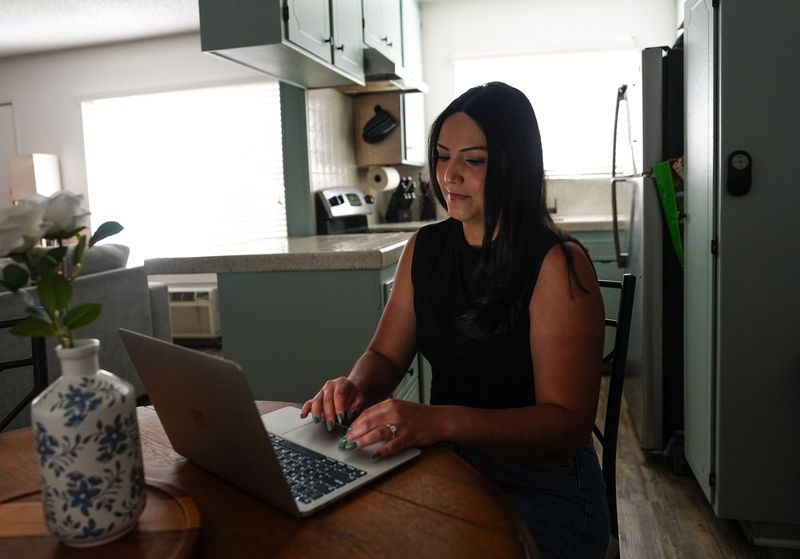
As an associate marriage and family therapist, she spends her mornings at a Head Start center in Escondido, a federally funded program that offers child care and preschool education to low-income families, where she guides children ages 3 to 5 to understand and develop healthier ways to regulate their emotions. She also sees teenagers, adults and couples in the afternoons.
As one of the few bilingual therapists at her workplace, she sees many Latino and undocumented clients. So she understood their fears about their immigration status even before experiencing her own nightmare.
A step closer to a green card, then handcuffs
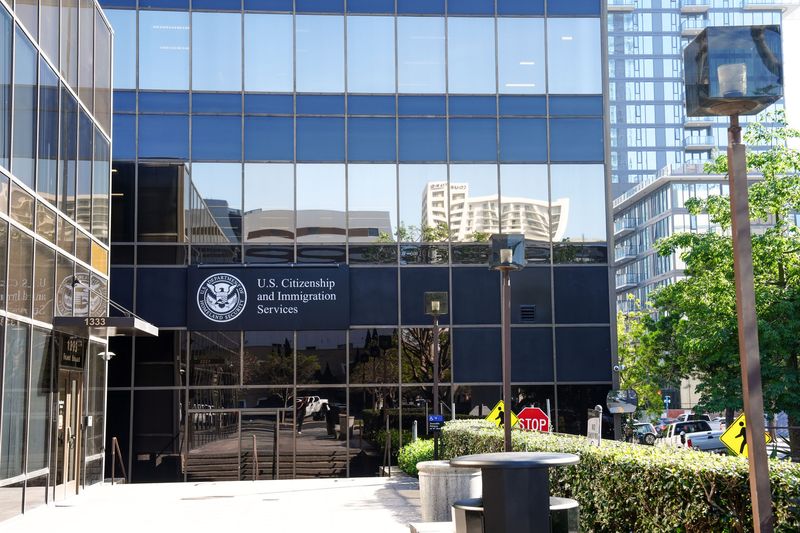
Several months after their wedding in April 2025, Araya-Davis and her husband arrived early at the U.S. Citizenship and Immigration Services’ San Diego Field Office for her green card interview at 8 a.m. Monday, Dec. 15, 2025. Her attorney had warned her that if she were detained, the building she would be taken to would be freezing. Araya-Davis, who runs cold, wore two sweaters to the interview.
At first, the process seemed routine. The immigration officer approved their marriage petition, which meant USCIS accepted that their relationship was legitimate and that they had not married just to get a green card. Then the officer began typing more than she was speaking as alerts from Microsoft Teams kept pinging from her computer. When the officer spoke again, she apologized and said other people were waiting to speak with Araya-Davis.
“She couldn’t even make eye contact with me,” she said.
Moments later, three ICE agents informed her that she was being detained for overstaying the tourist visa she entered the country on as a 4-year-old.
“I feel like I blacked out,” she said.
When her lawyer asked to see the warrant, she found it was an administrative ICE warrant, not one signed by a judge. Her attorney also noted it was dated the same day Araya-Davis first received notice of her interview in November, raising questions about whether the interview had been used to facilitate her detention. The agents said they were just following orders.
As they handcuffed Araya-Davis, one directed most of his comments to her husband, repeatedly assuring him that they would not hurt her and that they were not bad people.
“We’ll treat your lady with respect,” she recalled the agent saying.
Araya-Davis handed over her personal belongings to her husband, including her cell phone and jewelry.
She was then placed in a van with others detained that morning. No one said much. From inside the van, she overheard officers discussing how many more people they expected to detain that day.
Hours later, she was transported about two blocks to the Edward J. Schwartz Federal Building and United States Courthouse in downtown San Diego, where an ICE facility in the federal building’s basement became the next stop in what would be an excruciatingly long day.
She was placed in a holding cell as officers with the Department of Homeland Security repeatedly questioned her about her background and immigration history. Some tried to make small talk by asking about her husband, whether he had ever tried Peruvian food and whether they had ever traveled to Peru. An officer later told Araya-Davis, who does not have children, that he had her daughter’s passport. She soon realized it was her own — issued when she was 4, with a photo of her as a child in pigtails.
“He was like, ‘Oh, is this you in the picture? This is how old you were when you came to the United States?'” Araya-Davis recalled. “He was like, ‘Oh my gosh, they took you, even though you’ve been here this long?’ And I was just looking at him. I didn’t know what to say.”
Another officer was more blunt, at times referring to the arrests as “kidnapping,” she said. “He kept using the word over and over. Like, ‘I guess we’re just kidnapping people now.'”
Though she felt a few officers may have genuinely been trying to comfort her, she felt unsettled by their comments.
“Even as I try to have a lot of empathy and compassion, it was hard. It was really weird to have those interactions,” Araya-Davis said. “I went into being a therapist because I wanted to help people and the community. In going through this process, I realized I am a contributing member of the community. And yet, this is still happening to me.”
Inside Otay Mesa
By the time she arrived at Otay Mesa Detention Center, in southern San Diego County near Tijuana, it was close to midnight. She had not slept in nearly 24 hours. She was shaking, terrified and had not eaten or had anything to drink.
Araya-Davis was issued a navy blue jumpsuit, the color assigned to detainees with no criminal record.
She had assumed women in different-colored jumpsuits had more serious criminal records. On her last day in detention, she learned that was not always true. Some had been classified differently for minor offenses, including a speeding ticket or a DUI from years earlier.
Roughly 60,311 people were being held in ICE detention as of April 4, according to the most recent data from the Transactional Records Access Clearinghouse, a nonpartisan research center at Syracuse University. Of those detainees, about 70.8% had no criminal convictions, either none at all or only minor offenses like traffic violations.
In December 2025, the month Araya-Davis was detained, ICE detained 42,116 people, the highest monthly total that year and the most since May 2019.
That first night after her arrest, every bed was taken. Araya-Davis was given a mat and told to find space on the floor, where she slept until a bunk bed opened up days later. Before she could settle in, she needed water.
Water was available from a single sink shared roughly by 150 women in her pod. What she did not have was a cup. Those had to be purchased through the commissary, an in-detention store where detainees with funds in their accounts can order basic items like hygiene products and snacks. Orders were placed Sundays and delivered Tuesdays. She had just arrived on Tuesday.
Until then, a woman handed her a small plastic cup and told her to wash it first. Araya-Davis used that cup for the rest of her time in detention.
Over the next few hours, other women approached her, asked where she had been detained and offered what they could. The women in her pod, who spoke many languages and came from countries around the world, showed her how to turn on the showers and how to get through the first confusing hours inside.
“They kind of just took me in,” she said.
At mealtimes, the detainees lined up in the cafeteria and food was passed through a small metal opening just large enough for a tray. When the women peeked underneath, they could see who was serving the food: not officers, but other detainees in different colored jumpsuits. It was one of the only times they saw people outside their own unit. The work helped pay for ramen packets from the commissary or phone calls, and made the days pass by faster. Yet there weren’t enough jobs for everyone, so many had nothing to do.
What they were served was often hard to eat. The food was mostly bland, heavy on carbs and short on protein and fruit. Breakfast was often oatmeal and mushy potatoes. One meal consisted of green beans, rice mixed with pieces of bologna and three slices of sponge cake. Another time, she was served mashed potatoes that looked like baby food and a blackened meatball that was pink inside.
Araya-Davis’ commissary order would not arrive before her release, so other women shared their cookies, oatmeal and ramen they ate instead of the detention center’s lunch and dinner. Others slathered their meals in ketchup, mayonnaise or Sriracha “just to be able to get it down,” she said.
Because of a back injury, she also had to report for medication twice a day. The morning pill line came around 4:30 a.m., when staff would yell detainees’ names to call them out of bed. Araya-Davis had seen others miss their medication because they did not wake up in time. If she missed hers, she knew she would spend the day in pain. So she started waking up around 3:30 a.m., keeping herself alert enough to hear her name.
The scarcity and care inside one pod
As Araya-Davis adjusted to life inside Otay Mesa, her husband was home trying to piece together what was happening through brief phone calls they shared. They spoke twice the first day. Each call lasted a minute, and each time, she repeated the same assurances in a guarded tone: That she had water, that she had eaten, that she was OK.
“It just made it worse,” he recalled. “I’m like, ‘Why the heck are you saying the same thing twice?”
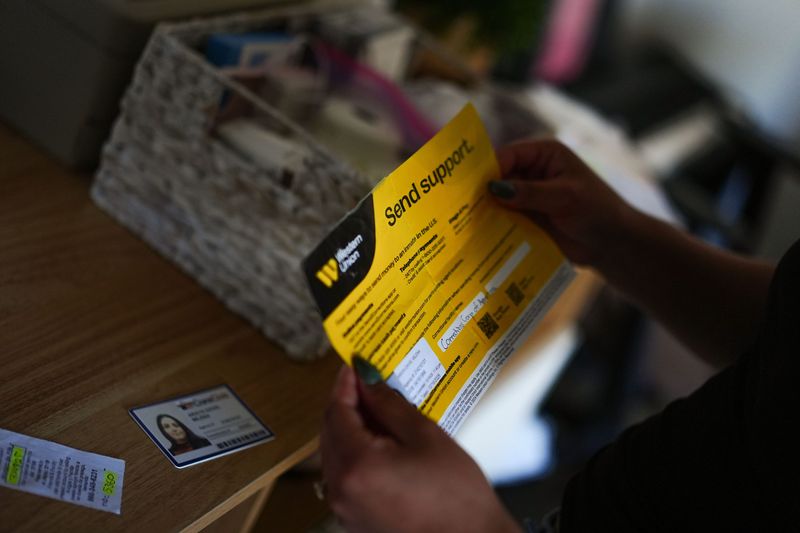
That night, he kept his phone beside him at full volume, waiting for another call. It finally came around 6 a.m., when Araya-Davis briefly called to ask him to send money so she could regularly make calls. Eventually, they also figured out how to text through a system run by the detention center.
“At this point, we finally got to have a real conversation,” Davis said. “It still sucked, but after a solid 36 to 40 hours, I finally knew that she was physically safe.”
As she waited for her bond hearing scheduled for the following Monday, her days at the detention center blurred together. Then, every so often, small moments broke through that stayed with her.
When someone had a birthday, the women celebrated it themselves. They pooled whatever they had acquired from the commissary — chips and other snacks to share — into a potluck. Sometimes, someone would assemble a small cupcake from what was available. Araya-Davis recalled once seeing a woman drawing a candle on a piece of paper to place it on the makeshift cupcake.
Then they would sing versions of “Happy Birthday” in different languages, a chorus of migration stories from countries and regions they had come from, including East Africa, Ukraine, Russia, Colombia, Ecuador, Mexico, Thailand and Vietnam.
“Everyone that was there is here in this country because they’re trying to have a better life, a better future — no matter the way that they got detained,” Araya-Davis said. “It was just really nice to see everyone coming together in such generous and thoughtful ways.”
Detention devastated family
After she was taken into custody at the federal building that Monday, her husband stepped outside with their attorney and got to work.
“There wasn’t really time to process it,” Davis said. “It was just like, ‘OK, what do I have to do right now?'”
Their attorney began listing steps: go downtown, bring her medication, gather documents and be ready for wherever she might be transferred next. Davis called both of their parents to explain what had happened, then began coordinating.
“I didn’t know how fast they were going to move her,” he said. “I just didn’t want to be behind on anything.”
Davis also had to gather letters of support ahead of Araya-Davis’ bond hearing, hoping to show the judge her ties to the community and that she was not a flight risk. He started with family and close friends, sending messages late that night and into the next morning. On the day she was detained, his Apple Watch recorded about 15,000 steps as he anxiously paced their apartment.
Soon, his request quickly spread and within a day, 36 letters came in, including two from Araya-Davis’ former high school teachers in Palm Springs. To this day, she has not yet read all of the letters, but the ones she has read have moved her — both for what they said and the urgency with which they responded.
By Saturday, five days after her arrest, Davis, joined by his parents and Araya-Davis’ parents, drove to Otay Mesa Detention Center to visit her.
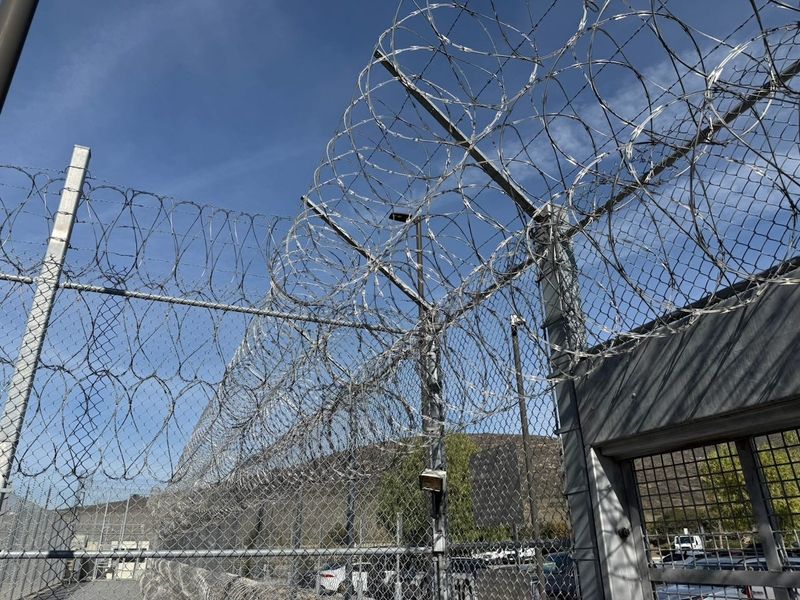
“You pull up and it just looks like a prison,” Davis said. “Barbed wire everywhere.”
In the visitation room, they sat around tables and waited as staff once more went over the rules: no touching, no passing anything, stay seated. If someone moved, guards yelled for them to sit down. Then a side door opened, and the women began trickling in. Araya-Davis found her family and sat across from them while guards patrolled the room.
“You try to sneak as much as you can, like holding her hand,” Davis said. “We just talked and it was really nice… But it was sad seeing her in her little jumpsuit.”
Months later, as her husband described that moment in late March, Araya-Davis’ voice wavered as she remembered what it was like from her side. Before the visit, she and the other women in her pod had tried to keep things light, joking about spotting each other’s husbands and families. But when she saw her own family, it became harder than she expected.
“Seeing my family be so sad and seeing (my husband) cry, it was just really, really hard,” Araya-Davis said. “Leaving felt like when I was getting detained all over again.”
When the hour was up, the officers called the women first. They stood, said their goodbyes and were led out together.
Araya-Davis had feared what might come after the visit: an invasive strip search she had been warned detainees could face after seeing their loved ones. Other women in her pod had told her it would be violating, but that seeing her family for that one hour would be worth it. She was not, however, searched after her family’s visit, as there were not enough female guards at the detention center that day.
“I felt like it just takes away your dignity and (that I’m) being treated like a criminal when I’m not,” Araya-Davis said.
After the visit, officers took her to a holding area. Within moments, she said, they were correcting her and yelling at her over a missing clip on her identification badge, a clip another officer had removed from her earlier. By the end of the day, her “little bit of happiness and joy” had faded.
Davis and their parents followed out of the visitation room and walked back to the parking lot.
“My mom already cried going into (the detention center) while we were in the waiting room. When we were walking out, I know her dad was pretty tearful the whole drive home,” he said. “I don’t think we said a word on the ride home in the car.”
For Araya-Davis’ parents, her detention carried a painful contrast. They had received their green cards about a year earlier through their younger daughter, who was born in the United States.
“I think they just felt a lot of guilt that it happened to me instead of them,” she said. “People forget that being detained doesn’t just affect the person that’s going through it. It affects everyone.”
Released from Otay Mesa, but not from its toll
On Monday, one week after Araya-Davis was detained, her husband, their parents and her best friend, who had flown in from Texas, gathered in a courtroom inside Otay Mesa Detention Center for her bond hearing. An immigration judge would decide whether she could be released from detention while her immigration case moved forward.
The hearing was brief. The judge granted her release without bond or an ankle monitor, unlike other women Araya-Davis has kept in touch with.
She was sent back into processing, where she spent eight and a half hours alone in a freezing holding cell with a metal bench and toilet. Officers occasionally called to her for information and her signature as they completed her paperwork, but gave few details about when and where she would be released.
As she waited, she sat in the same clothes she had worn when she was detained a week earlier. They had been washed, but returned damp — and her sweater had a new hole in it.
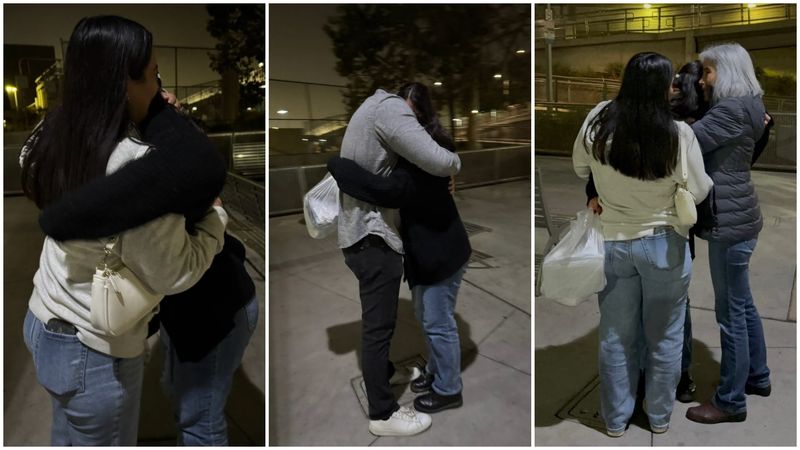
Well into the night, more than 12 hours after her bond hearing, she was finally loaded into a white bus with other detainees and released at the San Ysidro Transit Center, about 10 miles from Otay Mesa Detention Center and another 10 miles from the San Diego-Tijuana border.
In the days after she returned home, exhaustion set in. Araya-Davis was released Dec. 22, just before Christmas, after thinking she might spend the holiday in detention. Her parents and her husband’s parents visited them in San Diego, but she spent much of the first two days home sleeping and sick.
She still wakes around 4:30 a.m., the time staff at the detention center used to call detainees for their medication. Everyday tasks she once did independently, like driving alone or going to the grocery store, became harder. Even traveling outside San Diego feels risky.
“I don’t know if I’ll ever feel 100% safe, especially when there are … people in the (federal) administration that think, even if I have a green card, I don’t deserve to be here just because of how I look or where I came from,” Araya-Davis said.
Returning to work brought its own challenges. Many of her clients have also been detained or have relatives who have been detained. After her own detention, their fears overlapped with her own. So she cut back on therapy sessions and slowly eased back into work, grateful, she said, for supervisors who understood why she needed time.
“I’m not ready to be a support person when I’m still trying to figure out how to handle it myself,” she said. “When you’re in sessions, you have to be present. And I feel like it’s unfair if they have this therapist that’s not, that can’t be fully there.”
Davis, her husband, also a therapist, said understanding how trauma works did not make it easier to witness her live with the effects of detention. Araya-Davis can recount what happened calmly, he said, and that can make people think she is OK.
“Time passes, so people will kind of forget about it,” he said. “But in reality, for her, she’s still hurting.”
What an ‘illegal alien’ looks like
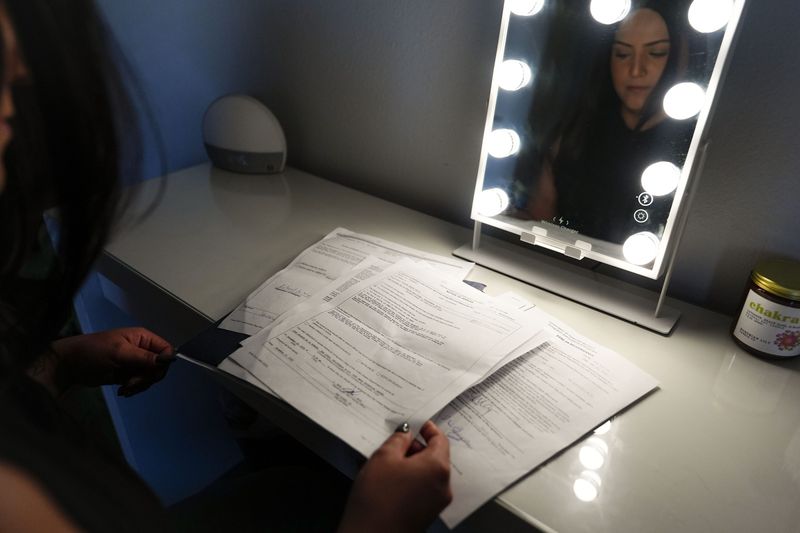
In early January, Araya-Davis decided to speak publicly about her time in detention. Sitting at her vanity desk in her bedroom, she propped up her iPhone, opened TikTok and hit record.
“It felt weird pretending everything was normal,” Araya-Davis said. “I didn’t want to keep explaining (what happened to me) over and over again.”
Her videos became more than a way to explain what had happened to those in her own life. She also hoped they could help others understand what detention could look like, feel more prepared and know they were not alone.
“If I could at least help one person, then it would make it worthwhile,” she said.
Her first video gained traction almost overnight. To date, it has nearly a million views, along with over 50,000 likes and nearly 1,500 comments. Strangers began sharing their own anxieties, questions and experiences.
“My husband came legally, but overstayed his visa. We have our interview this Friday. I hope everything goes well for us,” one person wrote.
“My husband got detained this morning at his biometric appointment,” another said. “I’m so lost.”
Others expressed disbelief: “Getting detained for the visa you overstayed as a child is insane.”
In the videos that followed, Araya-Davis has shared more in English and Spanish about what happened inside Otay Mesa: what the detention center looked like, how the days passed, what happened when someone needed medical care, how she prepared for being detained at her green card interview.
Some have even messaged her to learn how she became a therapist while undocumented, a question she has received from people interested in the field but unsure whether that path is feasible for them. She tries to answer what she can, while reminding people she is not an attorney.
She has even received comments from people saying they “had no idea this was happening,” and would “rethink (their) values or positions on certain things” after learning more about her detention.
“I think the more you know about a person, the easier it is for some people to have empathy,” she said. “It’s important for people to know this is happening to people just like me, people you went to school with, people you work with, people you see every day. It’s not just statistics.”
Araya-Davis said she knows her release came quickly compared with others. She was “only” detained for one week. She met women at Otay Mesa Detention Center who had been there for months, some for more than a year.
She believes the support around her helped: an attorney who moved quickly, a husband who gathered dozens of letters describing the life she had built, as well as family and friends who showed up in court for her. Many of the women, she said, did not have the same resources or people fighting for them.
She’s also aware that her upbringing in the Coachella Valley, her education, fluency in English and work as a therapist — what she calls privileges — may influence how some people receive her story. She sees that as a responsibility.
“I just wanted people to form their own opinions and really see what was going on,” Araya-Davis said. “But I hate that you have to be successful and hard working to be considered worthy of being here and worthy of respect. We are all human beings that should be treated with respect and be treated fairly.”
Soon after publishing that first video on TikTok, Araya-Davis returned to immigration court on Jan. 26. After her detention, she had moved into removal proceedings, meaning the federal government had opened a case that could lead to her deportation.
About 10 cases were scheduled before the immigration judge that day. Hers was the third called and lasted less than five minutes. Her attorney asked the judge to terminate the removal case and return her green card petition back to U.S. Citizenship and Immigration Services, where it had started before she was detained.
The prosecutor for the Department of Homeland Security opposed terminating the case. But the judge disagreed, saying he did not have the time or resources to keep cases like Araya-Davis’ in immigration court on his docket when her green card application could be decided by USCIS. He closed the removal case, allowing her application to return to the agency.
Her green card application remains pending. She has no clear timeline for when she might expect a decision, and the online system shows she may have to wait until May 2027 before she can even ask USCIS to examine why her green card application is taking so long to be reviewed.
“People think, ‘Just apply for citizenship or a green card,'” she said. “But when you actually try to figure out how to do that, you end up going in circles. There’s no clear answer.”
It’s why she continues to speak out publicly. She wants people to better understand how difficult the immigration system can be to navigate and why, she believes, reform is needed. Many people, she said, assume undocumented immigrants are “cutting the line,” when in reality, the line is unclear, inaccessible or does not exist for them at all.
“If people had the option to come here legally and have everything sorted out, a lot of us would have chosen that instead of living this way for so long,” she said.
In many cases, she added, eligibility depends on having a qualifying family member or employer willing to sponsor them. Not everyone has that option, and even those who do can face years-long backlogs. For example, the federal visa bulletin, which tracks when certain immigration applications are being processed, shows that some petitions filed more than a decade ago are only now being reviewed.
The idea of “getting in line” did not reflect how limited her options were as someone who has lived in the United States since she was 4. Nor did it capture the isolation of growing up undocumented. Araya-Davis rarely talked about her legal status, afraid that speaking out could put her parents, her family and her own safety at risk.
But after her week at Otay Mesa Detention Center, sharing her story felt like “a huge weight” had lifted from her shoulders. She no longer had to hide that part of herself. Instead, she could connect with people over it, and maybe help others navigate the system.
“This is me. This is completely who I am. I wanted people to look at me and question what they think they know,” Araya-Davis said. “This is what an ‘illegal alien’ looks like.”
Jennifer Cortez covers education in the Coachella Valley. Reach her at jennifer.cortez@desertsun.com.
This article originally appeared on Palm Springs Desert Sun: She grew up in Palm Springs from age 4. Then ICE arrested her
Reporting by Jennifer Cortez, Palm Springs Desert Sun / Palm Springs Desert Sun
USA TODAY Network via Reuters Connect