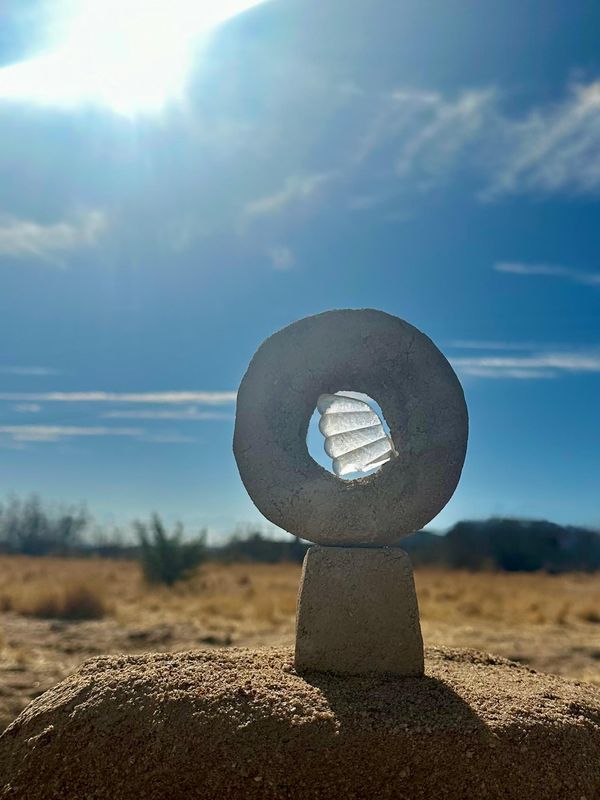
Fans of Desert X installations looking for something similar to scratch their art itch don’t have to wait too long: The fifth edition of Joshua Treenial will be on display this fall.
What is the Joshua Treenial?

The Joshua Treenial is a program of art, installations, performances and community building which highlight all that makes Joshua Tree so unique. It was co-founded by KJ Baysa and Bernard Leibov in 2015 and is produced by BoxoPROJECTS, where most installations and performances take place, as well as iconic local venues such as The Integratron and Art Queen.
When is the Joshua Treenial 2025?
The fifth edition of Joshua Treenial is set for Nov. 8 through 16. This year’s theme of “Desert Futures” will showcase pieces that inspire adaptation and creativity in the heart of the high desert. Admission is free for most installations and events, but performances at The Integratron are ticketed.
Fourteen artists, all based in or with ties to the desert, will participate in this year’s programming, along with a number of cultural partners. Here’s a sneak peek at their pieces before they go on display in November.
When to see Joshua Treenial art installations
An opening reception for the Joshua Treenial will take place 2 to 7 p.m. Nov. 8 at BoxoPROJECTS, located at 62-732 Sullivan Road in Joshua Tree.
Viewing hours of the various art installations will be 11 a.m. to 6 p.m. Nov. 9, 15 and 16 at BoxoPROJECTS. They can also be viewed by appointment Nov. 10 through 14. Appointments can be made by emailing info@boxoprojects.com
Performances will take place 5:30 to 8 p.m. Nov. 15 at The Integratron, located at 2477 Belfield Blvd. in Landers. Partamian and Monypeny will perform “Harmonic 486” at the venue.
What to know about Joshua Treenial art installations, performances
Here is a list of this year’s participating artists and their pieces at the Joshua Treenial.
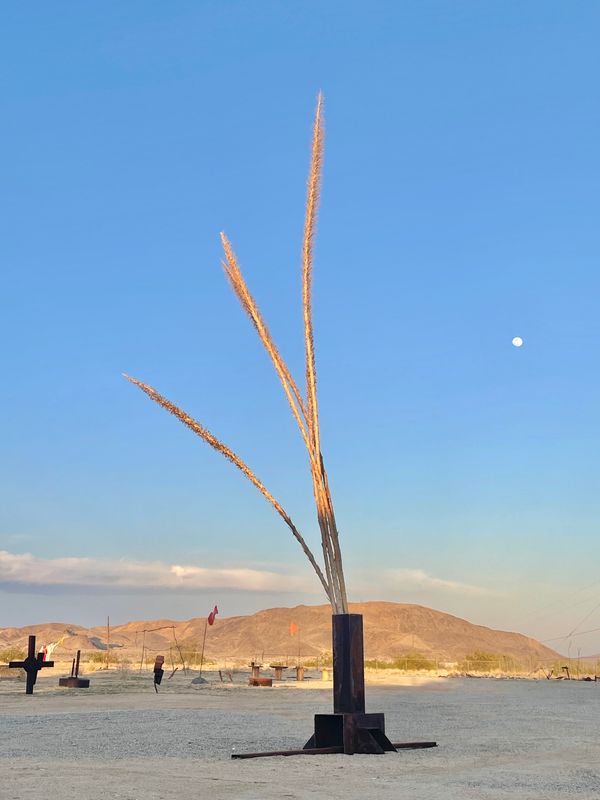
Ben Allanoff (Joshua Tree), “Gassho 3”
The 20-foot-tall “Gassho 3,” made of steel and dried plant material, expresses two of artist Allanoff’s primary unconscious obsessions: the identification and expression of that which feels fundamentally human, and the harmony of masculine and feminine energies — integral to fertility in the biological, cosmic and creative realms.
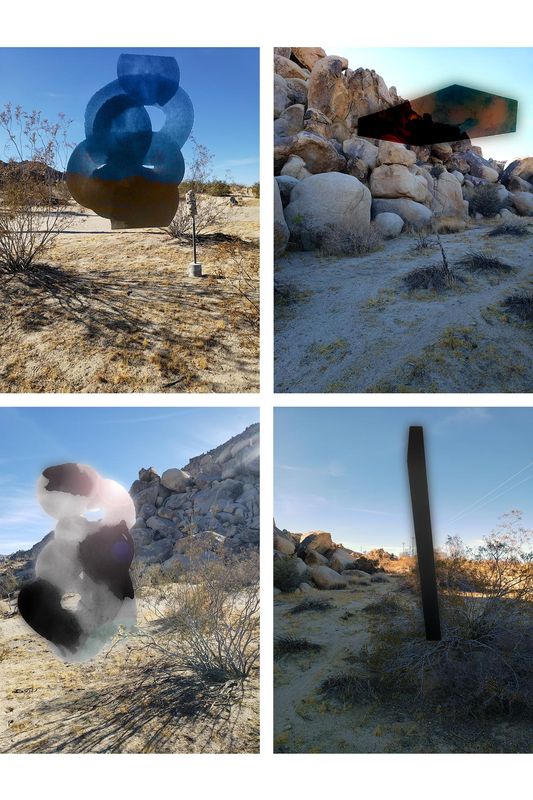
Yvonne Buchanan (Morongo Valley), “Anchors”
“Anchors” is a GPS app that targets sight, sound and smell. Participants discover four shapes floating in the landscape, bringing spirits, ghosts and specters of the past into the present. Four “holding stations” present small vessels that invite visitors to smell a pleasing scent to convey safety. When participants point their cell phones toward specific coordinates, the floating objects come into view, each emitting a specific sound. “Anchor” developed from a series of drawings titled “Out of Body” about Buchanan’s anxiety about social upheaval.
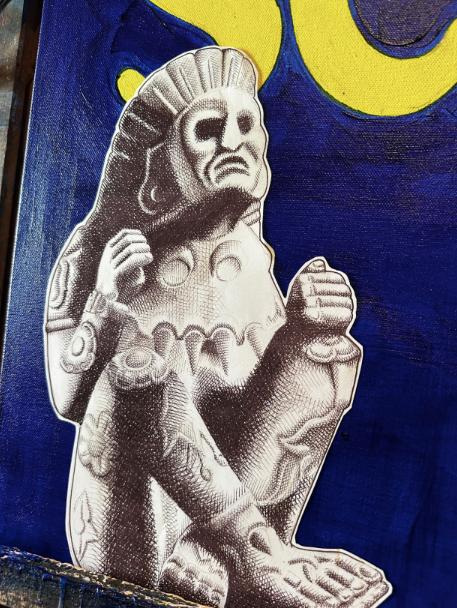
Carlos Ramirez (Indio), “Xochipilli”
“Xochipilli” explores the tension between cultural resilience and environmental degradation. By rendering the ancient Aztec deity Xochipilli — patron of art, song and the revelry of nature — onto discarded modern “artifacts,” Ramirez highlights the contrast between pre-colonial reverence for the natural world and contemporary cycles of excess and waste.
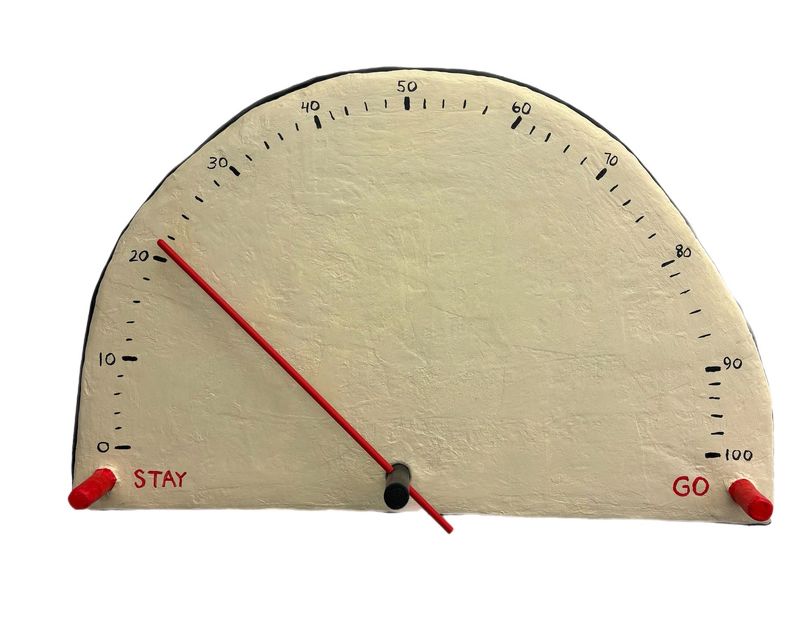
Coco Hall (Joshua Tree), “You May Go Now”
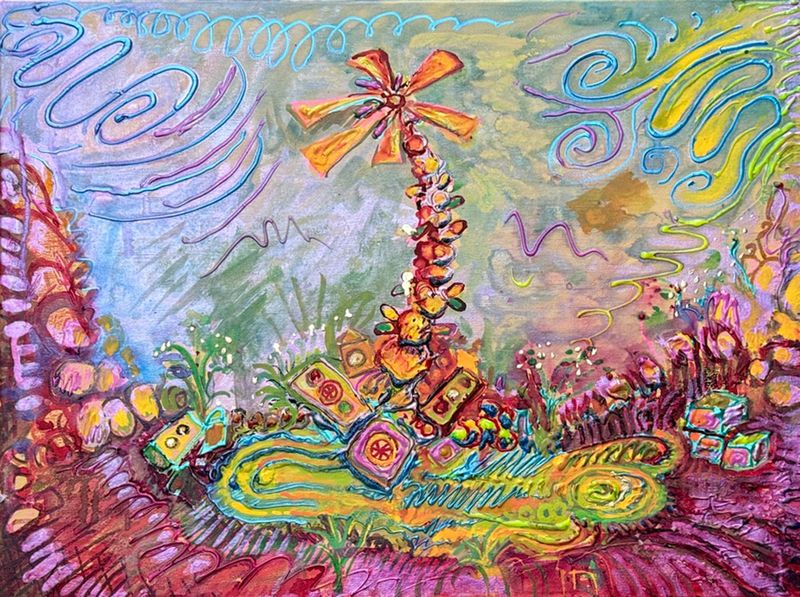
“You May Go Now” is about 21st century shifting. The objects in the installation include teddy bears, receptacles of unconditional love that represent the migrations of millions of displaced people, animals and other living creatures; ceramic and velvet remote controls; a fleet of papier mâchécrafts, each representing one of five necessities of life in industrialized countries; and the iPhone Oracle, which invites viewers to ask a yes/no question and unzip one of the stuffed iPhones for an answer.
Perry Hoberman (Twentynine Palms), “Fault/Fold/Fragment”
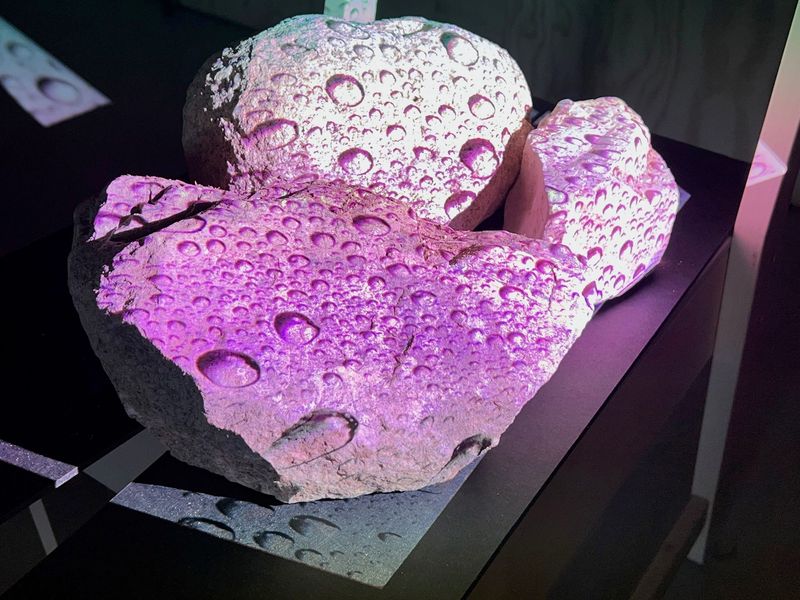
“Fault/Fold/Fragment” is a visual and aural piece illuminating the surrounding boulders with real-time, computer generated, stereoscopic projections. The rocks will become both the backdrop and the protagonists in a drama that evokes the deep past (such as when the entire region was underwater), the lived present (the silent grandeur of the desert) and the distant future (with or without human presence). Imagery suggesting vastly disparate scales of space (from the microscopic to the cosmic) and of time (from moments to millennia) will animate the rocks, evoking stasis as well as sudden upheavals like floods and earthquakes. The projections will be accompanied by live music.
Adriana Lopez-Ospina (Indio), “Resonance”
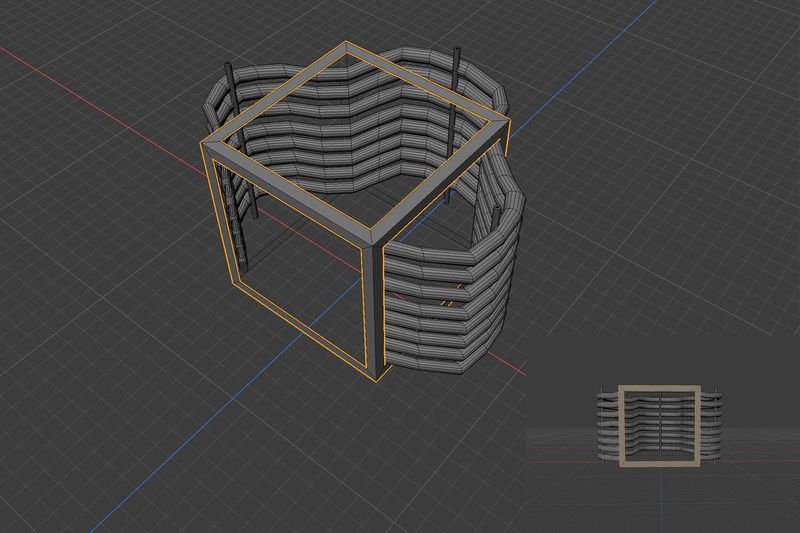
“Resonance” is a series of woven architectural structures crafted from flat reed coil and aluminum strips. The reed coil represents traditional craftsmanship and ecological resilience, while the aluminum reflects contemporary innovation and industrial adaptation. Each structure features carvings etched into the aluminum strips or burned into the flat reed coil, such as texts and symbols from local histories, ecological observations and speculative futures. By combining the two materials, “Resonance” mirrors how societies have adapted and thrived in a space often considered hostile.
Tyler Morgan (Charleston, South Carolina, previously Palms Springs), “Untitled”
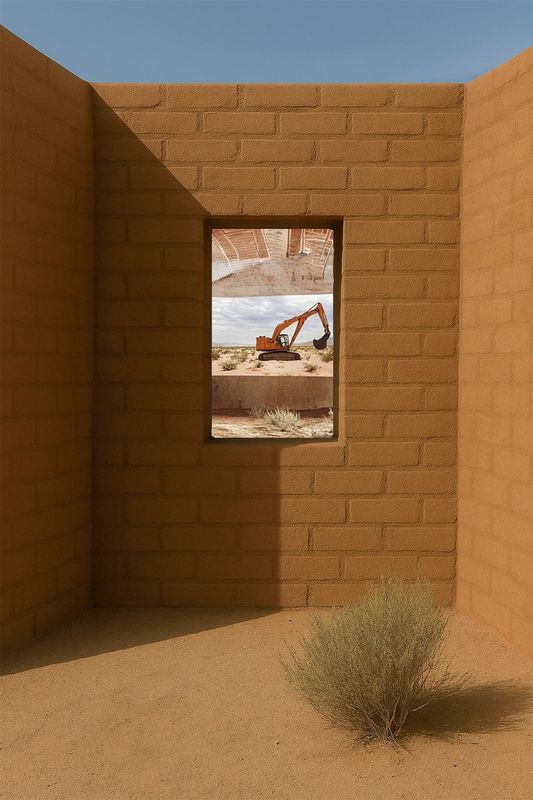
“Untitled” begins as an adobe structure in the form of the “#” symbol, and it mirrors a 3×3 grid used historically in Chinese agriculture and in sacred architecture and mysticism as a diagram of cosmic order. Its modern use in metadata and activism speaks to collective agency and interlinked narratives. “Untitled” frames a set of open questions about the relationship between form and function, symbol and site, permanence and ecological fragility.
Caroline Partamian (Yucca Valley) and Derek Monypeny, “Harmonic 486”
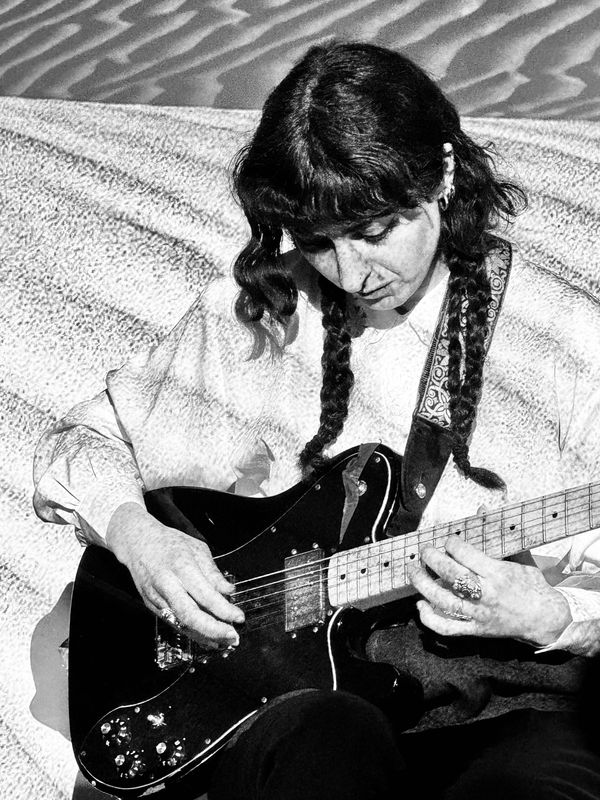
Ufologist George van Tassel drew inspiration from the harmonic relationships between the Integratron and the Great Pyramid at Giza, as outlined by world grid theory expert Bruce Cathie in a 1977 issue of Proceedings. Partamian has composed a graphic musical score using Cathie’s grid positioning breakdown of the Integratron, which she and musician Monypeny will independently interpret and perform. Their stringed instruments reference the Integratron’s original copper spiral designed to charge the cells of visitors to the building.
Randy Polumbo (Joshua Tree and New York City), “Mirage”
“Mirage” is a man-made pond and fountain with wheels turning from the power of dripping water, bubbles aerating water and mist created through solar energy. A canopy of solar panel “leaves and branches” powers a complex light show where colors shift, brightness weaves and things are not what they seem. This technoorganic oasis offers refuge, an opportunity to connect with the earth and its denizens and be blessed with water pulled from the ground by the sun, and reinserted after gently misting you.
Ethan Primason (Yucca Valley), “Z1, Z2, Z3”
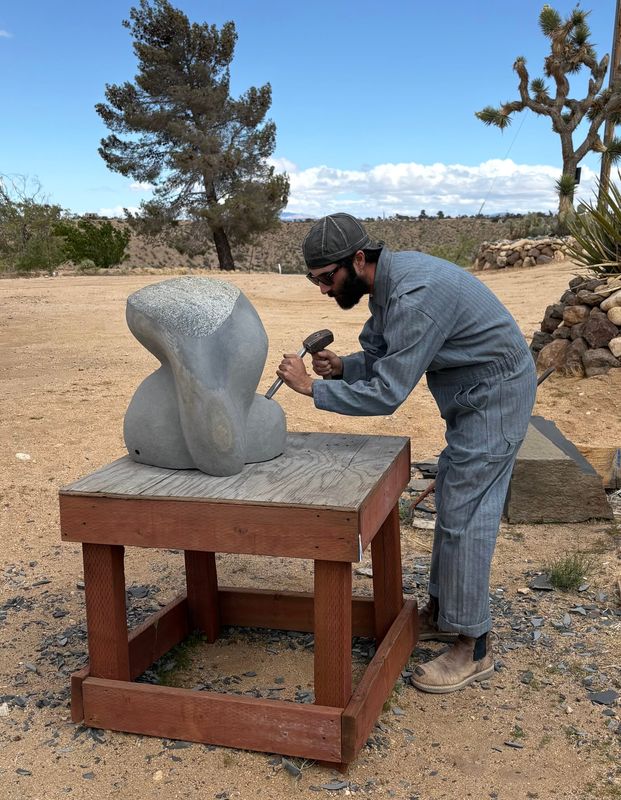
This sculptural triptych features three bodies, allegorical and abstract, all carved from the same column of basalt. While sculpting stone, Primason utilizes direct carving, a meditative and intuitive process that follows no drawing or blueprint, only a reaction to the inherent qualities and properties of the material.
Dorene Quinn (Morongo Valley), “Cholla Skeleton Regeneration”
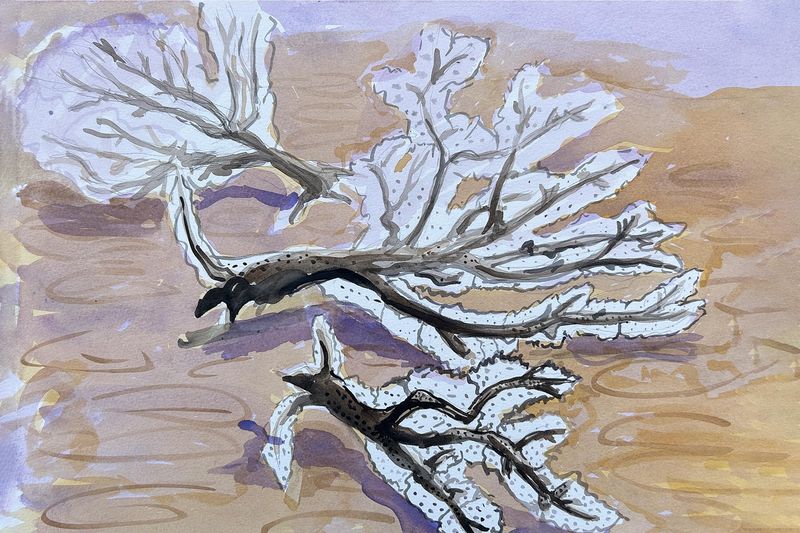
This installation of altered cholla skeletons represents the artist working to collaborate with nature as an act of preservation and protection. The “skeletons” were gathered from around Quinn’s property in Morongo Valley and are symbolically regenerated using wire cloth and cotton and recycled paper fiber to reinforce and extend the forms.
Heidi Schwegler (Yucca Valley), “Familiar”
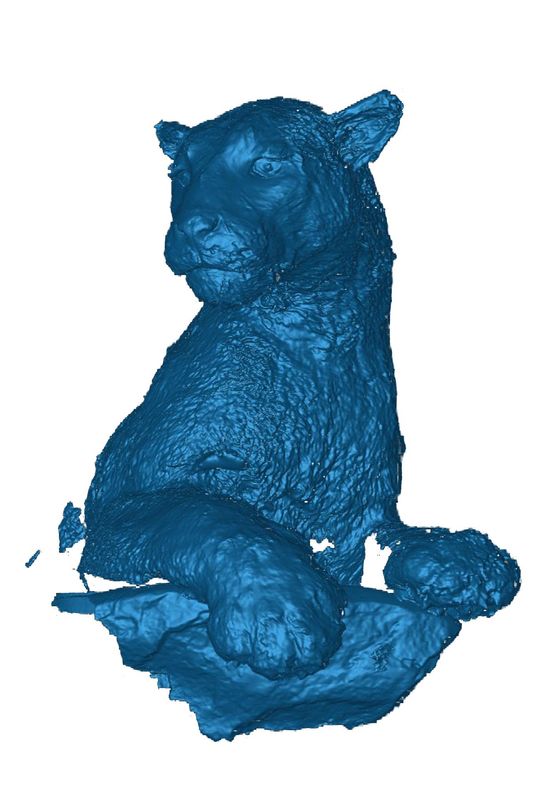
“Familiar” explores the intricate relationship between humans and the Mojave Desert. Schwegler has sculpted her “familiar,” a spiritual alter ego closely tied to the self, that blends her form with the spirits of the desert: the coyote, mountain lion and roadrunner all intertwined with the resilient cholla and found desert detritus.
Nicola Vruwink (Landers), “RE-FUSE(D)”
This series of totemic forms, created by hand using traditional craft and construction techniques, explores the interplay and the tensions between environmental preservation and human intervention. Built from materials sourced from the environment and remnants from Vruwink’s practice, the geometric forms address sustainability, adaptation, resilience and the complex relationship between humans and the desert landscape.
Cultural partners participating in Joshua Treenial
Additionally, nine cultural partners are joining Joshua Treenial to explore Desert Futures through workshops, performances, exhibitions and reading groups. Those partners include:
Partner programming will take place Nov. 7 through 16 at various locations.
For more information, visit boxoprojects.com/joshuatreenial/.
Joshua Tree restaurants
Looking for a bite to eat while you’re in town? Check out our guide to things to do in Joshua Tree that features two of our favorite spots, Crossroads Cafe and Joshua Tree Coffee Company, or consider checking out a new spot like Mojave Gold in nearby Yucca Valley.
(This story was updated to fix a capitalization error and date.)
Ema Sasic covers entertainment and health in the Coachella Valley. Reach her at ema.sasic@desertsun.com or on Twitter @ema_sasic.
This article originally appeared on Palm Springs Desert Sun: Missing Desert X? Find art installations, performances at 2025 Joshua Treenial
Reporting by Ema Sasic, Palm Springs Desert Sun / Palm Springs Desert Sun
USA TODAY Network via Reuters Connect