While the peak of the film noir genre may be a thing of the past, there’s at least one working director today who can’t get enough of the sleezy characters and ulterior motives common among those stories: Guillermo del Toro.
The Academy Award-winning filmmaker has drawn inspiration from films of the 1940s and 1950s throughout his career, including the dark atmosphere and shady villain found in his 1960s-set fantasy “The Shape of Water.” But the genre’s most obvious influence is found in his 2021 neo-noir psychological thriller “Nightmare Alley,” which he co-wrote with screenwriter Kim Morgan, who is also his wife.

The film, based on the 1946 novel of the same name by William Lindsay Gresham, stars Bradley Cooper as a charming grifter who works his way up from low-ranking carnival worker to lauded psychic medium, until he meets a psychologist (Cate Blanchett) who has her eyes set on exposing him. It was nominated for four Academy Awards, including best picture.
To close out the 26th annual Arthur Lyons Film Noir Festival on Sunday, a new “director’s cut” version of del Toro’s “Nightmare Alley” will premiere, with the filmmakers in attendance. The film will screen at 7 p.m. at the Palm Springs Cultural Center.
The director spoke with The Desert Sun ahead of his festival appearance to discuss the making of “Nightmare Alley” and some of his favorite film noirs.
Palm Springs Film Noir Festival to feature new cut of ‘Nightmare Alley’
When “Nightmare Alley” was first released in theaters in 2021, it was in a standard color format (though, thanks to its vivid cinematography, it looked anything but standard). Soon after, Searchlight Pictures announced a black-and-white version, titled “Nightmare Alley: Vision in Darkness and Light.”
The version of the film that will play at the Film Noir Festival is still called “Vision in Darkness and Light,” but del Toro said it’s a new edit that hasn’t been screened before that he’s “very eager to show.”
While working on the film, he was studying German director Douglas Sirk and his style. Many of Sirk’s films featured vivid colors, which del Toro said was because his contrast ratio was in black and white.
“My secret hope in the middle of the shoot was maybe we can do (it in) black and white, and during COVID I started playing with the black and white and I was able to bring even more ratio contrast in the second half of the shoot,” del Toro said during a recent phone interview. “I’ve been looking forward to being able to cut it without the final cut constraints and expand it a little, and this is a big event for us.”
Though he didn’t share too much of what this new version of “Nightmare Alley” contains, he said he incorporated certain scenes that seemed to “work better in black and white” versus color.
Del Toro’s film influences
Two genres that del Toro favors most are horror and crime fiction. It’s something he and Morgan found they both shared in common with their writing style and overall love of cinema.
That blend of genre, they realized, has a lot in common with neorealism, a film movement that was popular in Italian cinema after World War II that focuses on everyday life and deals with the haves and have nots. One day, Morgan suggested adapting Gresham’s “Nightmare Alley,” which is a perfect mix of all those styles.
“(Kim) has such an affinity and knowledge for the genre that I thought it would be really interesting to play with that oppressive, semi-eerie atmosphere of the carnival,” he said.
They dedicated about two years to their screenplay, which showcases variations of noir. The first half of the film is set in a carnival that appears to be in the middle of nowhere, giving off an “American Gothic” vibe that is very eerie and mysterious. Later on, as Cooper’s character heads to the big city, the film turns into a “big capital letters noir,” del Toro said, with Blanchett as a manipulative, femme fatale and a very brutal ending.
He added that the transition between the two narrative halves also required careful visual considerations: everything in the carnival is rounded, flexible and made of soft materials such as mud and straw, while the city has hard concrete and stark lines.
“You have an America that is emerging from the midst of being a country of being ‘aw shucks’ little towns and into the absolute grinding machine of the rigged city life, (that is) corrupt and against you,” del Toro said. “That’s why this genre can never stop because that’s still true of America.”
Del Toro, Morgan’s favorite film noirs: ‘Fallen Angel,’ ‘Strangers on a Train’
If given the chance, Del Toro and Morgan could talk about their favorite film noirs all day long.
“We love so many,” he said.
For “Nightmare Alley,” they were drawn to Otto Preminger’s films, such as “Where the Sidewalk Ends” and “Fallen Angel” starring Dana Andrews and Linda Darnell. With Andrews, in particular, del Toro said he was a great non-verbal actor who could convey “more with one drop of sweat and a glance” than others with a full page of dialogue.
Another pick is Alfred Hitchcock’s psychological thriller “Strangers on a Train.” The director said he decided to pay homage to Hitchcock’s classic by recreating the entrance of the carnival in his movie.
Morgan added that they also enjoy watching pre-code films, which refers to a period of time in the 1920s and 1930s when the Motion Picture Production Code was still not strictly enforced and films were more overtly sexual and violent.
Del Toro, Morgan are ‘desert rats’
The filmmaking couple shared that they enjoy spending time in Palm Springs whenever they get a chance.
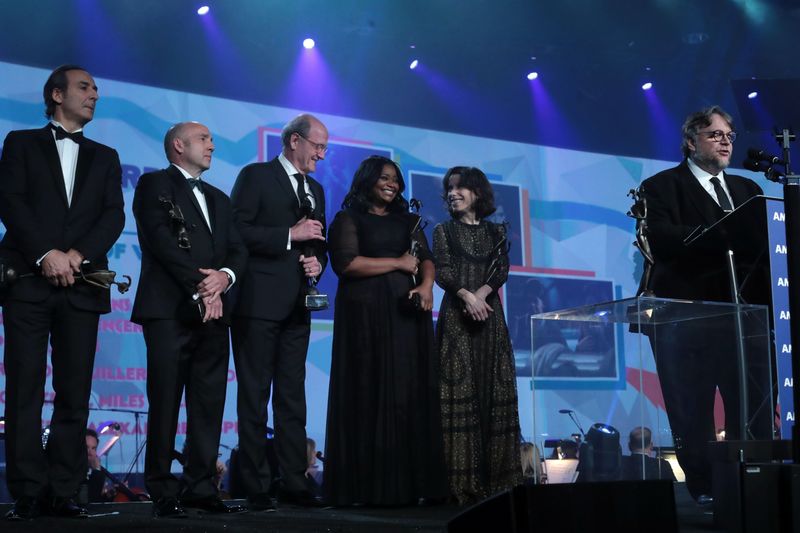
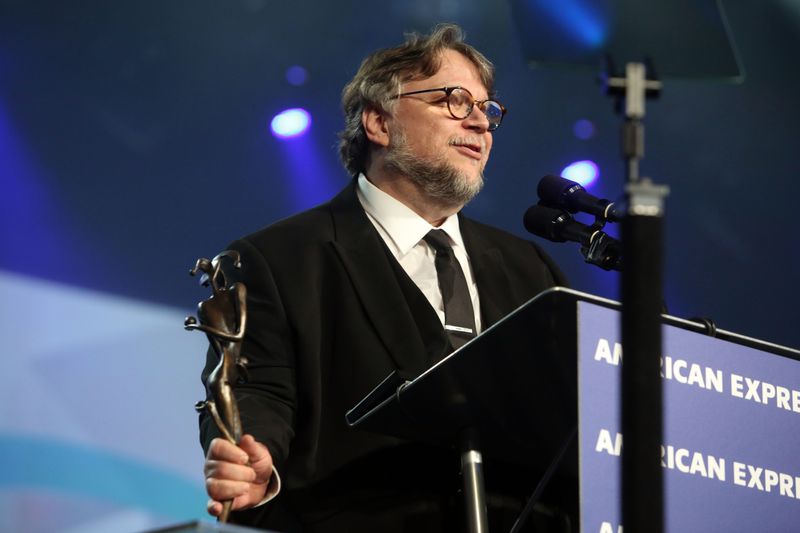
Del Toro has been honored at the Palm Springs International Film Awards previously, receiving the Vanguard Award with his “Shape of Water” cast. Morgan has also been a presenter at the Film Noir Festival.
They also have many friends who live in the Palm Springs area, including actor Udo Kier, and they enjoy visiting the late-actor Joseph Cotten’s famed estate.
“Kim and I are very much desert rats,” the director said.
If you go
What: “Nightmare Alley” special screening at Arthur Lyons Film Noir Festival
When: 7 p.m. Sunday, May 11
Where: Palm Springs Cultural Center, 2300 E. Baristo Road
How much: $32.64 (not included as part of the All-Access Festival Pass, but passholders can purchase tickets for 50% off)
More info: https://arthurlyonsfilmnoir.org/
Ema Sasic covers entertainment and health in the Coachella Valley. Reach her at ema.sasic@desertsun.com or on Twitter @ema_sasic.
This article originally appeared on Palm Springs Desert Sun: Guillermo Del Toro talks film noir ahead of special ‘Nightmare Alley’ screening in Palm Springs
Reporting by Ema Sasic, Palm Springs Desert Sun / Palm Springs Desert Sun
USA TODAY Network via Reuters Connect