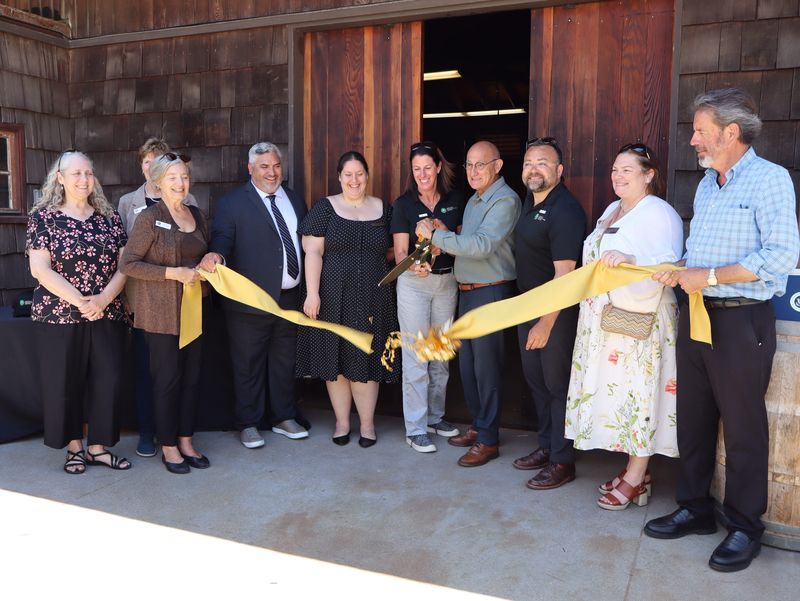
A new preservation center dedicated to restoring and safeguarding the historic architecture of Asilomar State Park and Conference Grounds was unveiled during a ribbon-cutting ceremony July 15 in Pacific Grove.
The workshop, filled with tools and reclaimed materials, marks a milestone in the ongoing stewardship of Asilomar and celebrates the collaborative efforts to protect one of California’s most treasured coastal landmarks.

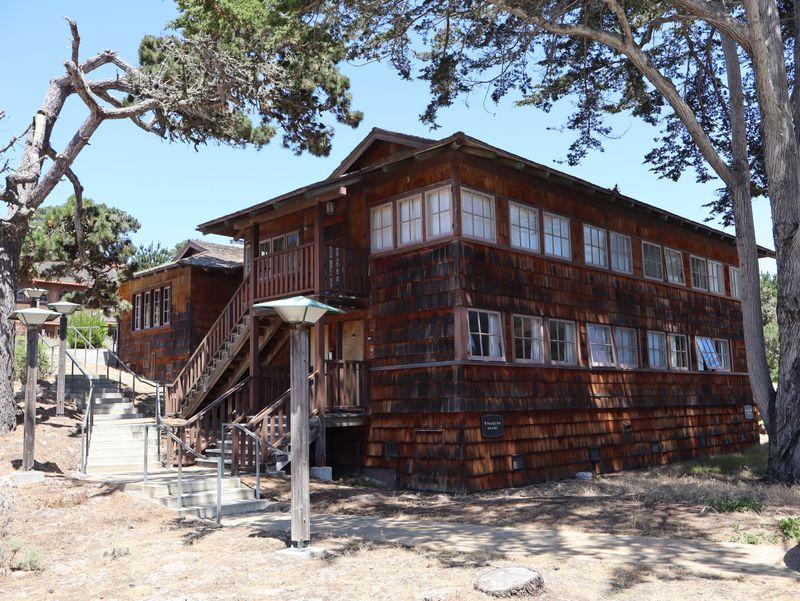
On Wednesday, July 15, visitors and local dignitaries got to learn more about the center’s role in preserving Asilomar’s architectural legacy, which includes buildings by California’s first female licensed architect Julia Morgan, and renowned mid 20th century architect, John Carl Warneke.
“Fixing things is different than preservation work,” said Alex Marin, general manager of Asilomar Hotel and Conference Grounds. “It’s replacing things in-kind, making sure that we’re using the appropriate materials and same techniques to build and construct—it’s a very detailed process that we are committed to.”
The history of Asilomar State Park
What would become Asilomar State Park and Conference Grounds began as a YWCA (Young Women’s Christian Association) facility and campgrounds. The YWCA leased the 30-acre strip of land from the Pacific Improvement Company in 1912.
Morgan, who designed Hearst Castle, another historic destination along the Central Coast, designed 25 buildings for the YWCA between 1913 and 1928, including the property’s first, the Phoebe Apperson Hearst Social Hall. Eleven of Morgan’s buildings, which employed the Arts and Crafts style, remain standing today.
The last YWCA camp was held in 1935 before Asilomar was leased to different operators until 1956 when it was incorporated into the California State Park System. The mid 20th century brought new development to Asilomar when John Carl Warnecke’s firm designed seven buildings between 1959-1968.
The Asilomar buildings designed by Morgan were designated a National Historic Landmark in 1987. In 2022, the same honor was given to the buildings designed by Warneke.
Preserving Asilomar State Park’s legacy
Shaun Quedou, manager of the new historic preservation center, got his start at Asilomar a couple of years ago when he was hired to build a deck. Now, he is building out the center, collecting old growth wood that would otherwise end up in a nearby landfill to use on restoration projects and leading, what he calls “high-end maintenance” at the historic property.
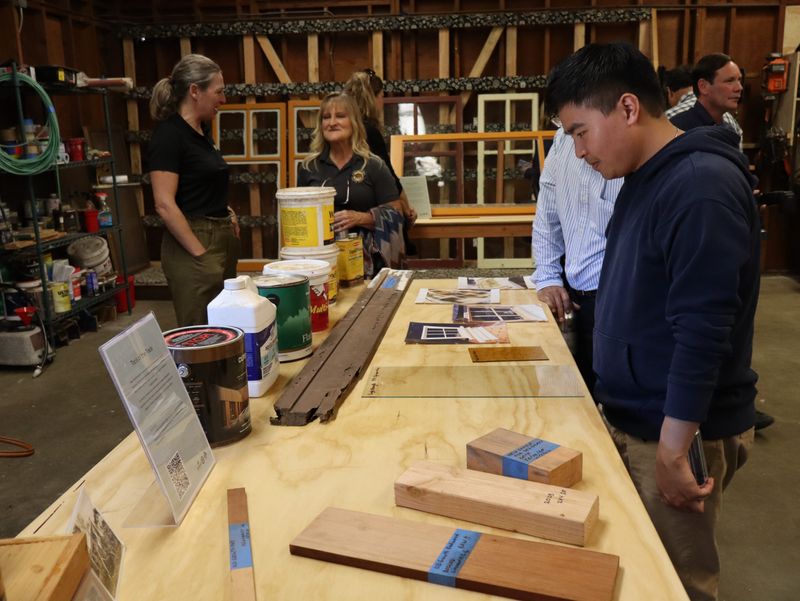
“We are returning things to how they were originally,” said Quedou, as he showed visitors the difference between modern 2×4 lumber pieces and the stronger, denser wood used in properties at the beginning of the 20th century when the first buildings of Asilomar were constructed.
“This is a 2×4 that came from a house built in 1921 that was demolished in Carmel—it took 130 years to grow—it is old growth lumber and much stronger than lumber we produce now,” Quedou said. “It is also extremely rot resistant.”
Gesturing to a window salvaged from his own home, built in 1914, Quedou added, “This window has been exposed to ocean air for over a hundred years and shows almost no signs of rot.” Modern lumber, he said, can’t perform the same way, pointing to the contemporary 2×4.
Quedou, who worked his way up through the ranks in the local construction industry, got a passion for historic preservation working on his own home.
Referring back to the old window, Quedou said, “People that used to fix these back in the day, that is all they did.” He said doing the maintenance work required at a historical property like Asilomar requires a specialized set of skills and materials.
Additionally, California State Parks has guidelines on how repairs should be done at its historic sites.
“We have a very large collection of significant historical resources at Asilomar that we are mandated to maintain at certain level, so it is a big workload,” said Matt Bischoff, historian and cultural resources manager for California State Parks, Monterey District.
Having Quedou and the historic preservation center on site, cuts down on costs and gives Asilomar and its partners more control over sensitive maintenance issues, Marin said.
“Rather than outsourcing talent where you don’t have as much control and costs multiply and you get less work done, we are bringing the talent inhouse to make sure we are able to do the multitude of work that needs to get done on the 55 historic buildings at Asilomar,” Marin said.
There is also a vision to expand the center’s purpose to include training programs and apprenticeships on historic preservation.
“We are going to be able to use this center, which was a storage room, to train our own people, people from California State Parks or up-and-comers to help build back some of the skill sets that are frankly, in decline,” said Sasha Day, president and CEO of Aramark Destinations, the operations partner at Asilomar hotel and conference grounds. “There is a need out there for historic preservation that is not going away.”
This article originally appeared on Salinas Californian: Asilomar unveils center to preserve historic landmarks at state park
Reporting by Roseann Cattani, Salinas Californian / Salinas Californian
USA TODAY Network via Reuters Connect
By Roseann Cattani, Salinas Californian | USA TODAY Network