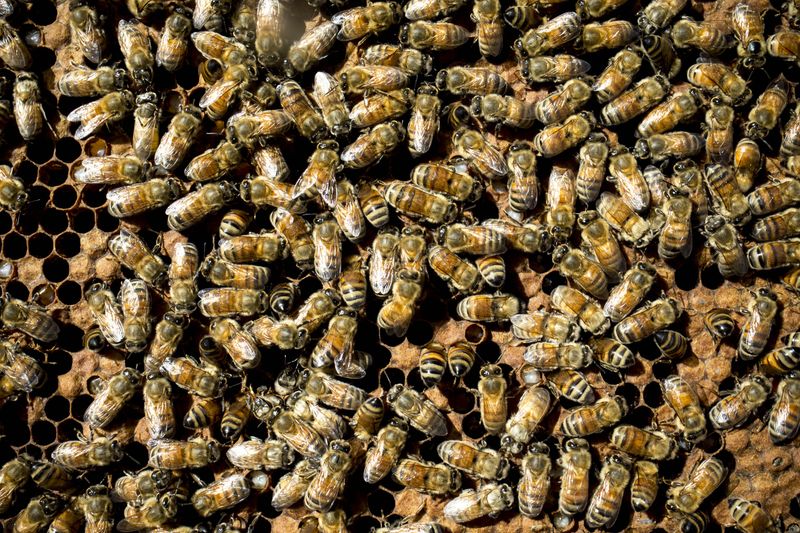
Africanized honeybees, also known as “killer bees,” have spread to 13 states, including California, posing threats to people and animals.
Here’s what to know about Africanized honeybees and their presence in California.

What are Africanized honeybees?
Africanized honeybees, a mix of African and European bees, are far more aggressive than honeybees. They attack in large numbers, chase people and animals for up to a mile, even follow cars, and can sting through standard beekeeping gear.
Africanized honeybees look almost identical to regular honeybees, so much so that most people can’t tell the difference. They’re slightly smaller, with golden-yellow coloring and darker brown bands, but only experts can spot the difference by measuring their wings and body size.
Where are Africanized honeybees found?
Killer bees first grabbed headlines in the 1990s after showing up in the U.S. They thrive in warm, tropical climates and struggle to survive cold winters, so they’re primarily found in southern states.
Are Africanized honeybees in California?
Africanized honeybees were first detected in California in 1994 and have since become the majority of feral bee colonies in nature, according to the University of California Agriculture and Natural Resources.
What to do when you’re attacked by a killer bees
Africanized honeybees don’t pack more venom than regular honeybees but attack in bigger numbers. Each bee can sting only once before it dies, but when the colony feels threatened, hundreds may swarm and sting.
If you’re getting attacked, experts recommend running away quickly in a zigzag pattern and seeking shelter in a building or car. Jumping into the water is not recommended because the bees will wait for you to resurface.
If you are stung, the University of California Agriculture and Natural Resources suggests you:
Bee-Proofing Your Home
The University of California Agriculture and Natural Resources suggest these tips to help prevent bees from nesting in your home.
What states have confirmed sightings of Africanized honeybees?
Africanized honeybees have been reported in at least 13 states, with Florida seeing the highest numbers. Here’s where these aggressive bees have been spotted so far:
This article originally appeared on Palm Springs Desert Sun: Aggressive Africanized honeybees spread to 13 States, including California
Reporting by Jennifer Lindahl and James Ward, Palm Springs Desert Sun / Palm Springs Desert Sun
USA TODAY Network via Reuters Connect