Nights in Lancaster are chilly, the kind that warrants a blanket pulled to the chin. In March, reaching to switch on the heater comes to mind before switching off the alarm clock, but getting up early is a must in the spring. This is wildflower season after all, and with the overuse of geotagging online these days, popular places to recreate easily swell in numbers later in the day.
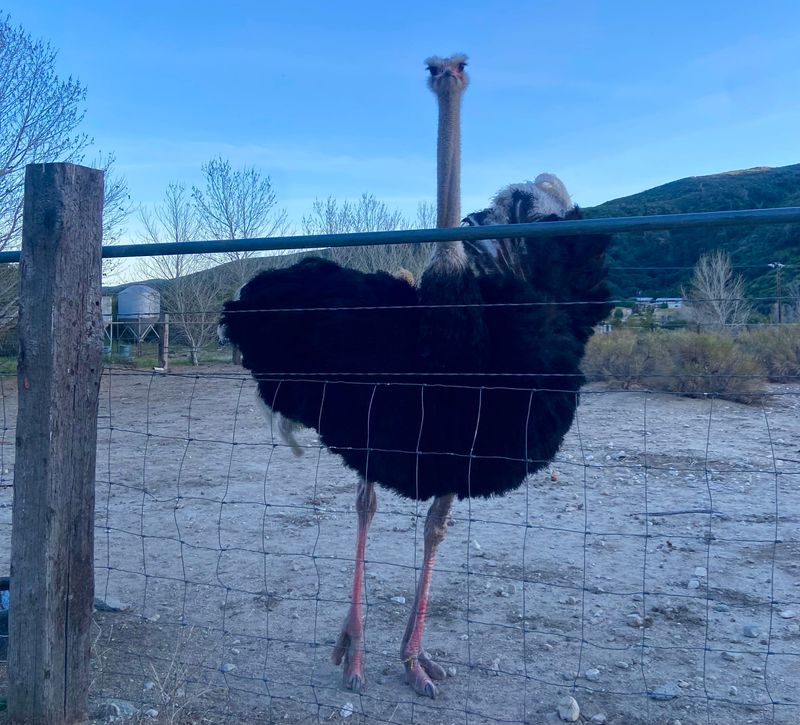
A wobble of ostriches catches the headlights of the motorhome as I drive off the Quail Run Ostrich Ranch campground five miles from the Antelope Valley Poppy Reserve, leaving behind $60 ostrich eggs and a fear of the awkward birds.

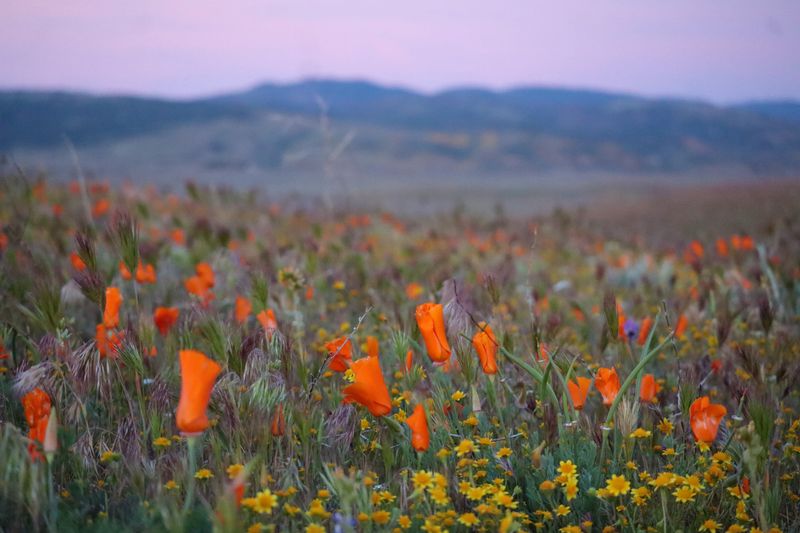
Once inside the reserve, the cold gives way to the heat of the rush, scrambling up to the Valley Vista Point to beat the sun’s break through the horizon, hoping to catch California’s state flower overwhelmed with a blast of gold on camera.
The close access of the campground enables beating the heat and the crowds at the poppy reserve, as its singular parking lot is only capable of hosting the first few arrivals of the day.
The bags under the eyes and the early morning grogginess of putting on mismatched socks are entirely worth it as a pack of coyotes howls at the exact moment the sun peaks. A sense that all is right in the world accompanies your place in the poppy fields, perhaps a compelling reason why the state reserve is beloved by residents of the High Desert and beyond.
How to get to the poppy reserve
Getting to Antelope Valley from Victor Valley is simple.
Head west on Pearblossom Highway, CA-138, through the trove of Joshua Trees in Phelan and past the small town of Little Rock, population 1,500, to Highway 14 toward Lancaster.
Points of interest along the way include the Charlie Brown Farms fair-style gift shop in Little Rock, Lake Palmdale, Elizabeth Lake and Lake Hughes.
What are the best ways to view the poppies?
Arrive early at the poppy reserve for the best way to view the wildflower blooms. The subtlety of dawn adds a mystical element to an already special place.
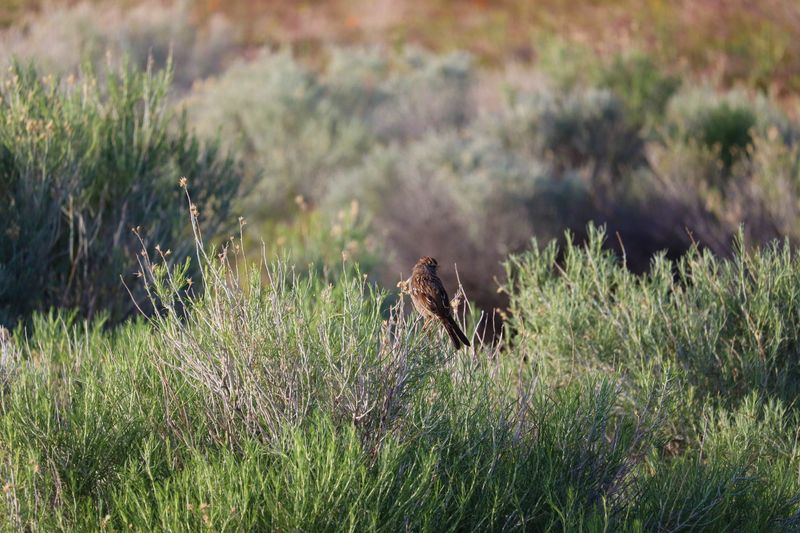
Not only do poppies, yellow fiddlenecks and lupine cohabitate in a colorful way visitors can’t get enough of, but the chances of spotting native wildlife are also higher earlier in the day.
Spring is high time at the reserve. Visit during the week if possible to avoid overcrowding in the parking lot.
A $10 entrance fee is payable at a pay kiosk in the parking lot. After you’ve paid, head first to the Valley Vista Point viewpoint on the east side of the park to capture the sunrise.
Is this year a superbloom?
While many different sources are calling this year a superbloom year in California, like Outside Online and FOX Weather, it did not appear that way at the Antelope Valley reserve when I visited on March 16.
Photos circulating online of completely orange landscapes are inaccurate to the conditions of this year’s bloom, which appeared to be outnumbered by flowers of the yellow variety: fiddlenecks, goldfield and coreopsis.
Trail information
There are eight miles of trails around the Mojave Desert grassland habitat, including a paved section for wheelchair access. Most of the trails are marked as easy, with only a few sections marked moderate, and even fewer described as difficult.
The Tehachapi Vista Point on the west side of the park is one of the best places to photograph rolling hills spotted with wildflower explosions. There are only pockets of color this year, but they are still impressive.
Benches are located throughout the trails to rest or stage a photography shoot. The state park website also notes that the resting points are prime areas for wildlife watching. Throughout the park live meadow larks, lizards, gopher snakes, coyotes, bobcats, mice, gophers, kangaroo rats, beetles, scorpions and others.
It is important that visitors stay on the established trails, as the reserve is also a prime habitat for rattlesnakes.
Featured campground
The Quail Run Ostrich Ranch campground is not only relevantly located for flower chasers, but it is also affordable at only $25 per night for tents and $35 for RVs, plus taxes. The sites are primitive and DIY, but there is a bathroom and potable water on site.
Campground hosts are hands-off and communicate with campers through the Hipcamp app rather than in person, leaving campers to figure out which entrance is for the campground and which is off-limits as their private residence.
Once inside, campers can feed grass to the ostriches “at your own risk,” practice archery at the dedicated shooting site or play in the playground. There is also a camp store on site with $60 ostrich eggs for purchase and local honey.
Other useful information
The park is open from sunrise to sunset daily. Dogs and drones are not allowed inside the park, and wildflower picking is strictly prohibited.
According to the California State Parks, spring is normally very windy at the poppy reserve. Check the weather report first for general conditions, as poppies tend to curl up in cold conditions.
Additionally, the eight miles of trails are not shaded. Bring a sunhat and plenty of water, as walking on the exposed trails is the only way to view the wildflowers.
McKenna is a reporter for the Daily Press. She can be reached at mmobley@usatodayco.com.
This article originally appeared on Victorville Daily Press: A local’s guide to visiting the Antelope Valley Poppy Reserve
Reporting by McKenna Mobley, Victorville Daily Press / Victorville Daily Press
USA TODAY Network via Reuters Connect