A developer who tried to bribe a city council president.
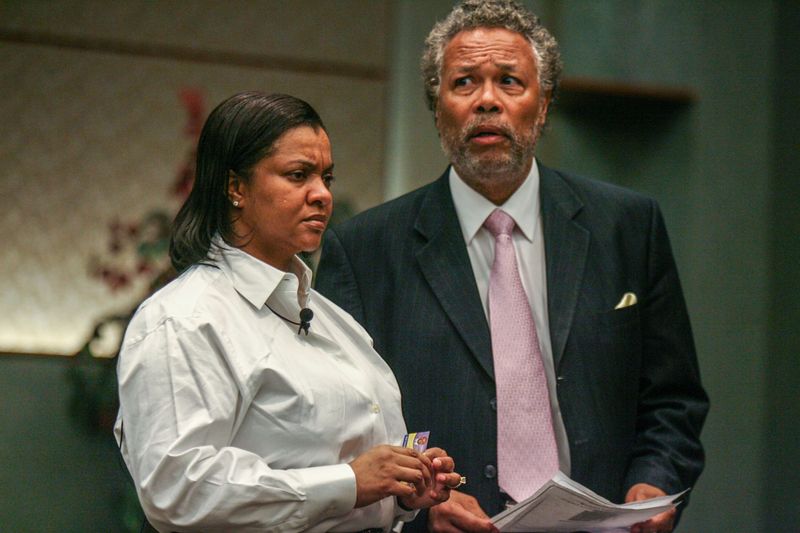
The former city council president he tried to bribe.

A felon whose dishonest business practices hurt Detroiters.
A contractor who used dirt that may have endangered Detroiters.
And a former elected official who used his strip club to launder money for the murderous gang leader who helped get Detroiters hooked on heroin.
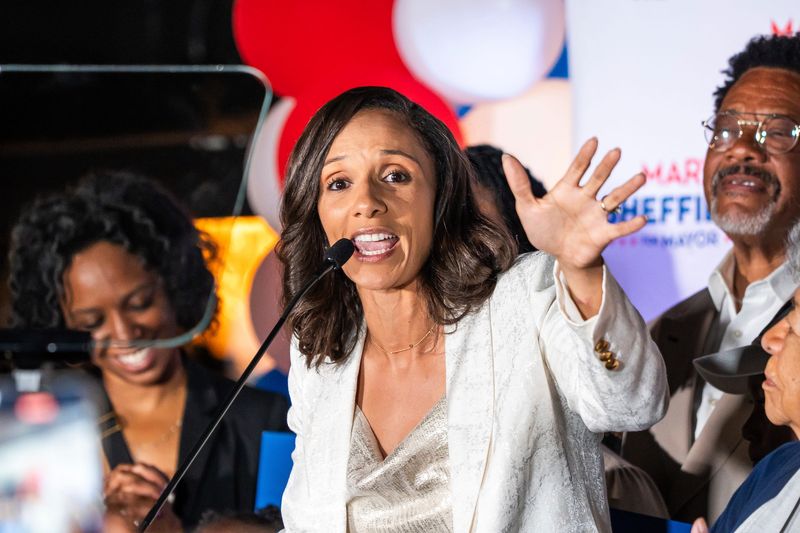
Five people with one thing in common: They are all putting money into Mary Sheffield’s candidacy for mayor of Detroit.
I’ll identify these donors and tell you their stories in a minute. First, let’s try to tally up all the dough being spent to help elect Detroit’s next mayor. (Spoiler alert: It’s impossible.)
Sheffield raised nearly $3 million for her campaign as of Oct. 25, according to the most recent campaign finance data available. The Rev. Solomon Kinloch Jr., who launched his campaign more than a year after Sheffield declared her candidacy, has raised $790,000 — about a quarter of Sheffield’s haul.
Detroit Next, a pro-Sheffield political action committee, raised another $340,000, as of Aug. 25, which is the most recent data available for PACs. And each candidate has benefited from dark money committees that have spent hundreds of thousands to promote them.
Like it or not, it’s virtually impossible to win an election without money. Most candidates believe they can never have enough.
Campaigns also value symbolism, which is why they carefully craft messages designed to convey the candidate’s accomplishments and ambitions. And candidates make statements with their campaign finance policies, particularly if they establish guidelines governing from whom they will — and, more tellingly, will not — take money.
For example, Councilwoman Gabriela Santiago-Romero, a progressive from southwest Detroit, declared she will not accept donations from corporate political action committees to emphasize her independence and commitment to Detroiters of modest means. When billionaire Dan Gilbert’s Rocket State PAC sent her campaign $5,000, she sent it back.
Sheffield, who has carefully cultivated an image as a populist since first being elected to council in 2013, in June sent out a fundraising email that said she is “not backed by billionaires or corporate PACs.” After I revealed that she actually took a lot of money from billionaires and corporate PACs, the campaign told me the message was an error. They blamed what they called an overly enthusiastic staff member “using standard campaign language … from previous fundraising campaigns.”
So, I asked the Sheffield campaign whether they had any guidelines governing campaign contributions. Sheffield spokeswoman Brittni Brown has ignored repeated requests to answer that question.
When I asked Kinloch’s campaign whether it had any guidelines, spokesman Dan Lijana sent me a statement that said, in part: “The Kinloch for Mayor campaign does not accept financial contributions from any individual or corporation with connections to city hall corruption scandals.”
I’ve scrutinized contributions to both campaigns, and did not find any donations from notorious individuals or officials with companies city officials deemed detrimental to Detroiters in Kinloch’s reports. It’s impossible to say definitively who is backing each candidate, however, because of the fat stacks being donated to the nonprofits paying for their campaign mailings, television, radio and social media advertising.
The 13th Congressional District Democratic Party Organization spent more than $241,000 to support Kinloch before the Aug. 5 primary election, while 5Plus1 ponied up more than $220,000 to promote Sheffield. If you’ve opened your mailbox, driven past a billboard, or turned on your TV, radio or computer, you know these dark money committees have spent hundreds of thousands more since then.
The reason these outfits are known as dark money committees is because they can raise loads of dough without disclosing to you and me where they got their money — or how they’re spending it. The only reason we know anything about the role these groups play in our elections is because they’re required to put their name on any mailings or billboards they pay for, the Federal Communications Commission requires broadcasters to reveal who is buying political ads and, in the case of 5Plus1, they made contributions to Detroit Next, which is required to detail its finances under the law governing political action committees.
But enough of the mysteries. It’s time to identify some of the donors with, er, interesting pasts who donated to Sheffield.
Big money player
Chris Jackson is a successful developer, treasurer of the Detroit Building Authority, which is the city agency that manages municipal properties, and a prolific fundraiser for Detroit politicians.
He also runs the Detroit Next PAC which has spent more than $200,000 to support Sheffield for mayor.
What Jackson leaves out of his biography is that he admitted under oath in 2010 that he paid $25,000 so then-Detroit City Council President Monica Conyers wouldn’t thwart his effort to help open a totally-nude strip club just minutes from city hall.
Jackson was given immunity from prosecution to testify against Sam Riddle, a political consultant, who was a Conyers aide and adviser when he told Jackson in 2006 that it would cost $25,000 to get Conyers to vote for a Deja Vu gentlemans club. Jackson was hoping to make some dough by putting ATMs in Deja Vu clubs.
Even though Deja Vu’s owners told Jackson they didn’t want to pay Riddle for Conyers’ vote, Jackson decided on his own to give Riddle’s company a check for $10,000 and a check for $15,000.
When the prosecutor asked: “Was there any doubt in your mind, Mr. Jackson, you were paying Mr. Riddle for Monica Conyers’ vote?” Jackson, under oath, answered: “No.”
When I asked Riddle in 2015 about Jackson, he told me: “Detroit knows, political insiders in particular know, who and what a Chris Jackson is.”
“The smart ones smile, even shake his hand and keep steppin’. The problem is when you pause with Chris Jackson. And how long do you pause. And how he pimps your political office for his well-being.”
Riddle’s trial ended with a hung jury. He pleaded guilty in a later public corruption trial, admitting that he sought bribes for Conyers.
Jackson did not return multiple messages I sent him seeking comment on his role in Sheffield’s campaign.
Sheffield spokeswoman Brown said in a statement: “Chris Jackson has no official role in our campaign, but like other Detroiters who love our City and believe in Mary’s vision, he is a supporter of her candidacy for Mayor.”
By now you may have guessed that Conyers is the former city council president Jackson tried to bribe, and who also supports Sheffield for mayor.
Conyers donated $25 to Sheffield’s campaign on Oct. 23.
Brown declined to comment on how Sheffield, who is Detroit’s current city council president, felt about accepting a contribution from Conyers.
Regarding the other donors with legal problems I found in Sheffield’s campaign finance reports, Brown quoted Sheffield as saying: “I can’t personally know the full history of every donor, but I can say this: Many of the individuals you’ve referenced are tax-paying job creators who employ Detroiters, have invested millions in our city when others turned their backs, or are community leaders with a record of service.”
It’s true that prolific fundraisers like Sheffield can’t know everything about everyone who donates to their campaign.
But Sheffield absolutely knows Conyers, who resigned from city council in disgrace before pleading guilty to conspiracy to commit bribery in 2010.
And she absolutely knows Jackson’s history, because I shared it with her 10 years ago when I was working at Fox 2 (WJBK-TV, Channel 2) and asked her: “What should Detroiters think when they see someone who tried to bribe a councilwoman now raising money for a councilwoman?”
She said he was a swell guy. And why wouldn’t she? I asked her about Jackson because he was hosting — what else? — a holiday fundraiser for Sheffield.
Tiger tales
“Taxpaying job creators” doesn’t quite describe Keith Stallworth, a former state and county lawmaker who pleaded guilty to a federal financial crime after being charged in 2001 with helping a drug ring launder money through his strip club.
I guess you could argue that, as the proprietor of Tiger’s Lounge, later known as Xanadu, Stallworth did create jobs for people willing to do the no-pants dance for money.
Stallworth donated $1,000 to Sheffield’s campaign on Jan. 30, and hosted a fundraiser for her on Feb. 27.
Public records suggest Stallworth is not the most diligent taxpayer, however, as evidenced by the more than $450,000 in unpaid state and federal taxes he and his businesses have racked up since 1995.
Stallworth and his business have been the subject of many troubling news reports since 1989, ranging from campaign capers to violations of various state laws, including a ban on lap dancing.
In 2001, he got busted for using his brother’s identity to obtain a phony driver’s license. Stallworth apparently needed it to get into Canada, where he owned a summer home, because he was concerned Canadian officials would not let him into the country after being convicted of domestic violence.
Those incidents pale, however, compared to federal prosecutors’ allegations that Stallworth used Tiger’s Lounge to launder drug money as part of a conspiracy involving 13 others who sold weed, cocaine and heroin.
The indictment listed Melvin “Butch” Jones as a ringleader. Jones was the founder of Young Boys Inc., the murderous gang known as YBI and notorious for using underage boys as drug runners to help it dominate Detroit’s drug scene in the late 1970s and ’80s. Stallworth was charged as a co-conspirator in the drug ring, but not in the killings.
While the case worked its way through the court, in 2002, Stallworth was elected to the Wayne County Commission.
A year later, he resigned after striking a plea deal with Uncle Sam to cooperate in the prosecution of his codefendants. His reward was being allowed to plead guilty to a lesser charge of structuring a financial transaction to evade currency reporting requirements.
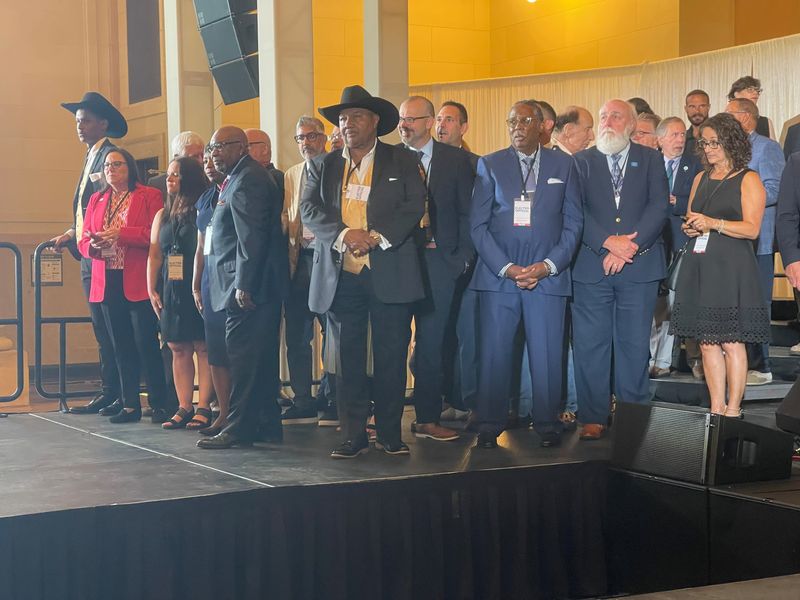
I ran into the loquacious former lawmaker on Aug. 19 at Michigan Central, where he was one of scores of Democrats and Republicans on hand to endorse Mayor Mike Duggan’s bid to become the first independent candidate elected governor of Michigan.
“Mary’s ready,” Stallworth said when I asked him about his involvement in Sheffield’s campaign. “So, I endorsed her early.”
There’s no business like tow business
Neither Sheffield nor her team would discuss Stallworth’s involvement in their campaign.
Brown reiterated in one of her last emails to me: “To our knowledge, all other individuals mentioned are upstanding and contributing members of our community with a demonstrated record of serving the City of Detroit and the region in various capacities.”
The Detroit Police Department and the city’s Inspector General don’t share that view of Louay Hussein and Nationwide Recovery, the towing company a judge ruled “engaged in an offensive trade that is offensive, hurtful … and is a public nuisance that interferes with public safety, peace, comfort and convenience” of Detroiters.
The Hussein family, Nationwide’s attorney and his law firm’s political action committee poured more than $85,000 into Sheffield’s campaign and Detroit Next. The Deldin Law PAC, run by Nationwide’s attorney Marc Deldin, also spent about $3,000 last June to throw a fundraiser for Sheffield.
Sheffield also should know about the city’s legal battles with Nationwide, since the city’s law department briefs councilmembers on litigation, and the council approves payments to law firms hired to represent the city in legal matters.
City officials have been battling Nationwide since 2016, when DPD appointed then-Lt. Michael Parish as a towing monitor to clean things up. An investigation found that one tow trucker driver was working with car thieves, and that Hussein got information from a car thief, though cops couldn’t determine whether Hussein knew the person was a crook. Parish said an audit revealed that Nationwide was charging exorbitant rates and was operating in a way that made it difficult for police to gather evidence against car thieves.
“We couldn’t have them in our towing system based on the information we had,” Parish said.
He said Hussein was in charge of the daily operations of Nationwide, but couldn’t own the company because he had a criminal record.
Hussein’s legal troubles date to 2002, when he pleaded guilty in U.S. District Court to bank fraud for writing checks worth tens of thousands of dollars from a closed account and depositing them into a new account.
In January 2003, Hussein was sentenced to one month in prison. Later that year, Royal Oak Police busted him for writing a bad check. He was convicted in Oakland County Circuit Court and, because the caper violated the terms of his sentence in the federal case, in 2004 a federal judge sentenced Hussein to seven more months in prison.
In 2007, Hussein was back in court, this time in Wayne County, on insurance fraud charges.
In 2008, citing a conviction in the Wayne County case, a federal judge sentenced Hussein to eight more months in Club Fed for violating the terms of his sentence agreement from the 2002 case.
DPD’s decision to yank Nationwide’s tow permit prompted the company to sue the city in 2017.
Deldin challenged the department’s claims about its business practices, and said the company wasn’t given a chance to defend itself before losing its piece of the action. Nationwide sought more than $100 million in damages.
A federal judge agreed Nationwide was denied its right to a hearing before losing its towing privileges, but awarded the company only $1.
Nationwide popped up on the city’s radar again this year, when the city’s Inspector General learned Nationwide’s owner Sam Hussein bought ABA Impounds, which tows cars for Detroit police. The Inspector General, on Sept. 3, issued a report recounting the city’s history with Nationwide and explaining that the company was not banned from doing business with Detroit only because the city’s debarment ordinance was not in place at the time Detroit police raised concerns about Nationwide’s business practices. The ordinance allows city officials to ban — or debar — disreputable companies and individuals from doing business with Detroit for up to 20 years.
The Inspector General concluded its report by advising city officials to think twice before doing business with Nationwide again.
“Nationwide, Sam Hussein and Louay Hussein have a history of misconduct that raises questions about their ability to act with business honesty and integrity,” the report said, adding, “Nationwide, along with Sam Hussein and Louay Hussein, engaged in improper and unlawful practices that caused harm to Detroit residents.”
The Husseins and Deldin declined comment when I asked them about their support of Sheffield.
I should note that Deldin, who I have known for nearly 20 years, donated $250 to my 2021 city council campaign after I invited him to a fundraiser.
Demolition man
By now, you may be wondering whether there is anything in a donor’s history that would cause Sheffield to return their campaign contribution.
There is: A dispute over dirty dirt.
Gayanga CEO Brian McKinney donated $1,000 to Sheffield’s campaign on Dec. 9, 2024, $5,000 to Detroit Next on July 18, and $8,325 to Sheffield’s campaign on Sept. 4.
On Sept. 11, the Inspector General suspended Gayanga and McKinney from doing business with the city after it said tests on the dirt used to fill pits left after demolishing homes “failed to meet the state’s residential standards.”
The suspension is for up to 90 days, while the inspector general considers whether to add Gayanga and McKinney to the city’s debarment list.
Gayanga, a Detroit-based business that prides itself on hiring Detroiters, is challenging the city’s findings.
“No contractor in the demolition program has created more living wage jobs for Black and brown residents in the city of Detroit,” Gayanga spokesman Shaun Wilson told me. “Due to our close proximity to the community, the safety of residents is one of our core beliefs.
“We vehemently refute the complaint.”
Sheffield spokeswoman Brown said: “The donation from Brian McKinney was made prior to his company’s suspension. Once our campaign was made aware of the suspension and subsequent appeal, the contribution was returned.” (Campaign finance records filed Oct. 24, show a record for a returned payment to McKinney.)
We won’t know whether Detroit Next returned McKinney’s lucre until the PAC files its next campaign report.
By then, Detroit will have a new mayor.
M.L. Elrick is a Pulitzer Prize- and Emmy Award-winning investigative reporter, director of student investigative reporting program Eye On Michigan, and host of the ML’s Soul of Detroit podcast. Contact him at mlelrick@freepress.com or follow him on X at @elrick, Facebook at ML Elrick and Instagram at ml_elrick.
This article originally appeared on Detroit Free Press: You won’t believe who I found giving money to elect Detroit’s next mayor
Reporting by M.L. Elrick, Detroit Free Press / Detroit Free Press
USA TODAY Network via Reuters Connect