Car washes seem to be popping up on every corner.
Well, not every corner. But it feels that way to some.

Officials in Warren and Roseville pressed pause on new car washes until officials in those Macomb County cities could look at the current number of car washes and possible ordinance changes for new ones. Officials in Livonia, in Wayne County, also are having conversations about possible limits on new car washes.
The Midwest Car Wash Association in Lansing said in a statement that Michigan is one of the strongest car wash markets in the country because of its climate, road salt usage and seasonal weather conditions, contributing to strong consumer demand for professional car wash services.
It said that industry estimates indicate there are about 2,100 professional conveyor, express, in-bay automatic and full-service car wash facilities operating in the Mitten State. The number approaches 4,000 when self-service facilities, gas station car washes and mobile wash services are included.
In 2025, there were more than 9.2 million registered motor vehicles in Michigan, the heart of the U.S. auto industry, according to the state’s Department of Transportation.
Car washes have been around for a long time in Michigan, with the first automatic car wash being Paul’s Auto Wash on West Fort Street in Detroit, which began operation in 1946, according to a postcard on the Detroit Historical Society website.
Regional trade group: Industry could grow 5% to 8% in coming years
An Aug. 5 article by Professional Carwashing & Detailing magazine says the U.S. now has more than 60,000 professional carwash locations. The Midwest Car Wash Association said the professional car wash industry forecasts annual growth estimated at 5% to 8% over the coming years.
Being a car wash owner or investor can be lucrative. Private equity firms have been interested in the market, which is not mature yet, according to an April 6 piece in Professional Carwashing & Detailing magazine.
The U.S. car wash services market size was estimated at more than $15 billion in 2025 and is expected to reach more than $17 billion by 2033, according to Grand View Research, a California-based market research and consulting company.
Just over the Michigan line, officials in Toledo studied the issue of car washes in that city, the state’s fourth-largest. The city had a moratorium on car washes from July 2024 through the end of January 2025 to study the impact of the proliferation of such businesses on public health and safety in surrounding neighborhoods, including environmental and reuse concerns for properties, as well as other issues.
According to a February 2025 letter to the City Council from the secretary of the city’s Plan Commission, the study found that Toledo saw a recent increase in new commercial car washes. Officials looked at zoning and unified development codes for five other cities, including Detroit.
Convenience, subscription-based payment model a plus
It said the 2023 International Carwash Association U.S. Consumer Pulse Study cited home car washing declined by 60% since 1996 because of increasing demand for conveniences, which car washes provide. It said that adopting the subscription-based payment model increased convenience.
It also said a decrease in operating costs from subscription-based payments and increasing car wash technology that lower water, sewer and electric bills have made investment firms more eager to invest in “safely profitable” car wash companies.
“With an influx of investors, national-oriented car wash companies have been expanding quickly into new cities to capitalize on the aforementioned convenience-oriented demand and to capture said demand away from other companies doing the same,” the letter said.
According to the International Carwash Association, the percentage of drivers who report most frequently washing their vehicle at a professional car wash increased from about 48% in 1994 to nearly 80% today. It said improvements in speed, convenience, quality and value have increased demand.
The group said the majority of retail car wash locations in the U.S. are owned and operated by small- to medium-sized independent car wash companies, but consolidation changed the structure in the mid-2010s, according to its website.
Today, about 200 companies operate 10 or more stores, totaling more than 6,000, and about 3,000 companies operate one or two stores. Convenience and petroleum retailing groups typically control larger car wash networks, it said. The group said the industry employs more than 220,000 full-time and part-time workers at retail stores and more than 15,000 in car wash equipment, chemical and service providing companies.
Some cities keep track of the number of car washes
In metro Detroit, officials in cities that have or are considering moratoriums on new car washes provided some statistics on the number of car washes in their communities.
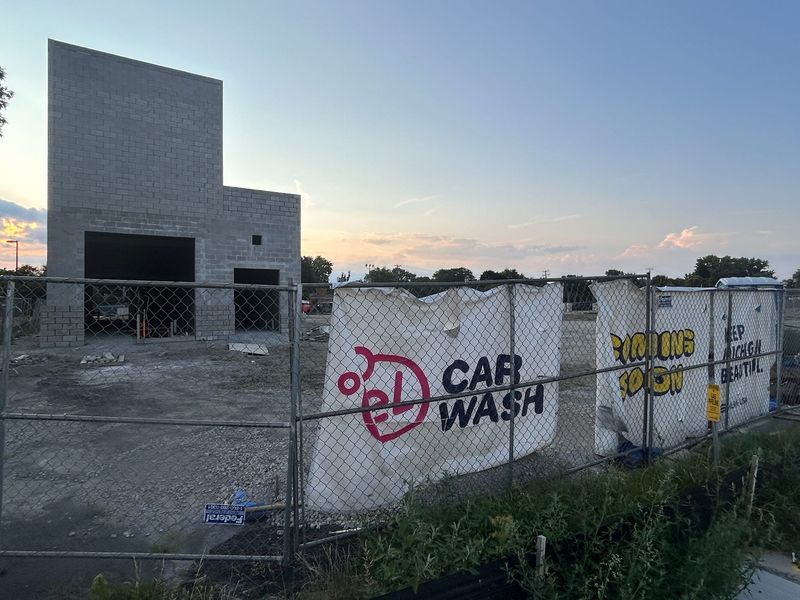
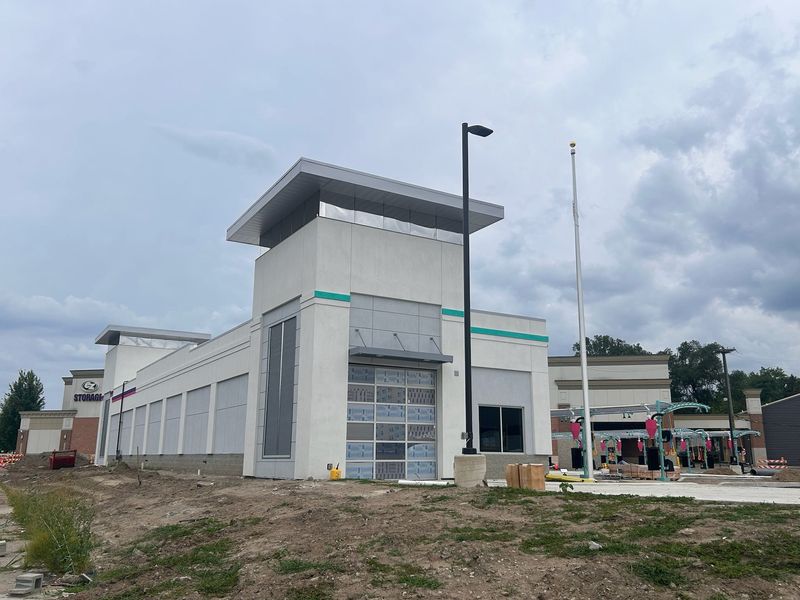
They said there are about 25 car washes in Warren, the state’s third most populous city; about 19 in Livonia, which is 36 square miles, and there will be 13 in Roseville, which is just under 10 square miles, including a new El Car Wash on Gratiot Avenue, which is under construction.
El Car Wash, a Florida-based company with six Michigan locations, all in metro Detroit, celebrated its 100th car wash Aug. 1 at a location in Pompano Beach in Florida. The business has expanded from four locations in 2018, with locations in Florida, Michigan and the mid-Atlantic after it acquired Baltimore-based Canton Car Wash, according to a release on its website.
It announced in 2024 its first Michigan location in Brighton, which would have license plate recognition technology and RFID technology “to allow for a more efficient wash experience,” and that Detroit Lions legendary running back Barry Sanders took an ownership stake in the company and would play a key role in its expansion across Michigan. It also said members of its executive team, investors and others are made up of Michigan alumni.
The Midwest Car Wash Association said it supports the continued growth and long-term success of the professional car wash industry, and it understands why some communities may choose to implement a temporary moratorium while they review zoning ordinances and evaluate future development.
“Our objective is not simply to see more car washes built, but to encourage responsible, sustainable growth that benefits business owners, customers, and the communities they serve. When new car washes are concentrated too closely together, it can create market conditions that make it difficult for both existing and new operators to achieve long-term profitability and continue investing in their communities.
“If municipalities such as the Cities of Warren and Roseville use a temporary moratorium to establish thoughtful zoning standards—including appropriate spacing between facilities and sound site planning requirements—it can ultimately strengthen the local marketplace. Well-planned development helps protect existing investments while providing future operators with a greater opportunity to succeed. Responsible planning benefits everyone by creating a healthy, competitive marketplace rather than one that becomes oversaturated.”
Contact Christina Hall: chall@freepress.com. Follow her on X: @challreporter.
Support local journalism. Subscribe to the Free Press.
Submit a letter to the editor at freep.com/letters.
This article originally appeared on Detroit Free Press: Why so many car washes are popping up in Michigan
Reporting by Christina Hall, Detroit Free Press / Detroit Free Press
USA TODAY Network via Reuters Connect
By Christina Hall, Detroit Free Press | USA TODAY Network