“This is this mega transition from biological to digital intelligence, from humans being, um the dominant species in the planet or the universe to not being, and we want that to go well. Um, so that’s like, uh, sort of high stakes, it’s a little bit stressful.”
That’s Sam Altman, the co-founder of OpenAI, speaking back in 2017, when very few people were thinking of AI at all. And here he is the same year, speculating that eventually people will become cyborgs:

“A popular topic in Silicon Valley is talking about what year humans and machines will merge (or, if not, what year humans will get surpassed by rapidly improving AI or a genetically enhanced species). Most guesses seem to be between 2025 and 2075.”
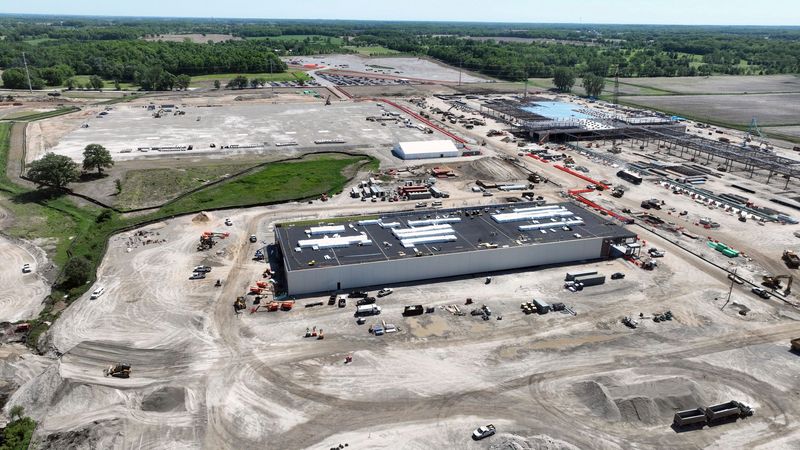
And there was Sam Altman on Monday, smiling alongside Gov. Gretchen Whitmer at the site of a hyperscale data center in Saline Township ― a massive project that will suck down enough electricity to power 1 million households ― bitterly opposed by a lot of residents and forced into the community via lawsuit:
“We know what the current attitude towards data centers in the world is … but I think we can make this a great example … This could turn into the site where hundreds of millions of students around the world learn and get private tutoring. This could turn into the site where millions of small businesses can run their business with AI in the cloud. … Hopefully someday we’ll all read about some incredible thing AI has done for society … and there’ll be a good chance that it happened as this site came online.”
This is a new, rosier Altman, who lately has seemed to discover that telling people you’re working to usher in a “Terminator”/”The Matrix”-esque version of the future where humans are meat batteries for our robot overlords evokes a little pushback. (But hasn’t seemed to hurt the prospects of OpenAI, which is steaming toward a $1 trillion IPO.)
The jobs devastation Altman has predicted is worrisome. The whole AI-will-displace-humans thing is even more so.
So this is my question, one that it’s absolutely insane I even have to ask: If Altman believes that his work could result in the end of humanity as the planet’s dominant species, why on earth is Michigan doing business with him?
Whitmer: No comment
I’ll cut straight to the chase: I asked Whitmer’s spokesman that very question. He declined to comment.
It’d be easy to dismiss the now-41-year-old Altman’s nearly decade-old predictions as the ramblings of an immature man enraptured by his own tech. Except he’s said these things over and over, including a blog post last year mulling the possibilities of humanoid robots:
If we have to make the first million humanoid robots the old-fashioned way, but then they can operate the entire supply chain — digging and refining minerals, driving trucks, running factories, etc. — to build more robots, which can build more chip fabrication facilities, data centers, etc, then the rate of progress will obviously be quite different.
Altman also seems to have discovered that predicting that your company will put 90% of people out of work ― while accumulating vast wealth for yourself ― isn’t great PR, telling CNBC last week that it’s a “terrible message.”
Whitmer insists that Michigan has strong AI “guardrails,” and that data center construction will create jobs. But the state’s primary mechanism for AI regulation ― ensuring jobs and environmental protection ― rests in tax credit legislation providing a 6% sales and use tax exemption for data centers that meet the state legislation’s requirements. It’s unclear what controls the state could exert over data centers that opt to forgo the tax credit. But state legislation was never meant to hold the line on the most significant technological upheaval of our lifetimes.
A recent Glengariff Group poll, conducted for the Detroit Regional Chamber, found that 55% of likely voters surveyed don’t want data centers in their communities; 49% said they’d be open to the idea if the centers were well regulated. Because data centers capitalize on existing zoning laws, the small communities where many opt to locate are virtually helpless to fight them.
By the time the Saline data center opens, or the Google center down in Van Buren Township, Whitmer and most of the lawmakers who approved that tax credit scheme will be term-limited out of office.
It’s conventional wisdom among our state’s data center proponents to argue that Michigan has to be at the forefront of this technology. Speaking at the Saline Township site Monday, Walbridge Chairman John Rakolta Jr. ― whose company is building the data center ― couldn’t have been more enthusiastic: “This is our chance once again to make a difference on the world stage.”
Amazon founder Jeff Bezos and Google CEO Sundar Pichai both say that in 20 years, data centers will be in space.
When someone tells you who they are …
Whitmer frequently refers to the jobs that she says AI data centers will create, but the jury’s still out. Most of the jobs created by the Saline Township data center will be construction jobs, with just 450 long-term. A recent report by the Brookings Institution found that to reap the benefit of ancillary information technology support jobs requires a density of data centers in the same county. This is not great news.
As best I can tell, it’s impossible to discern how many data centers are under construction or operating in Michigan. The website datacentermap.com, which the Michigan Economic Development Corp. links to as a resource, lists 75, but doesn’t distinguish those that pre-date the massive centers required to support generative AI. But I’ll tell you this, if Target or Taco Bell were expanding the way data centers are, we might think they’d overdone it.
AI has become a sine qua non of modern life, and I can, grudgingly, admit that it’s here to stay, whether we like it or not.
But where is it going?
Altman told CNBC that he doesn’t think the problem is the message: “I don’t think it’s that we haven’t articulated the upsides. I think people actually believe us.”
I’m not sure they do. But as the saying goes, they probably should. Especially in Lansing.
Nancy Kaffer is the editorial page editor of the Detroit Free Press. Submit a letter to the editor at freep.com/letters, and we may publish it in print or online.
This article originally appeared on Detroit Free Press: Whitmer’s treating AI like jobs policy. It’s bigger than that | Opinion
Reporting by Nancy Kaffer, Detroit Free Press / Detroit Free Press
USA TODAY Network via Reuters Connect
By Nancy Kaffer, Detroit Free Press | USA TODAY Network