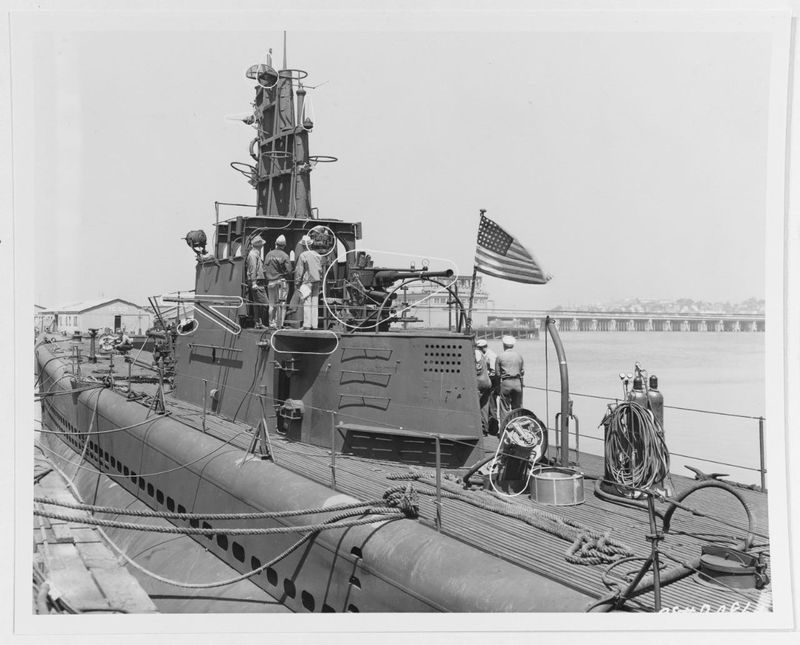
Workers at a Wisconsin shipyard restoring a decorated World War II submarine usually docked in Muskegon uncovered a hidden bit of history that ties the boat directly to another sub that went down during the war.
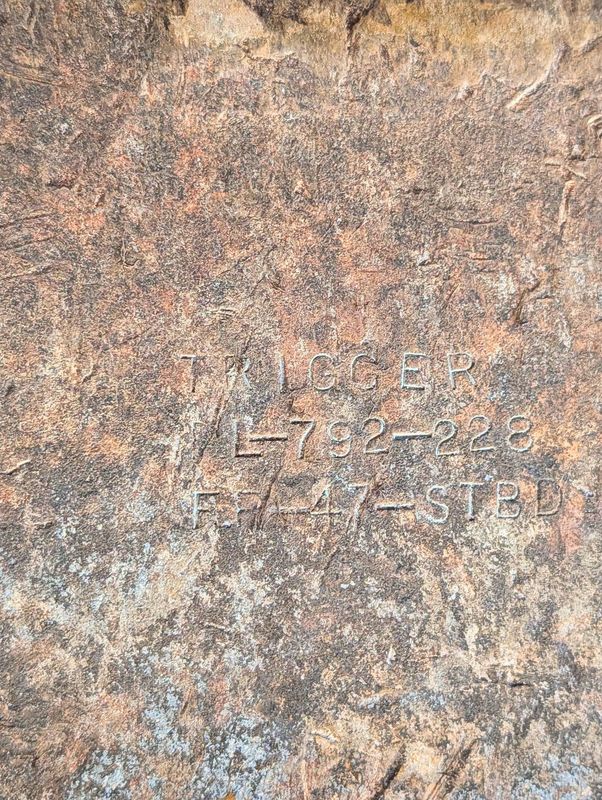
Restoration workers uncovered a “flood valve” on the USS Silversides that was intended for the USS Trigger, which was presumed lost in March 1945. Flood valves are hinged covers at the bottom of certain ballast tanks which may be opened to admit or expel sea water.

“Coolest find yet,” The USS Silversides Museum posted on Facebook. “The USS Trigger (SS-237) was Silversides’ sister ship. Built right next to her and launched after Silversides. This flood valve is labeled Trigger and for whatever reason ended up on Silversides. USS Trigger was sunk during the war with all hands lost (sunk 28 March 1945). This could be the only surviving ‘Trigger’ submarine part. – Scott, Vessel Curator, on site in WI for Silversides’ dry dock.”
The piece of metal includes stamped lettering that says “TRIGGER L-792-228, F (R or B) -47-STBD.”
The Trigger was presumed lost shortly before the war ended after sinking a Japanese ship and then enduring depth charges following the attack. It never returned to base.
The Silversides, which saw extensive action during World War II, usually is docked in Muskegon where the public can visit and tour the boat.
The vessel was towed to Fincantieri Bay Shipbuilding in Sturgeon Bay, Wisconsin, in July to undergo restoration work intended to keep it seaworthy for another 15-20 years. The museum said this is the first time the vessel has been in dry dock since July 1954.
“USS Silversides is more than a historic artifact — she is a powerful, living connection to the men who served and the communities that supported them,” said Veronica Campbell, executive director of the USS Silversides Submarine Museum. “This project represents our commitment to preserving that legacy with care and integrity. By taking action now, we are ensuring that future generations can continue to experience her story firsthand.”
The 312-foot-long boat is scheduled to return to Muskegon sometime in October.
Here’s a closer look at what’s taking place and where else to visit historic ships until it returns.
Why is the USS Silversides in Wisconsin?
The USS Silversides Submarine Museum earlier this year announced the major dry dock preservation project for the USS Silversides (SS-236), one of the most decorated submarines of World War II.
The $3.5 million project was funded by a $750,000 grant through the Save America’s Treasures Grant Program, administered by the National Park Service, U.S. Department of the Interior, as well as multiple donors and sponsors.
The multi-phase project is being led by Valkor Energy Services, serving as the project and construction management team.
While in dry dock, “specialists will conduct a comprehensive evaluation and restoration effort, including hull cleaning, structural inspection, steel repair, and the application of advanced protective coatings to ensure long-term stability,” the museum explained.
Dry dock work will include:
How did the Silversides get to Wisconsin? Does it still have working engines?
The submarine does not move under its own power. It was towed across Lake Michigan by Basic Towing, of Escanaba, Michigan, a marine transportation provider specializing in Great Lakes towing operations, the museum explained.
USS Silversides departed Muskegon on July 13, sailed smoothly through the night, and arrived safely in Sturgeon Bay on the morning of July 14, 2026, after a 16-hour trip, the museum said.
Is the USS Silversides Museum in Muskegon open while the vessel is gone?
Yes, other exhibits in Muskegon remain open.
The museum also is preparing to introduce new waterfront experiences for visitors.
The museum currently is open from 10 a.m. to 5 p.m. every day. Admission, which may include the sailing vessel Jakab, ranges from $18 to $30 with children, military, WWII veterans and military families at ho charge.
What did the USS Silversides do during WWII?
The Gato-class submarine was commissioned in Dec. 15, 1941, just after the attack on Pearl Harbor on Dec. 7.
The vessel survived 14 wartime patrols, earned 12 battle stars and a Presidential Unit Citation. She was credited with sinking 23 enemy vessels totaling more than 90,000 tons of shipping.
The boat was decommissioned in 1946, and later served as a training vessel in Chicago. In 1987, the sub moved to Muskegon.
In 1972 it was placed on the National Register of Historic Places and in 1986 it was named a National Historic Landmark.
USS Edson, the ‘Gray Ghost of the Vietnamese Coast’
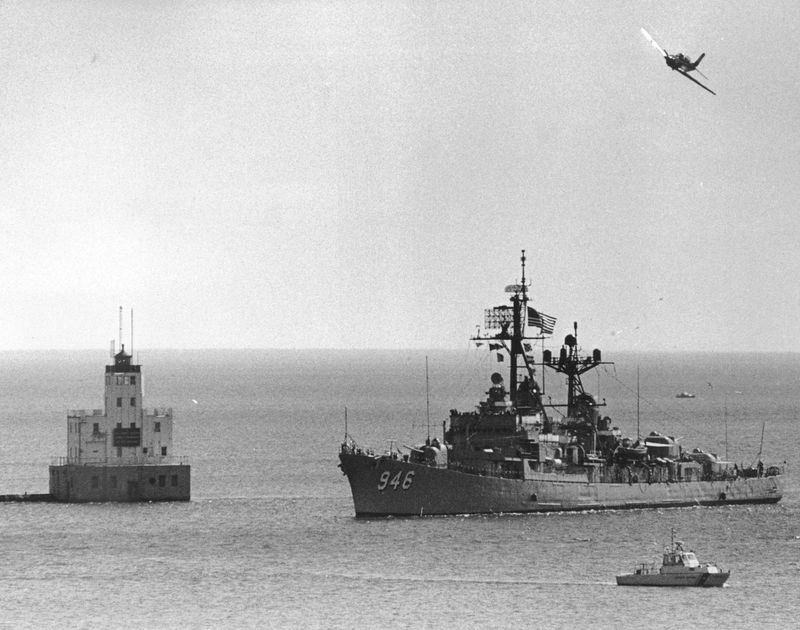
Commissioned in 1958, USS Edson (DD 946) served for 30 Years and 10 deployments in Vietnam, according to the Saginaw Valley Naval Ship Museum, 1680 Martin St. in Bay City, which is home to the Edson.
In May 1967, the vessel was struck by enemy fire when it later appeared, North Vietnamese were surprised, and the Edson became known as the “Gray Ghost of the Vietnamese Coast,” the museum said.
The ship is one of 18 Forrest Sherman-class destroyers built; only two remain. The Edson was named a National Historic Landmark and to the National Register of Historic Places in 1990.
The vessel is named for World War I veteran Merritt Austin Edson, a Marine who later became a naval aviator. He was the winner of Navy Cross in 1928.
Tickets are $10 for children and $15 for adults. Hours vary by season.
Huron Lightship permanently ‘docked’ at Port Huron
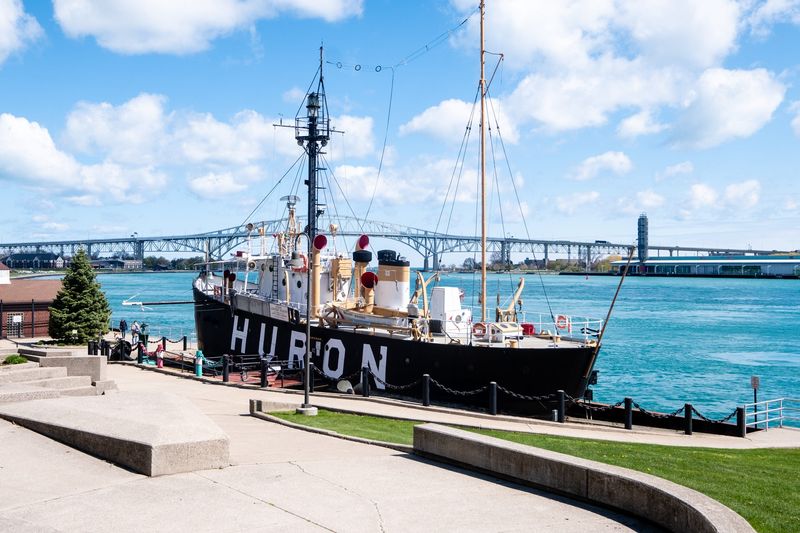
Lightships are floating lighthouses that are anchored in areas where it was too deep, expensive, or impractical to construct a lighthouse, according to Port Huron Museums, displaying a light at the top of a mast and, in areas of fog, a fog signal and radio beacon.
The Huron, located in Pine Grove Park, 800 Prospect Place in Port Huron, was the last operating lightship on the Great Lakes, and served for more than 50 years when retired in 1970, the museum notes. For 36 years, she was stationed at Corsica Shoals, a sandy area 6 miles north of Port Huron.
The museum aboard the vessel includes a collection of artifacts, including model ships, and a live camera feed of the bottom of the river. The ship was dedicated in 1990 as a National Historic Landmark.
Hours vary by season. Tickets are $12 for adults, with discounts for students and seniors.
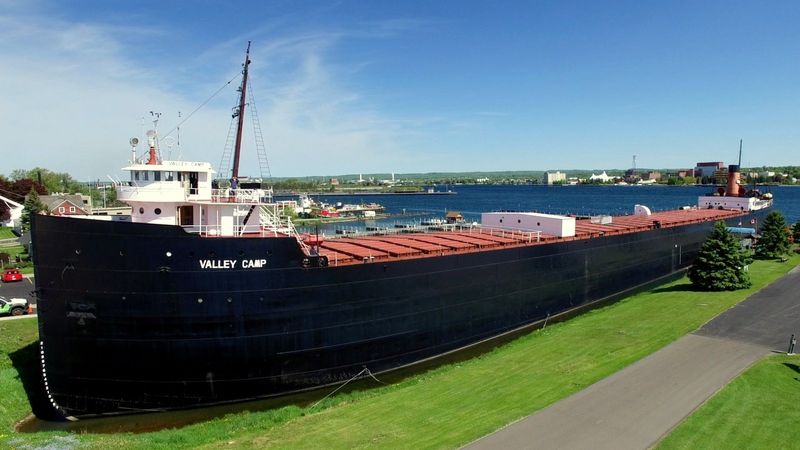
SS Valley Camp moored near Soo Locks on St. Marys River
The Museum Ship Valley Camp cargo encompass a 20,000-square-foot museum with over 100 exhibits, including two lifeboats from the ill-fated Edmund Fitzgerald. There are four 1,200-gallon aquariums stocked with various species of fish from the Great Lakes region.
Built in Lorain, Ohio, in 1917 for the Producers Steamship Company, the ship was first named Louis W. Hill. Later, under the ownership of Wilson Marine Transit, it was re-named in honor of the Valley Camp Coal Company.
From 1917 until its last voyage in 1966, the 11,500-ton ship logged 3 million miles and carried in excess of 16 million tons of cargo. A length of 550 feet, beam of 58 feet, and depth of 31 feet, the Valley Camp had a crew of 32 men.
Purchased by Le Sault de Sainte Marie Historical Sites, the ship arrived at Sault Ste. Marie on July 6, 1968, during Sault Ste. Marie’s tri-centennial celebration.
Visitors are able to view the crew cabins, from the captain’s quarters to the accommodations lived in by the oilers and the coal passers. Museum hours vary by season. Tickets are $8.50 for children and $17 for adults. Combination tickets are available, and there are discounts for events and various groups.
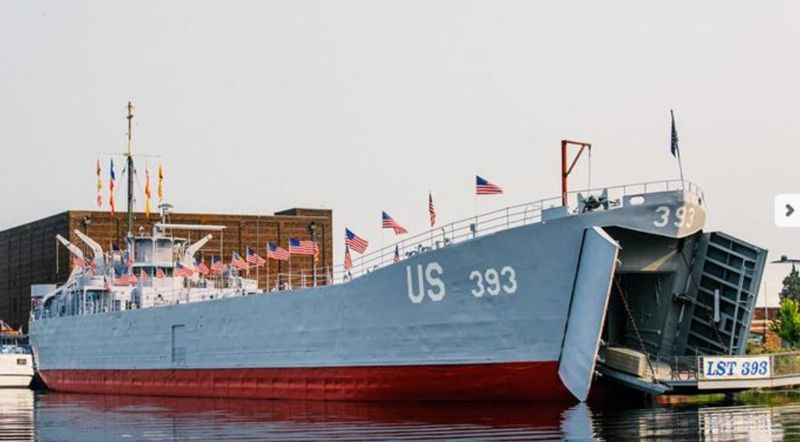
USS LST 393 carried thousands to battle in France, Italy
Landing Ship Tanks were ocean-going ships capable of shore-to-shore delivery of tanks, amphibious assault vehicles, and troops, the LST 393 museum notes. In total, 18 shipyards produced 1,051 LSTs in three years, the museum says.
The USS LST 393 was launched in Newport News, Virginia, on Nov. 11, 1942. Over 9,000 soldiers made their way to the front aboard LST 393, as well as 3,248 vehicles, the museum says. She also carried over 5,000 prisoners and, during her service, logged 51,817 nautical miles.
The ship made 75 voyages to foreign shores on three continents, including 30 round-trips to the beaches of Normandy, France. She won battle stars for her service in the occupation of Sicily, the invasion of Salerno, and the D-Day invasion at Normandy and was decommissioned in 1946.
The LST 393 is located at 560 Mart St., along the Mart Dock on the Muskegon Lake waterfront, in the heart of downtown Muskegon. Hours vary by season, and the vessel is closed from October to April. Tickets are $15 for adults, children $10.
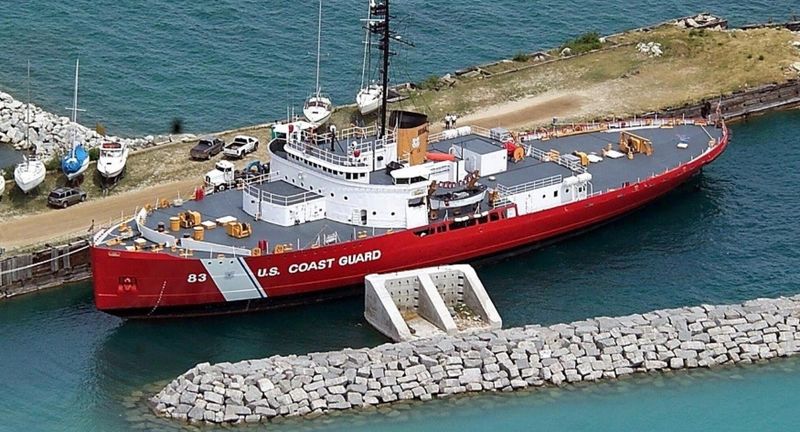
USCGC Mackinaw kept Great lakes shipping moving
The United States Coast Guard icebreaker Mackinaw (WAGB-83) is known as the “Queen of the Great Lakes” and “The Largest Icebreaker on the Great Lakes,” according to the Icebreaker Mackinaw Maritime Museum.
The ship was built as part of the war effort during World War II to meet the heavy demands of war materials and transportation during the winter months, the museum notes. Congress authorized construction of Mackinaw on Dec.17, 1941, 10 days after the attack on Pearl Harbor.
Built in Toledo, Ohio, the Mackinaw was commissioned on Dec. 30, 1944. Cheboygan remained her home port her entire life, the museum says. The ship has a length of 290 feet, a beam of 74 feet, 4 inches, and a displacement of more than 5,200 tons.
Decommissioned in 2006, the vessel is moored on the waterfront in Mackinaw City, on the eastern end of the old railroad dock.
Tours include the mess deck, captains quarters, bridge, engine room, ward room sick bay and more. The ship is open seasonally. Tickets are $8 for children and $15 for adults. All current and former USCG personnel are admitted free, as are USCG Auxiliary members. Military personnel tickets are $11.
Martime museum showcases sailing era, more
The Michigan Martime Museum in South Haven, features a pair of replica vessels and three historic boats.
Among the exhibits are the Bernida, a 1921 racing sloop with a single mast, a 1941 U.S. Coast Guard motor lifeboat, and a 1929 Chris Craft wooden boat.
The museum, 260 Dyckman Ave. .is open 10 a.m. to 5 p.m. Monday through Wednesday, and Sunday, and, 10 a.m. to 7 p.m. Thursday through Saturday. Admission is $15 in the summer for adults, and $10 for children, military and students. Other rates may apply.
SS City of Milwaukee carried trains across Lake Michigan
Docked in Manistee, the SS City of Milwaukee is the last of six sister ships designed in the 1920s and built by the Manitowoc Shipbuilding company, of Wisconsin.
The ship is available for tours, facility rental, contains a bed and breakfast (May through early September) and hosts the annual Ghost Ship Haunted House every Friday and Sat in October.
In addition, the attraction includes the USCGC Acacia (WLB 406), one of 39 180-foot seagoing buoy tenders built for the U.S. Coast Guard between 1942 and 1944. The ship also was capable of ice breaking.
It was decommissioned in 2006 and acquired by the SPCM in spring 2009.
The City of Milwaukee is a steel-hulled ship with a carrying capacity of 28-32 fully loaded rail cars, the museum says on its website. The vessel was powered by four Scotch marine boilers, producing 185 pounds of pressure powering two triple-expansion reciprocating steam engines rated at 1350 horsepower each, for a combined horsepower of 2,700.
Launched in 1931, the ship operated for Grand Trunk Railroad until 1978, then Ann Arbor Railroad until 1981. It’s the last railroad ferry on the Great Lakes, the museum said.
A detour to Toledo highlights Great Lakes shipping
The National Museum of the Great Lakes, 1701 Front St. in Toledo, Ohio, features the freighter Col. James M. Schoonmaker and the tugboat Ohio.
The Schoonmaker was built at the Great Lakes Engineering Works of Ecorse, Michigan. The ship held the title of “Queen of the Lakes” as the largest ship operating on the Great Lakes until April 14, 1914.
The Ohio was a fire tug, serving at the Port of Milwaukee for 45 years. After serving in other capacities until 2015, the Ohio in 2018 was towed to the museum’s dock in front of the Col. James M. Schoonmaker Museum Ship.
The museum is open May to October. Hours are 10 a.m. to 5 p.m. Monday (closed Tuesday in winter) to Saturday, and noon to 5 p.m. Sundays. Museum tickets are $8 for children 6-17 and $14 for adults. Other groups receive discounts. Adding boat tours is an additional fee.
This article originally appeared on Lansing State Journal: USS Silversides restoration uncovered surprising detail. What they found
Reporting by Dan Basso, Lansing State Journal / Lansing State Journal
USA TODAY Network via Reuters Connect
By Dan Basso, Lansing State Journal | USA TODAY Network