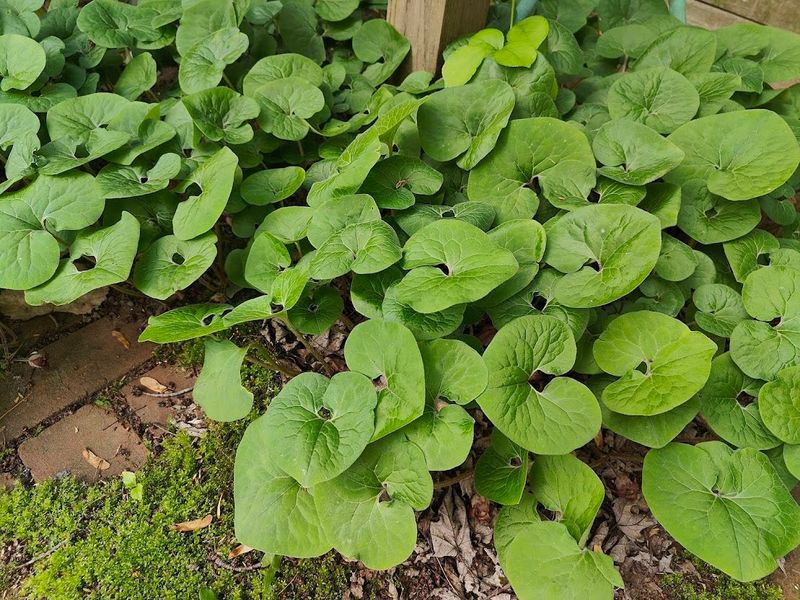
Shady areas can be some of the most problematic sites in a landscape. People often resort to planting shade-tolerant grass with various degrees of success.
Instead, transform that boring spot into something special with wild ginger.

Canadian wild ginger (Asarum canadense) is a perennial plant native to most states in Eastern North America, including our area. Canadian wild ginger is hardy down to zone 3, so it will easily withstand our severest winters.
While the rhizomes have the aroma of ginger, wild ginger is not botanically related to the culinary ginger root we find in the produce department. During colonial times, the aromatic rhizomes were sometimes processed and used as a ginger substitute.
In its natural environment, wild ginger is a woodland plant that can be found growing in colonies in rich, moist soil on the forest floor. Their deciduous leaves drop every fall, then return in spring just before tree leaves emerge.
In our gardens, it can be the best solution for shaded areas. Attractive, satiny, 3 to 6 inch heart-shaped leaves make a dense, tidy groundcover that crowds out weeds. Plus, wild ginger is deer-resistant. Another species, shiny-leafed European wild ginger, hardy to zone 4, was often used before the recent trend of using native plants.
Wild ginger is easy to cultivate if planted in rich, moist soil. So to be successful in a yard, the soil must be prepared first by digging in large amounts of organic matter to replicate a rich, forest-like soil. To get a colony started, plant container-grown plants from a reputable native plant nursery about one foot apart each way. Don’t plant them too deep, only one inch deep or so. Bare root rhizomes also will work. Keep the soil evenly moist by watering once a week or more depending on the amount of rain. Wild ginger prefers moist, acidic conditions but will tolerate alkaline soil and minor drought once it is well-rooted.
An established colony will pretty much look after itself and will slowly spread into a beautiful carpet with very little input from the gardener. They also self-sow. You can often find new plants several feet away growing from seeds carried by ants looking to feed on the nutritious outer parts of the seeds.
Canadian wild ginger, while grown for its satiny leaves, blooms in late spring. It’s hard to see the flowers, however, because they blossom under the leaves, not on top of the foliage like many plants. The three-quarters of an inch long maroon flowers attract flies and other small insects to act as pollinators. They sit on or near the soil surface and are shaped like miniature jugs set on their sides. Kids can have a lot of fun searching for the flowers.
Wild ginger looks best when given plenty of room to spread into a lush green carpet. They are a must-have for woodland gardens but will enhance any garden style. Use them in shady rock gardens or as a border along shady walkways. Combine with other shade plants such as trilliums, hostas and ferns to add beautiful texture to your natural shade garden.
This article originally appeared on The Detroit News: Use wild ginger to spice up your drab shady spots
Reporting by Bob Dluzen, The Detroit News / The Detroit News
USA TODAY Network via Reuters Connect