A special state Senate race and a variety of property tax and school bond issues are at stake Tuesday in select elections around Michigan.
Voters in the 35th District, which spans Bay, Midland and Saginaw counties, will pick one of three candidates to represent them for the remainder of the year: Republican Jason Tunney, a lawyer and businessman from Saginaw; Democrat Chedrick Greene, a firefighter from Saginaw; or Libertarian Ali Sledz from Midland.

The 35th District seat has been vacant since former state Sen. Kristen McDonald Rivet, D-Bay City, was sworn in as a member of the U.S. House on Jan. 3, 2025. The winner will serve the final months of McDonald Rivet’s four-year term and run as the incumbent in the regular August primary election.
The traditionally Democratic seat is being contested by the Republicans as Democrats hold a 19-18 majority. If Greene wins, the Democrats will hold a 20-18 and will more easily be able to pursue their legislative agenda. If Tunney wins, Senate control would be tied at 19-19 and Lt. Gov. Garlin Gilchirst II, a Democrat, would cast any tie-breaking votes.
But Republicans would effectively have veto power by withholding a vote to prevent a tie and Gilchrist’s ability to weigh in.
The race will provide early insights into where voters in one key area of Michigan stand 26 weeks before the Nov. 3 general election, in which the state will choose a new governor and a new U.S. senator. The special election also comes 16 months into Republican President Donald Trump’s second term as war in the Middle East has hiked gas prices in the U.S.
In an interview Friday — as some Michiganians were paying $4.99 a gallon or more for regular unleaded gas — Tunney said rising fuel costs were coming up in conversations during his door-to-door campaigning. Asked if the spike was hurting his bid for the state Senate, Tunney replied, “I don’t think it helps.”
Greene is viewed by many as the favorite on Tuesday, partially because of a string of victories Democrats have had in special elections in other states since President Donald Trump’s election in November 2024. McDonald Rivet, a former Bay City commissioner, won the seat in 2022 by 6 percentage points over Republican former state Rep. Annette Glenn, 53%-47%
Metro Detroit voters also are heading to the polls Tuesday to cast ballots in a smattering of school-related property tax and bond proposals.
The polls will be open from 7 a.m. to 8 p.m. Voters must show some form of valid identification or sign an affidavit that they are a registered voter. Absentee ballots must be returned to the clerk’s office before the polls close to count. Unregistered voters are allowed under state law to register on the day of the election.
The Secretary of State’s office also answers frequently asked questions here.
In Oakland County, the Avondale School District is seeking the approval of two measures to cover tax funding and school building repairs for the district of 3,600 students covering portions of Auburn Hills, Rochester Hills, Bloomfield Township and Troy.
The district is proposing to restore its nonhomestead operating millage to 18 mills, the maximum allowed under state law. Voters are being asked to authorize the district to levy the limit of 18 mills on all property except primary residences in the event of any property tax rollbacks, up to 3 mills.
Avondale is also seeking a 1-mill building and site sinking fund millage for 10 years to make improvements and repairs to facilities, as well as upgrade technology and transportation.
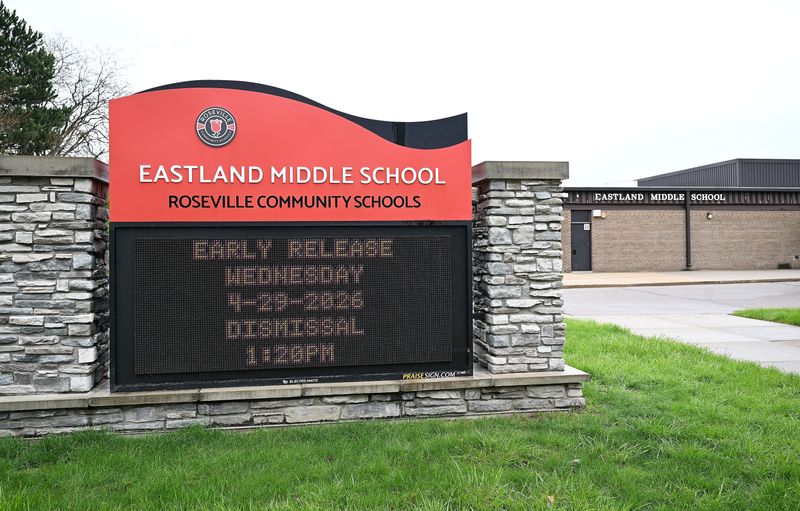
Roseville Community Schools has the largest school bond in the region on the ballot, requesting a $175 million bond.
Roseville’s average millage that would be required to retire each series of bonds is estimated at 7.64 mills annually. The proposal would not increase the millage rate because the request would be offset by the retirement of debt.
Roseville Superintendent Mark Blaszkowski said the district of more than 4,000 students needs to downsize, and he has presented his community with a plan to go from 11 total buildings, including 10 schools and the administration building, to eight. The district’s high school enrollment is expected to drop by about 500 students between 2018 and 2029.
The $175 million would finance the building of a new elementary school that would allow the district to close one school and turn another into an early childhood center, the superintendent said. Blaszkowski said he expects major renovations to existing buildings, including roof replacements, central HVAC and security upgrades. About $700,000 is set aside just to purchase new instruments for the band.
Oakland County
Grand Blanc Community Schools, a district in Genesee County with a portion of Oakland County’s Holly Township, is seeking the approval of $149 million in bonds. The money would pay for, among other things, a new performing arts center addition to the Grand Blanc High School’s East Campus and an early childhood center addition to the Perry Center, as well as classroom additions to replace temporary modular buildings currently in use.
The 25-year bonds would not increase the millage rate, which is expected to be at 6.3 mills or below. The estimated average annual millage required for the bonds is 2.95 mills.
Macomb County
In Macomb County, Eastpoint Community Schools is seeking an operating millage replacement approval, which would extend the district’s authority to levy the limit of 18 mills on all nonhomestead property ahead of any potential rollbacks, for up to 4 mills. The current levy expires in 2028.
Richmond Community Schools, which includes St. Clair County communities of Casco and Columbus townships and a part of the city of Richmond, has a $51.8 million bond request. The money would be used for building and equipping school building additions, remodeling and improving technology and playground sites. The 20-year bond is estimated to require 3.81 mills over the life of the bond.
Wayne County
The Huron School District, which serves Flat Rock and New Boston in Wayne County as well as some townships in Monroe County, is asking for a $68.8 million bond for improvements, including security upgrades, constructing a new school support facility, upgrading athletic facilities and playgrounds, and acquiring additional technology. The estimated average annual millage anticipated for the 30-year bond is 3.63 mills.
The Monroe Intermediate School District is asking for a renewal of its regional enhancement millage, which allows the ISD to raise more money on behalf of all the public schools within its boundaries. If the enhancement millage is defeated, it would expire this year.
The ISD collects the money and distributes it equally based on student population. The less than 1-mill levy would cost homeowners $0.9866 on each $1,000 of taxable valuation for five years until 2031. The renewal would generate an estimated $7.6 million for districts next year, money that can be spent on any district need.
jpignolet@detroitnews.com
This article originally appeared on The Detroit News: State Senate control at stake in special election. Other issues on ballot
Reporting by Jennifer Pignolet and Craig Mauger, The Detroit News / The Detroit News
USA TODAY Network via Reuters Connect