

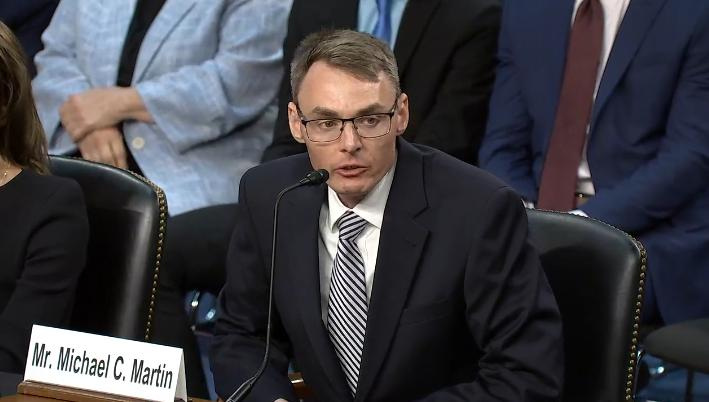
Federal prosecutor Michael Martin testifies before the Senate Judiciary Committee on June 10, 2026, about his nomination to the U.S. District Court for the Eastern District of Michigan.
Home » News » Local News » Michigan » Senate panel advances Trump pick for federal judge post in Michigan
Michigan

Senate panel advances Trump pick for federal judge post in Michigan

Washington ― The Senate Judiciary Committee on Thursday voted 14-7 to advance to the full Senate the nomination of veteran federal prosecutor Michael Martin to be a judge on the U.S. District Court for the Eastern District of Michigan.

Martin, 51, of Grosse Pointe Park, was nominated by President Donald Trump on May 11 and is the first nominee to that court during Trump’s second term.

Video Thumbnail

Martin received bipartisan support from senators on the panel Thursday, with three Democrats voting in favor of his nomination: Sens. Dick Durbin of Illinois, Sheldon Whitehouse of Rhode Island and Mazie Hirono of Hawaii. There was no discussion of the nomination or Martin’s qualifications during Thursday’s meeting.

During his confirmation hearing last month, Martin affirmed to senators that Joe Biden won the 2020 presidential election and that the U.S. Capitol was attacked on Jan. 6, 2021, in a departure from prior Trump judicial nominees who had sidestepped those questions at their hearings.

“As part of my work as an assistant United States attorney, I had the opportunity to look at pictures and videos from that day, and what I saw was officers ― law enforcement officers ― were attacked, and the building was damaged and vandalized,” Martin said when asked about the Capitol on Jan. 6.

His answers to questions about the 2020 election and Jan. 6 before the committee on June 10 didn’t satisfy at least one Democratic senator, Richard Blumenthal of Connecticut, who had pressed Martin on which candidate got the most popular votes and who voted against Martin on Thursday.

“Senator, my focus as a judicial nominee is on the law, and as a matter of law, Joe Biden won the 2020 election,” Martin said.

“Joe Biden received more Electoral College votes,” Martin later said, adding that, under the Constitution, the popular vote is “not the operative fact.”

Blumenthal argued that Martin and the other judicial nominees on the panel had adopted a new “script” to “thread the needle” and “protect” Trump’s lie that he won the presidency in 2020.

“If you’re unwilling to show us that you’re independent of the president at this early stage of your service, you disqualify yourself as judicial nominees,” Blumenthal said at the hearing.

Martin is the criminal division chief in the U.S. Attorney’s Office in the Eastern District and has been a federal prosecutor for 20 years, including a stint as the office’s national security unit chief. Previously, he was an analyst with the Central Intelligence Agency.

Martin likely earned bipartisan support from the Judiciary panel in part because of he gave “better” answers to key questions that Democratic senators have been asking all Trump nominees about who won the 2020 election and what happened on Jan. 6, 2021, at the U.S. Capitol, said Carl Tobias of the University of Richmond School of Law, where he studies the federal judicial nomination process.

Martin was “less evasive than other district nominees in answering other questions,” said Tobias, who predicted Martin could be confirmed by the full Senate before the August recess.

Whitehouse at last month’s hearing referred to the 22nd Amendment prohibition on any person being elected to the presidency more than twice. Martin affirmed that reading and that Trump would be covered by the provision.

“Yes, sir,” Martin told Whitehouse.

Martin was also asked by Durbin about the April firing of two federal civil rights prosecutors in Detroit who had secured convictions against a group of Christian protesters accused of blocking access to abortion clinics. The Trump administration said they were politically motivated cases under Biden.

Martin said he had no role in the firings. “I do not believe that career prosecutors should be terminated simply because they decided to work on a case,” he said.

Last month’s hearing marked the first time in Trump’s second term that Democratic senators ​had turned over so-called “blue slips” allowing a Trump judicial nominee to advance. The panel’s custom is not to hold hearings for a judicial nominee unless that nominee’s home state senators submit blue slips consenting to their moving forward.

Michigan Sens. Gary Peters of Bloomfield Township and Elissa Slotkin of Holly emphasized in June statements that Martin was chosen as part of the state’s judicial nominations process with the bipartisan Judicial Nominations Advisory Committee vetting, interviewing and providing feedback on applicants for the Eastern District vacancy.

Martin was born in Cincinnati and graduated from Miami University in Ohio, earning a master’s degree from Georgetown University and his law degree from Boston College in 2002.

At the DOJ, his role focused on prosecuting violations of espionage and export control offenses. In the Eastern District of Michigan, he investigated and prosecuted terrorism, espionage, export control, theft of trade secrets and immigration violations, as well as drug, gun and violent crime cases, according to a questionnaire he filled out for the Judiciary Committee.  

Martin also said in the questionnaire that he tried 11 criminal cases and 10 of them to verdict, most of them before a jury.

He helped to prosecute “Underwear Bomber” Umar Farouk Abdulmutallab, who was sentenced to life in federal prison for the failed Christmas Day 2009 terror attack aboard a Detroit-bound airliner.

He also prosecuted Islamic State soldier Ibraheem Izzy Musaibli, a Dearborn man captured on an Islamic State battlefield in 2018 and sentenced to 14 years imprisonment, and Issam Hamama, a former U.S. military translator convicted of lying to FBI agents when he said he was not a source for the Iraqi Intelligence Service during Saddam Hussein’s presidency.

Martin has been nominated for the seat vacated by Judge Sean Cox after his retirement last year.

mburke@detroitnews.com

This article originally appeared on The Detroit News: Senate panel advances Trump pick for federal judge post in Michigan

Reporting by Melissa Nann Burke, The Detroit News / The Detroit News

USA TODAY Network via Reuters Connect
Image

By Melissa Nann Burke, The Detroit News | USA TODAY Network

Related posts

Leave a Comment

Federal prosecutor Michael Martin testifies before the Senate Judiciary Committee on June 10, 2026, about his nomination to the U.S. District Court for the Eastern District of Michigan.
Home » News » Local News » Michigan » Senate panel advances Trump pick for federal judge post in Michigan
Michigan

Senate panel advances Trump pick for federal judge post in Michigan

Washington ― The Senate Judiciary Committee on Thursday voted 14-7 to advance to the full Senate the nomination of veteran federal prosecutor Michael Martin to be a judge on the U.S. District Court for the Eastern District of Michigan.

Martin, 51, of Grosse Pointe Park, was nominated by President Donald Trump on May 11 and is the first nominee to that court during Trump’s second term.

Video Thumbnail

Martin received bipartisan support from senators on the panel Thursday, with three Democrats voting in favor of his nomination: Sens. Dick Durbin of Illinois, Sheldon Whitehouse of Rhode Island and Mazie Hirono of Hawaii. There was no discussion of the nomination or Martin’s qualifications during Thursday’s meeting.

During his confirmation hearing last month, Martin affirmed to senators that Joe Biden won the 2020 presidential election and that the U.S. Capitol was attacked on Jan. 6, 2021, in a departure from prior Trump judicial nominees who had sidestepped those questions at their hearings.

“As part of my work as an assistant United States attorney, I had the opportunity to look at pictures and videos from that day, and what I saw was officers ― law enforcement officers ― were attacked, and the building was damaged and vandalized,” Martin said when asked about the Capitol on Jan. 6.

His answers to questions about the 2020 election and Jan. 6 before the committee on June 10 didn’t satisfy at least one Democratic senator, Richard Blumenthal of Connecticut, who had pressed Martin on which candidate got the most popular votes and who voted against Martin on Thursday.

“Senator, my focus as a judicial nominee is on the law, and as a matter of law, Joe Biden won the 2020 election,” Martin said.

“Joe Biden received more Electoral College votes,” Martin later said, adding that, under the Constitution, the popular vote is “not the operative fact.”

Blumenthal argued that Martin and the other judicial nominees on the panel had adopted a new “script” to “thread the needle” and “protect” Trump’s lie that he won the presidency in 2020.

“If you’re unwilling to show us that you’re independent of the president at this early stage of your service, you disqualify yourself as judicial nominees,” Blumenthal said at the hearing.

Martin is the criminal division chief in the U.S. Attorney’s Office in the Eastern District and has been a federal prosecutor for 20 years, including a stint as the office’s national security unit chief. Previously, he was an analyst with the Central Intelligence Agency.

Martin likely earned bipartisan support from the Judiciary panel in part because of he gave “better” answers to key questions that Democratic senators have been asking all Trump nominees about who won the 2020 election and what happened on Jan. 6, 2021, at the U.S. Capitol, said Carl Tobias of the University of Richmond School of Law, where he studies the federal judicial nomination process.

Martin was “less evasive than other district nominees in answering other questions,” said Tobias, who predicted Martin could be confirmed by the full Senate before the August recess.

Whitehouse at last month’s hearing referred to the 22nd Amendment prohibition on any person being elected to the presidency more than twice. Martin affirmed that reading and that Trump would be covered by the provision.

“Yes, sir,” Martin told Whitehouse.

Martin was also asked by Durbin about the April firing of two federal civil rights prosecutors in Detroit who had secured convictions against a group of Christian protesters accused of blocking access to abortion clinics. The Trump administration said they were politically motivated cases under Biden.

Martin said he had no role in the firings. “I do not believe that career prosecutors should be terminated simply because they decided to work on a case,” he said.

Last month’s hearing marked the first time in Trump’s second term that Democratic senators ​had turned over so-called “blue slips” allowing a Trump judicial nominee to advance. The panel’s custom is not to hold hearings for a judicial nominee unless that nominee’s home state senators submit blue slips consenting to their moving forward.

Michigan Sens. Gary Peters of Bloomfield Township and Elissa Slotkin of Holly emphasized in June statements that Martin was chosen as part of the state’s judicial nominations process with the bipartisan Judicial Nominations Advisory Committee vetting, interviewing and providing feedback on applicants for the Eastern District vacancy.

Martin was born in Cincinnati and graduated from Miami University in Ohio, earning a master’s degree from Georgetown University and his law degree from Boston College in 2002.

At the DOJ, his role focused on prosecuting violations of espionage and export control offenses. In the Eastern District of Michigan, he investigated and prosecuted terrorism, espionage, export control, theft of trade secrets and immigration violations, as well as drug, gun and violent crime cases, according to a questionnaire he filled out for the Judiciary Committee.  

Martin also said in the questionnaire that he tried 11 criminal cases and 10 of them to verdict, most of them before a jury.

He helped to prosecute “Underwear Bomber” Umar Farouk Abdulmutallab, who was sentenced to life in federal prison for the failed Christmas Day 2009 terror attack aboard a Detroit-bound airliner.

He also prosecuted Islamic State soldier Ibraheem Izzy Musaibli, a Dearborn man captured on an Islamic State battlefield in 2018 and sentenced to 14 years imprisonment, and Issam Hamama, a former U.S. military translator convicted of lying to FBI agents when he said he was not a source for the Iraqi Intelligence Service during Saddam Hussein’s presidency.

Martin has been nominated for the seat vacated by Judge Sean Cox after his retirement last year.

mburke@detroitnews.com

This article originally appeared on The Detroit News: Senate panel advances Trump pick for federal judge post in Michigan

Reporting by Melissa Nann Burke, The Detroit News / The Detroit News

USA TODAY Network via Reuters Connect

Image

By Melissa Nann Burke, The Detroit News | USA TODAY Network

Related posts

Leave a Comment