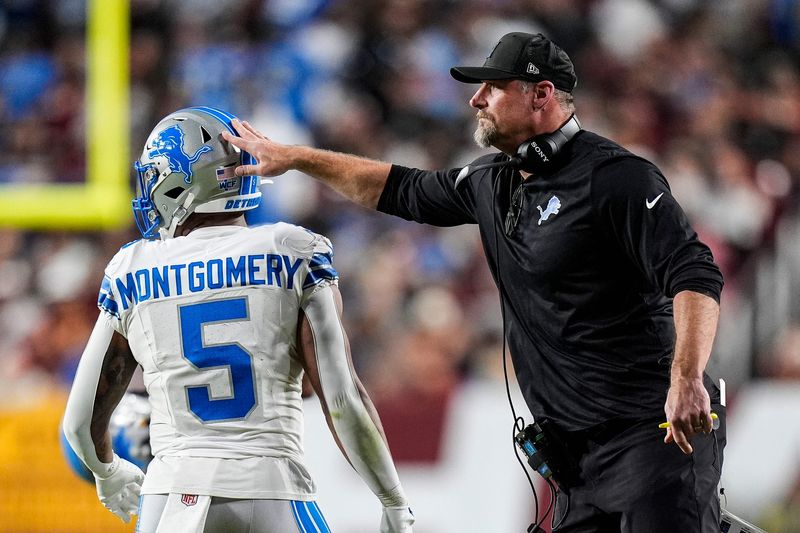
Six months ago, it would have seemed unthinkable that the Detroit Lions would soon part ways with David Montgomery.
After all, they gave the veteran running back a two-year, $18.25 million contract extension in October 2024. At the time, it seemed Montgomery would be part of the team for the foreseeable future while working alongside his dynamic backfield partner, Jahmyr Gibbs.

But things change, and they did this past season, when the Lions decided to give Gibbs a featured role and narrow Montgomery’s workload. Suddenly, Montgomery appeared expendable, and Lions general manager Brad Holmes even suggested in January the organization would consider dealing him away this offseason.
Sure enough, that’s what happened Monday, when Montgomery was sent to the Houston Texans in exchange for interior offensive lineman Juice Scruggs and two picks – a 2026 fourth-round selection and a 2027 seventh-round choice.
Below we give our reasons why we like the trade and present our reservations as well:
Reasons to like Lions’ David Montgomery trade
When Holmes floated the possibility of a trade involving Montgomery back in January, the public’s reaction wasn’t favorable. Many wondered then whether the organization could get fair compensation for a player who was perhaps more valuable to them than he would be to any other team.
It seemed a reasonable concern. Dating back to September 2023, the previous seven swaps involving a running back netted, at most, a package that included a fifth-round pick in return.
Somehow, some way, Holmes was able to extract way more from the Texans in a deal for Montgomery.
The haul included a 2026 fourth-round choice, a 2027 seventh-round selection and Scruggs – a fourth-year veteran who has made starts at both guard spots and center.
While Scruggs, a second-round pick in 2023 out of Penn State, possesses an extensive injury history and has been an inconsistent performer when he has played, he provides added depth on the interior, which has been a weak area ever since former All-Pro Frank Ragnow retired last June.
Meanwhile, the fourth-round pick the Lions received can be used to grab a younger replacement for the 28-year-old Montgomery or another quality player who can fill a hole in the roster.
That should come in handy for a team that has more pressing needs and a different vision than it did when Montgomery was first paired with Gibbs in 2023.
When both players were originally united, the Lions were committed to the idea of a shared backfield. Before Montgomery suffered a torn MCL in his right knee in December 2024, the distribution of touches between Montgomery and Gibbs was practically even. Montgomery averaged 16.16 per game; Gibbs 15.5.
But after Gibbs continued to flash his dynamic potential, the Lions made a conscious effort to expand his role prior to the 2025 season. He then leapfrogged Montgomery on the depth chart and became the starting running back.
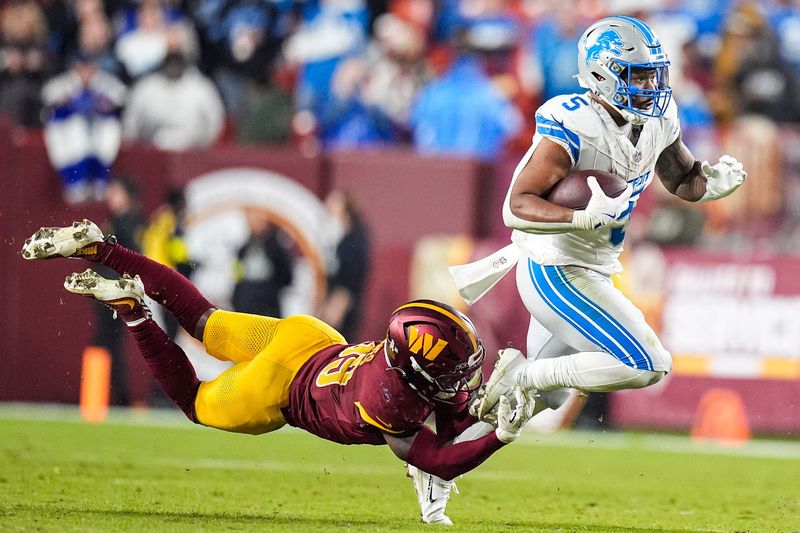
Montgomery’s opportunities, meanwhile, decreased. He finished 2025 with 716 rushing yards on 158 attempts – both career lows. By then, Montgomery had become unhappy with his reduced usage. Holmes alluded to that last week at the NFL combine, when asked about the possibility of moving Montgomery.
“A player has to want to be at a certain place,” Holmes said.
If he didn’t want to stay in Detroit due to his weakened role, then it made sense for the Lions to deal him.
When considering this organization has worked tirelessly to develop a healthy culture and strong team chemistry, it doesn’t seem wise to hold onto a player who could become more disgruntled if management isn’t prepared to improve his situation.
It’s uncertain if the Lions were willing to make that kind of commitment, given they appear to be all in on Gibbs, a burgeoning star who becomes eligible for a massive contract extension this year. Keeping Gibbs in the fold will require a heavy investment, as the average annual value for the top running backs is in the $20 million range. If the Lions are going to get the most bang for their buck out of Gibbs, then off-loading Montgomery was a necessary move.
David Montgomery trade risky for Lions
When the partnership between Montgomery and Gibbs was thriving, the Lions were as successful as they have ever been in the Super Bowl era.
Between 2023 and 2024, Detroit won more regular-season games – 27 – than any other team in the NFL during that period.
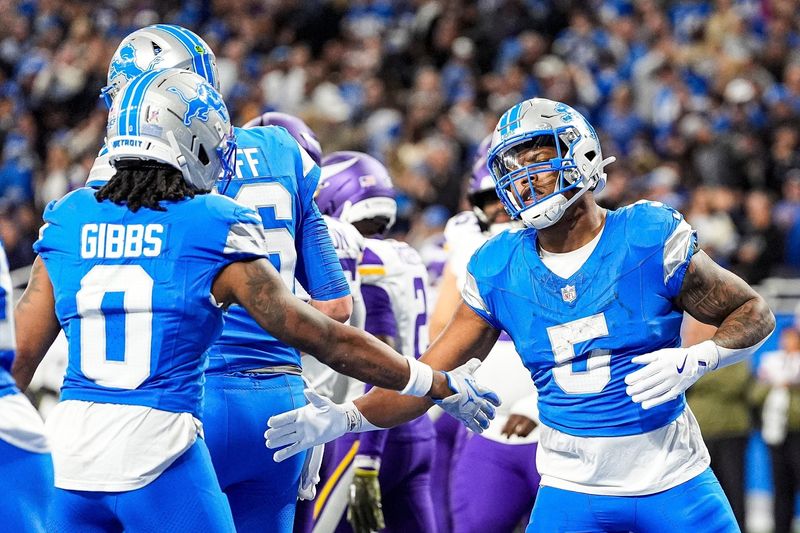
Behind a sturdy offensive line, Gibbs and Montgomery – who would soon come to be known by their nickname, “Sonic and Knuckles” – powered the Lions’ rise as a Super Bowl contender. They were a potent pairing, a unique one-two punch that mixed Montgomery’s muscle with Gibbs’ flash.
With Montgomery now gone, that formidable combination is, too. The Lions may not be able to recover what they have decided to forsake.
Montgomery is a tough runner and converted 9 of 13 fourth-down opportunities with the Lions, extending drives in the process for a team and coach – Dan Campbell – who liked to press their luck in these do-or-die situations.
In 2025 as the starter, Gibbs successfully moved the chains on only 40% of his fourth-down runs.
In many ways, the Lions’ decision to feature Gibbs came at a cost because of his boom-and-bust tendencies. While Gibbs netted 10 or more yards 50 times, he was stopped behind the line of scrimmage on 35 other occasions, averaging 2.85 yards per loss.
Montgomery didn’t create nearly as many big gains as Gibbs, but his ratio of negative plays to touches was better compared to his backfield partner’s (1-to-11 versus Gibbs’ 1-to-9). The bad outcomes he suffered also weren’t as severe (1.68 yards per loss).
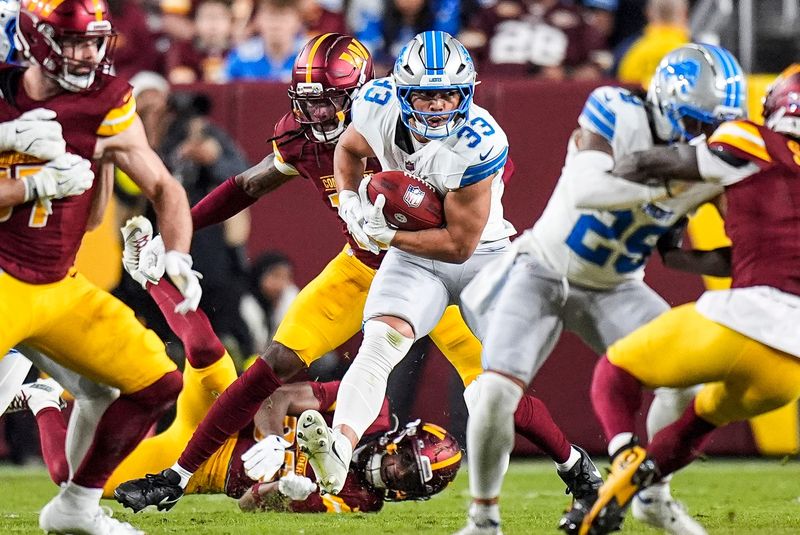
Montgomery is a steady, if not spectacular, runner. He showed the ability to move the pile, break tackles and fall forward to extend the length of his gains. He also was better than Gibbs when tasked with providing protection for quarterback Jared Goff.
Montgomery surrendered some form of pressure on 13.2% of his pass-blocking snaps in three years with the Lions, a rate 5.6 percentage points lower than Gibbs’.
While Gibbs may not be tasked with all the dirty work his former sidekick handled, it’s unclear if the other running backs on the final 2025 active roster will be capable of performing all of Montgomery’s duties.
Sione Vaki, a 2024 fourth-round pick, and Jacob Saylors, a product of the UFL, have played a combined total of 35 offensive snaps in their NFL careers. Their work up until this point has largely been consigned to special teams.
Consequently, the Lions may need to seek a more proven option to fill the void created by Montgomery’s departure.
But that will come at a cost, eating away at the $1.92 million in cap savings the Lions netted in the trade.
Contact Rainer Sabin at rsabin@freepress.com. Follow him @RainerSabin on X.
This article originally appeared on Detroit Free Press: Reasons to like (and dislike) Detroit Lions’ David Montgomery trade
Reporting by Rainer Sabin, Detroit Free Press / Detroit Free Press
USA TODAY Network via Reuters Connect