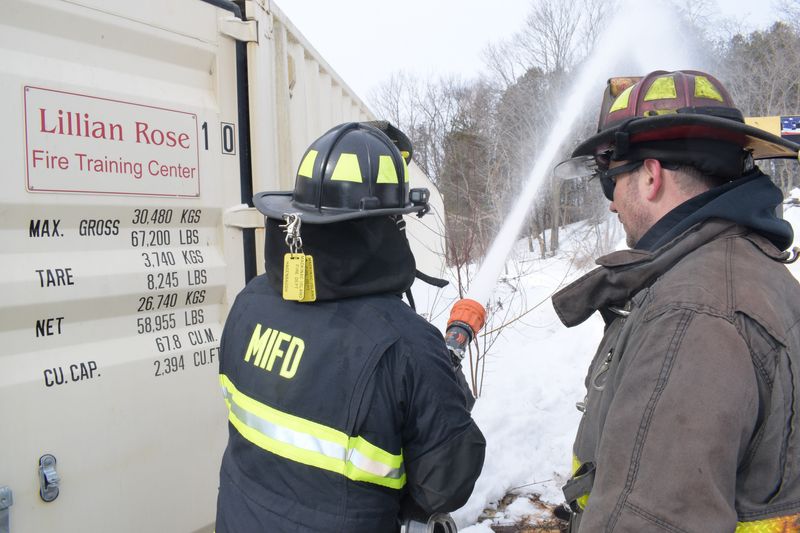
Firefighting in Detroit — and across Michigan — remains a vital pillar of public safety and community infrastructure. Yet beyond its nobility, such a profession also carries a less visible reality shaped by detrimental health concerns.
In a city marked by dense housing stock, as well as legacy industrial corridors and aging infrastructure, every response entails contact with a complex mix of carcinogenic substances since burning materials from these settings can discharge volatile and semi-volatile organics, inorganics, asbestos, heavy metals and fine particulates. Alarmingly, these cumulative exposures have contributed significantly to elevated cancer incidence, with national data indicating firefighters face about a 9% surge in diagnoses as well as a 14% increase in mortality.

For Detroit’s fire service, these risks are further intensified by specialized operational tools and environments, including those tied to the military. At Detroit Arsenal, for instance, training exercises have historically relied on aqueous film-forming foam (AFFF), a key source of synthetic per- and polyfluoroalkyl substances (PFAS) that contaminated more than 700 installations throughout the country. And as cancer cases associated with these occupational hazards have become increasingly difficult to ignore, the need for more systematic means to study and understand them has correspondingly grown clearer.
Recognizing this, the National Firefighter Registry for Cancer opened in 2023 to track exposure histories and long-term health outcomes of all firefighters. As of April 22, 2026, nearly 47,800 enrollees have already registered — among them were more than a thousand residents of Michigan. But though this figure marks a stride in the government’s noble pursuit, the registry’s usefulness is still constrained, especially as most of the more than a million firefighters nationwide remain uncounted.
Broader participation is crucial to ensure the dataset is robust enough to link occupational exposures to cancer trends reliably — thereby strengthening the evidence needed to enhance prevention strategies, safety standards and healthcare and benefit systems for those impacted.
Cristina Johnson
Veteran advocate, Asbestos Ships Organization
This article originally appeared on The Detroit News: National Firefighter
Registry could save lives | Letter
Reporting by Letter to the editor / The Detroit News
USA TODAY Network via Reuters Connect