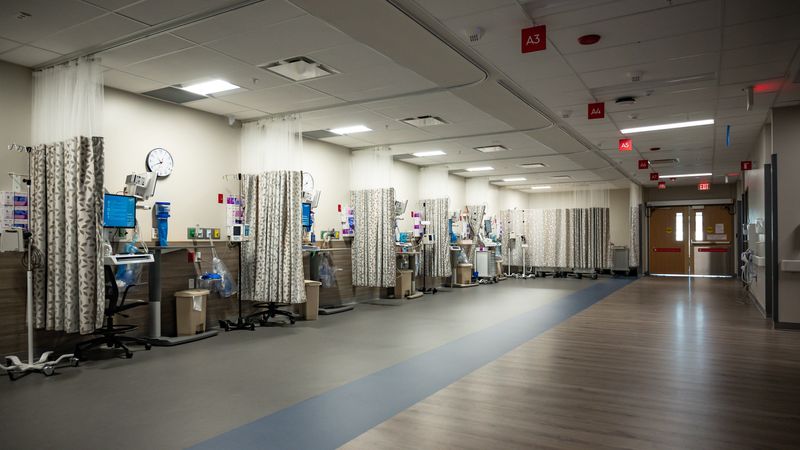
For many rural Michiganians, access to health care is shaped by distance. A specialist may be 100 miles away. A birthing hospital may be an hour from home. A missed appointment can become a medical crisis.
An opportunity to improve the situation has emerged on the horizon. Michigan has been tapped to receive more than $173 million from the federal Rural Health Transformation Program as part of a five-year national effort. As the state begins to distribute these funds, the initial focus is appropriately on expanding access, strengthening the workforce and modernizing care.

However, lasting change can only happen if proven care models spread beyond the communities where they begin. For the funding to create lasting impact, Michigan should require more than local success. It should build a shared statewide playbook so rural providers can learn from what works and adapt it to their own communities.
For the nearly 1.8 million Michiganians living in rural communities, getting to the doctor isn’t easy. An Uber isn’t available. A urologist may be 100 miles away. For an expectant mother, having a birthing hospital an hour from home can mean the difference between a routine delivery and a life-altering medical emergency.
These geographic realities underline why funding alone never guarantees transformation. If a hospital in the Upper Peninsula discovers a breakthrough way to reduce maternal mortality, but that knowledge stays localized, the program has failed its statewide mission. The real test is what happens after the dollars reach the field: whether effective approaches in one community are clearly identified, shared and scaled across rural health providers. If they are not, Michigan risks becoming a patchwork of pilots rather than a coordinated, system-wide effort. It will fall short of the full impact the RHTP was meant to deliver.
Rural healthcare systems face daily battles with financial sustainability, operating on thin margins and heavily dependent on government funding. According to the state’s Rural Health Transformation Proposal, 26% of Michigan’s 70 rural hospitals operate at a loss, often forcing them to cut essential services like maternity or mental health care just to keep the doors open.
The RHTP is meant to help care teams develop new, sustainable models for communities facing the greatest geographic and access barriers. Michigan’s plan focuses on integrating health and human services, supporting recruitment and retention, modernizing data and telehealth and reducing travel gaps for patients.
While the federal program includes accountability measures, Michigan should go further by asking whether funded models can be replicated beyond the original guarantee. Future rounds of funding should prioritize projects that demonstrate local success, clear evidence and statewide scalability.
What does this mean in the daily lives of Michigan’s rural healthcare professionals and patients?
Pilots that offer practical implementation playbooks can help new approaches reach more patients faster. Outcomes prove that something works, but they don’t tell clinicians in other regions how to make it work for them.
Further, local leaders must have the flexibility to adapt solutions to their specific patient populations. Although the core access and affordability issues transcend county lines, what proves effective for patients in the Keweenaw Peninsula may require a different strategy than for those in Cass County. If a rural hospital develops a successful strategy for expanding prenatal access through telehealth or recruiting clinicians into underserved communities, providers in other regions should be able to build from that experience rather than recreate it from scratch. Adaptation shouldn’t mean starting over. The goal is to give rural providers practical implementation playbooks they can tailor to their own workforce realities, geography and patient needs.
Across the state, rural hospitals and clinics are testing new approaches to care delivery under intense financial and workforce pressure. Too often, the operational lessons behind those successes stay trapped inside individual organizations.
An infrastructure for peer-to-peer knowledge sharing is critical for spreading solutions across the state. Rural health providers often practice in isolated silos without a professional network. They lack the staffing capacity or institutional infrastructure to independently reinvent solutions already being tested elsewhere. Michigan already has organizations working to support that collaboration.
The Michigan Center for Rural Health has spent decades helping connect hospitals, clinics, public health organizations and providers across the state through education, partnership-building and rural health networks. Expanding and better integrating those efforts into the state’s rural transformation strategy could help ensure successful models move more quickly across communities rather than remaining confined inside individual systems.
A rural hospital in one region that expands prenatal access through telehealth should not leave providers in other areas starting from scratch. Providers need practical implementation guidance from peers who understand the realities of rural care: how staffing models were adjusted, how reimbursement barriers were tackled, what technology investments were required and where early mistakes occurred.
Michigan’s rural health investment should not simply fund isolated success stories. It should accelerate the movement of proven models from one community to the next. If the state is going to invest millions in transforming rural healthcare, success should be measured not only by what works once, but by what can work again across county lines.
Mike Houston is CEO of LLYC US, a Michigan-based strategic communications and public affairs firm that advises organizations on complex health, policy and stakeholder challenges.
This article originally appeared on The Detroit News: Michigan’s rural health investment must be built to scale | Opinion
Reporting by Mike Houston / The Detroit News
USA TODAY Network via Reuters Connect